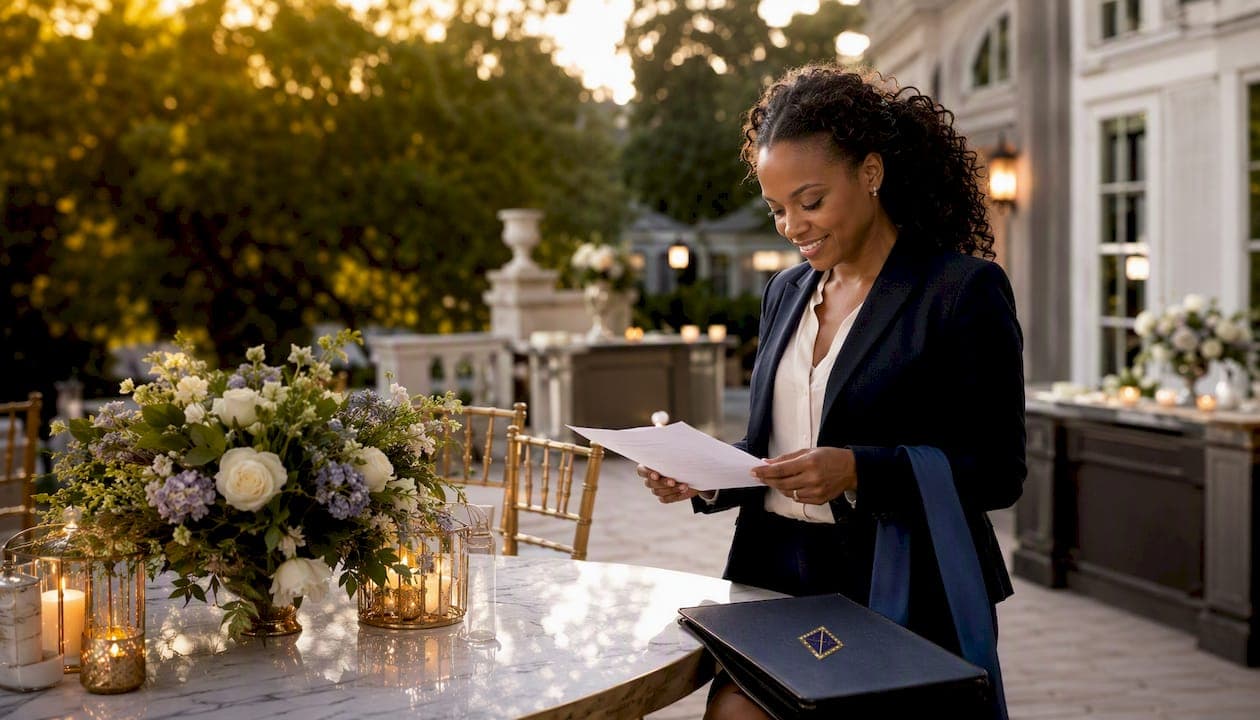
Elegant event spaces increase perceived credibility, raise guest engagement, and produce better outcomes for client events. That's the short answer. The longer one is that the venue itself functions as a brand signal before your first slide loads or your first handshake lands. When the space communicates quality, guests arrive primed to trust you.
Here's what drives that effect:
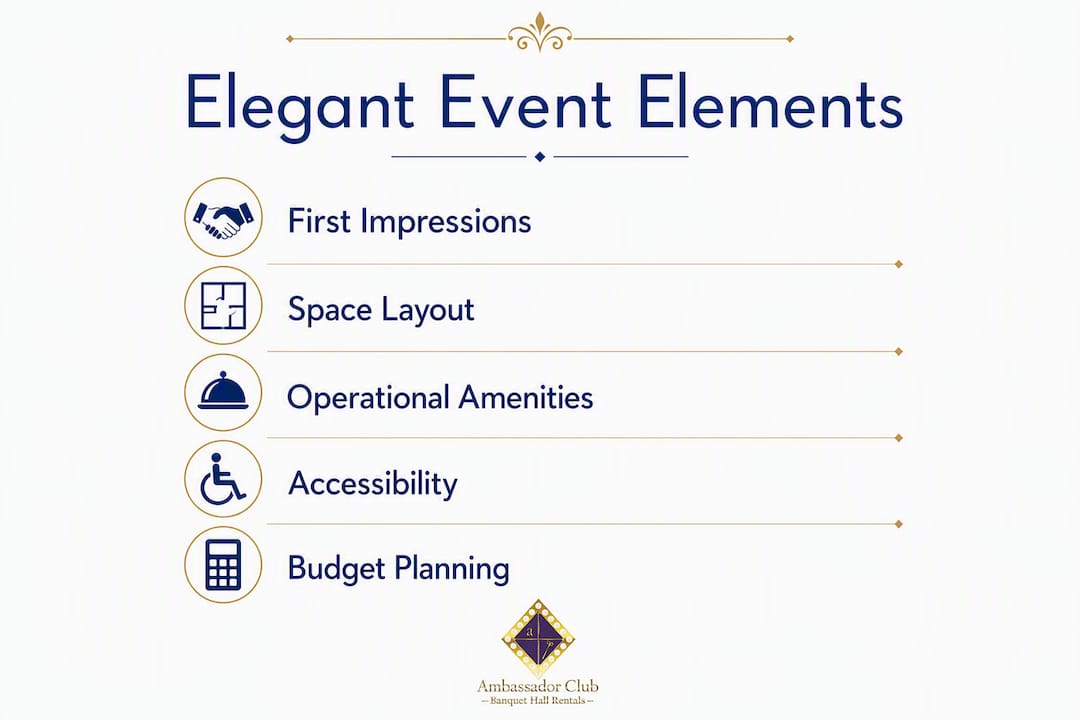
- First impressions form fast. Clients assess trust and competence from physical spaces in under seven seconds, before anyone speaks.
- Atmosphere shapes behavior. Lighting, materials, and layout act as an "emotional architecture" that guides mood, dwell time, and how openly guests interact.
- Operational reliability protects your reputation. Built-in AV, a commercial kitchen, and trained staff mean fewer surprises during the event itself.
- Venue quality compounds over time. Physical brand environments accumulate brand equity and reinforce client confidence across multiple touchpoints.
TL;DR for planners: When justifying venue spend to a client or stakeholder, frame it this way: the venue is not a line item, it's the first piece of content your guests experience.
Table of Contents
- How atmosphere and first impressions change guest behavior
- Space, layout, and guest flow: what the architecture actually does
- Amenities and operational features that reduce host stress
- Location, accessibility, and practical considerations
- How an elegant venue supports your event goals and brand
- Cost, budgeting, and timeline: what to expect
- Decision checklist: questions to ask before you sign
- The Ambassador Club (Portsmouth, VA): elegance in practice
- Key Takeaways
- The real lesson elegant venues teach you
- The Ambassador Club: a reliable, elegant venue for your next client event
- Useful sources and further reading
- FAQ
How atmosphere and first impressions change guest behavior
The entrance is your opening argument. Industry experts identify the first 90 seconds of arrival as the critical window where tone, trust, and attention are set. What guests see, hear, and feel in that window carries through the entire event.
The sensory cues doing that work are specific. Warm amber lighting at the entrance signals welcome and relaxation. Rich materials like wood paneling, stone floors, or quality upholstery communicate investment and care. A well-proportioned reception area with clear sightlines tells guests the host thought about their comfort. Soft, well-mixed background music at a conversational volume keeps energy up without forcing people to raise their voices.
Compare two arrivals: a client walks into a fluorescent-lit conference room with folding chairs and a projector cart, versus stepping into a 6,000-square-foot historic hall with warm lighting, a dry bar, and a polished dance floor. The content of the event hasn't changed. The client's readiness to engage with it has.
Design decisions around lighting, color, and texture produce measurable changes in mood and social interaction. Small shifts matter: a dimmer switch, a floral arrangement at eye level, a coat check that works smoothly. Each one reduces friction and adds to the cumulative impression of competence.
Pro Tip: Switch your lighting temperature during the event, not just at setup. Use warm amber tones during arrival and networking to encourage relaxed conversation, then shift to cooler, blue-toned light during presentations to sharpen attention. You can do this without moving a single chair.
Space, layout, and guest flow: what the architecture actually does
Layout determines whether guests mingle or cluster, whether presentations land or get lost, and whether the event feels effortful or effortless. A well-designed space supports the event's goals through capacity planning, sightlines, and circulation zones.
The core trade-off is capacity versus comfort. A room that seats 200 at maximum density feels very different from the same room with 150 guests and lounge pockets along the perimeter. Underfilling a space often produces better interaction, because guests move more freely and conversations start more naturally.
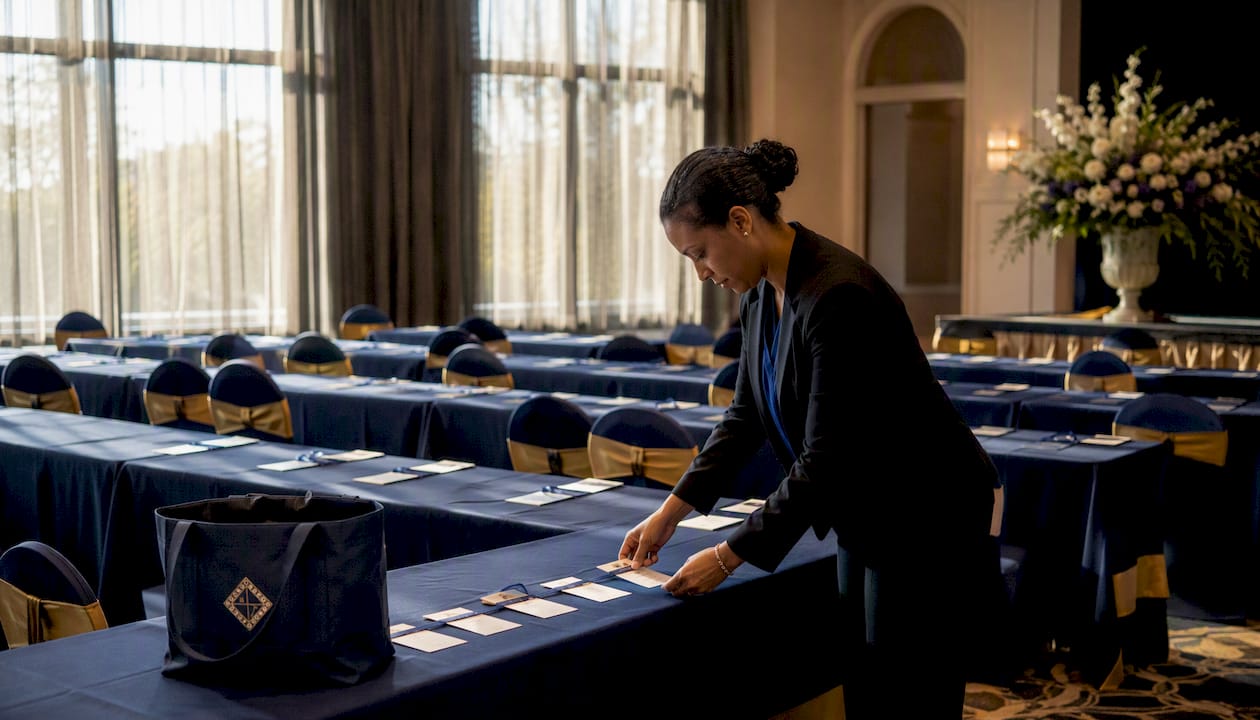
Sightlines matter most for presentations and award ceremonies. Every seat should have a clear view of the stage or screen without craning. For networking events, the opposite logic applies: you want zones that create natural stopping points, not a single open floor where everyone drifts to the walls.
Practical layout elements to confirm on a site visit:
- Entry and reception zone. Is there enough space for guests to arrive without bottlenecking? Is there a coat check or bag storage nearby?
- Transition zones. Are there defined areas between the main hall and restrooms, the bar, and any breakout spaces?
- Lounge pockets. Small seating clusters along the perimeter encourage side conversations during networking portions.
- Stage and screen placement. Can the projector or screen be seen from every seat without obstruction?
- ADA access. Are pathways clear for wheelchair users and guests with mobility aids throughout the entire space?
- Back-of-house flow. Can catering staff move between the kitchen and the floor without crossing the main guest area?
Visualize the flow as three overlapping paths: guests arriving and settling, staff serving and clearing, and presenters or performers moving to and from the stage. When those paths don't cross unnecessarily, the event runs quietly in the background the way good hospitality should.
Amenities and operational features that reduce host stress
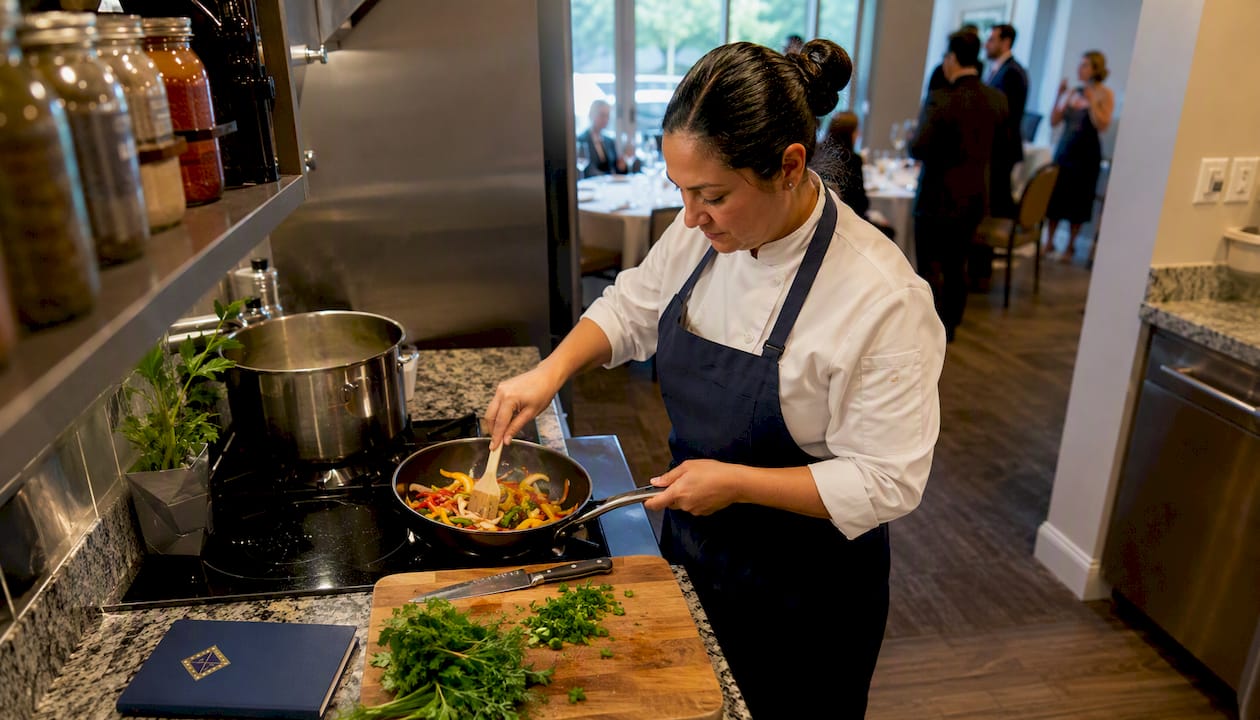
Elegance only delivers if the event actually runs. Built-in operational amenities are what convert a beautiful space into a dependable one. Good acoustics, reliable technology, and hospitality details keep attention on content and relationships rather than on whatever just went wrong.
The amenities that matter most for client events:
| Amenity | Why it matters |
|---|---|
| Full commercial kitchen | Supports on-site catering without temperature loss or outside vendor dependency |
| Built-in AV (projector, screen, sound) | Eliminates day-of rental coordination and reduces tech failure risk |
| Reliable Wi-Fi | Required for hybrid presentations, digital check-ins, and guest connectivity |
| Dry bar or beverage station | Keeps guests near the event space rather than wandering to a hotel bar |
| Dance floor | Adds programming flexibility for receptions, galas, and celebrations |
| Secure storage | Protects client materials, gifts, and equipment overnight or between setup and event |
| Dedicated loading access | Lets vendors move equipment without disrupting guest areas |
| Included tables and chairs | Cuts rental costs and eliminates a coordination variable |
Built-in features change the budget math significantly. A venue that includes AV, tables, chairs, and a commercial kitchen often costs less in total than a blank-slate rental with those items added on separately. When you're comparing venue quotes, list every add-on the alternative requires and price it out before drawing conclusions.
For textile and furnishing quality, details like chair upholstery, tablecloths, and draping contribute directly to the perceived elegance of the space. Selecting the right textiles for hospitality spaces affects both visual impression and guest comfort in ways that generic rental linens rarely match.
Location, accessibility, and practical considerations
A stunning venue that's hard to reach will undermine the event before guests arrive. Accessibility affects attendance, punctuality, and the overall impression of how well the event was organized.
Location checks every planner should confirm:
- Parking capacity. Can the lot or nearby street parking accommodate your expected guest count? Is there overflow parking within a short walk?
- Drop-off access. Is there a covered or clearly marked drop-off point for guests arriving by rideshare or car service?
- Transit options. Are there bus stops or transit connections within a reasonable distance for guests without cars?
- Nearby lodging. For multi-day events or guests traveling from out of town, are there hotels within a 10-minute drive?
- Neighborhood character. The surrounding area contributes to the event's perceived prestige. A venue in a well-maintained, recognizable district signals stability and care.
- Walkability and safety. Can guests walk to nearby restaurants or parking without concern, especially after dark?
Signage and wayfinding are underrated. Even a beautiful venue can feel disorganized if guests can't find the entrance, the parking, or the restrooms. Confirm that the venue has clear exterior signage, that your event will be listed at the entrance if the building hosts multiple events, and that interior wayfinding is intuitive. A small welcome sign at the door with the client's name or event title takes five minutes to produce and makes a real difference.
How an elegant venue supports your event goals and brand
Venue quality is a brand cue. Clients and guests read the space as a proxy for how much you value the relationship. Consistent, high-quality physical environments accumulate brand equity and reinforce client confidence over time, which means the venue choice at one event affects how clients perceive the next interaction.
"Thoughtful decor can be the deciding factor in meeting or exceeding ROI goals by increasing attendee retention and participation." — Smart Meetings
Place attachment is the psychological mechanism behind this. When a client associates a positive experience with a specific space, that memory becomes linked to your brand. A corporate dinner in a historic hall with warm lighting and attentive service becomes part of the client's story about your relationship. A generic hotel ballroom rarely does.
The practical implication: for high-stakes client events, sales presentations, and relationship-building dinners, the venue is doing persuasion work before you say a word. A polished event environment sends signals about quality and trust that no slide deck can replicate.
Cost, budgeting, and timeline: what to expect
Venue spend is an investment when it's aligned with the event's goals. For a client appreciation dinner or a product launch where relationship quality matters, a higher venue investment typically returns more than the same dollars spent on additional marketing materials.
Cost factors to budget for:
- Base venue rental rate
- Cleaning fee (sometimes included, sometimes separate)
- Security staff (required at many venues for events over a certain size)
- AV rental or setup (if not built in)
- Catering and kitchen staffing
- Transportation or shuttle services
- Permits (alcohol service, outdoor amplification)
- Overtime charges if the event runs long
- Décor and florals beyond what the venue provides
Built-in features shift this math. A venue with included AV, tables, chairs, and a commercial kitchen can reduce add-on costs substantially compared with a blank-slate space.
Booking timeline:
| Lead time | What to accomplish |
|---|---|
| 9 months out | Secure date, sign contract, pay deposit for peak-season events |
| 6–9 months out | Confirm catering, AV, and vendor access; finalize guest count estimate |
| 3–6 months out | Finalize layout, confirm staffing, send invitations |
| 4–6 weeks out | Confirm all logistics, conduct site walk-through with vendors |
| 1 week out | Final headcount, confirm day-of timeline with venue coordinator |
For corporate client events with a large guest count, several months of lead time is realistic for sought-after venues. Booking a historic banquet hall during peak season (October through December, and May through June) with less than six months' notice often means settling for a second-choice date.
Pro Tip: Ask the venue for a full itemized quote that separates base rental from every add-on. Then price each add-on independently to confirm you're getting fair value. The gap between "all-inclusive" and "base rate plus everything" is where budget surprises live.
Decision checklist: questions to ask before you sign
Use this checklist to confirm that the elegance you see on a site visit will translate into dependable delivery on event day.
Questions to ask on a site visit:
- What is the maximum capacity for a seated dinner versus a standing reception?
- What is included in the base rental rate (tables, chairs, AV, linens, staff)?
- What are the setup and breakdown windows? Can vendors access the space the day before?
- Is there a dedicated event coordinator on-site during the event?
- What is the cancellation and rescheduling policy, and what deposits are non-refundable?
- Does the venue carry general liability insurance, and what does it require from outside vendors?
- Are there restrictions on outside catering, alcohol service, or specific vendors?
- What is the overtime policy if the event runs past the contracted end time?
- Is there a backup plan for AV failure, power outages, or weather-related issues?
- What cleaning is included, and what triggers additional cleaning fees?
Red flags that warrant follow-up or a walk-away:
- Vague answers about what's included in the contract
- No on-site coordinator or a coordinator who manages multiple simultaneous events
- Restrictions on outside catering with no in-house alternative
- No clear cancellation policy in writing
- AV equipment that is visibly outdated or poorly maintained
- Parking that cannot realistically accommodate your guest count
Contract clauses to confirm in writing: access windows, vendor approval requirements, liability allocation, overtime rates, cleanup responsibilities, and contingency plans for venue-side failures.
The Ambassador Club (Portsmouth, VA): elegance in practice
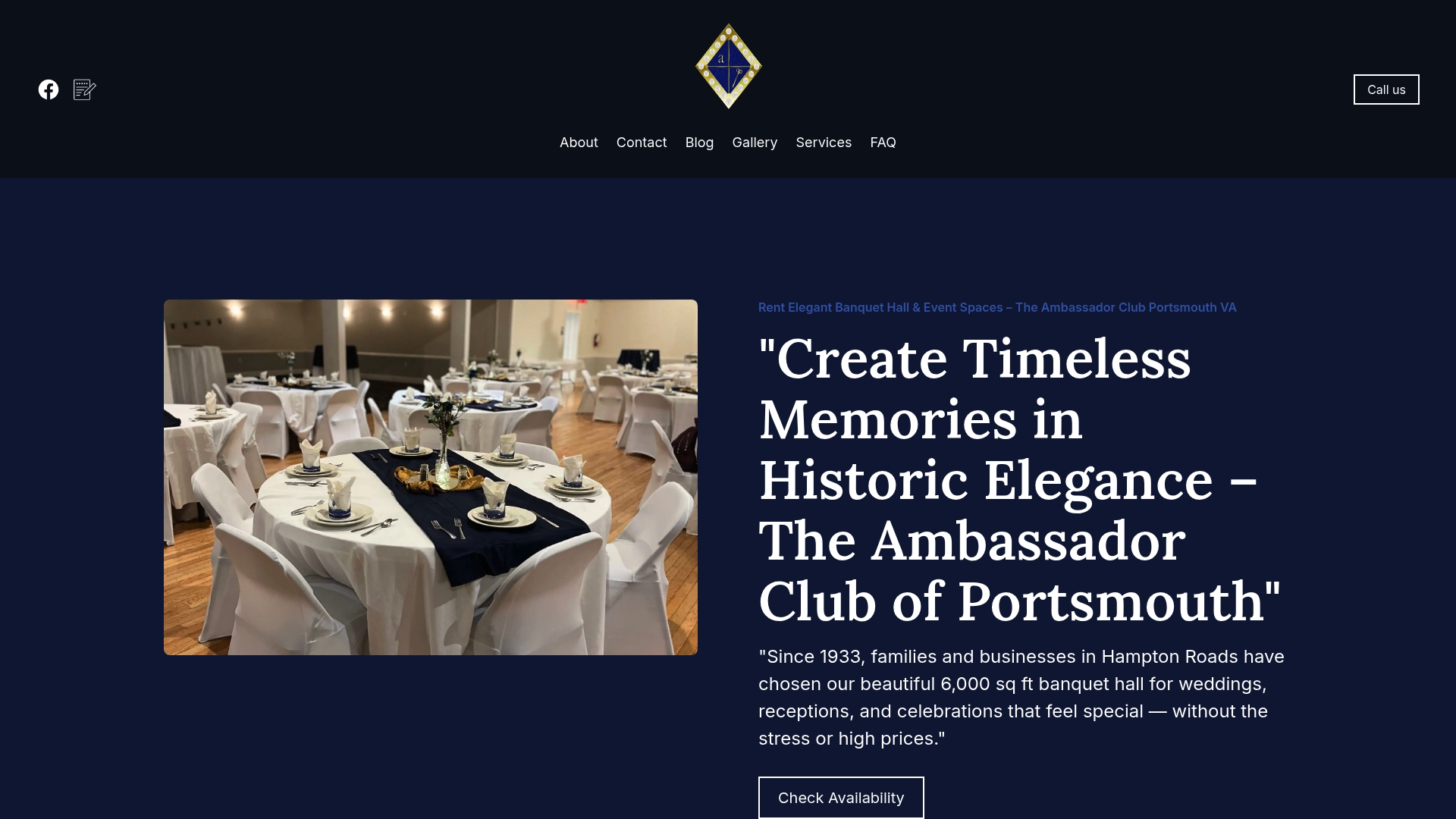
The Ambassador Club in Portsmouth, VA, is a concrete example of a historic venue where architectural character does the work that expensive décor usually has to. Venues with built-in historic character reduce decoration costs while enhancing perceived value, and the Ambassador Club's hall, in operation since 1933, delivers exactly that.
Venue specifications:
| Feature | Detail |
|---|---|
| Total hall size | 6,000 sq ft |
| Guest capacity | Up to 200 |
| Kitchen | Full commercial kitchen |
| AV | Built-in projector and large projection wall |
| Included furnishings | Tables, chairs, dance floor, dry bar |
| Event types | Weddings, corporate events, receptions, memorials, charity functions |
| Location | Portsmouth, VA (Hampton Roads area) |
The hall's historic character means planners arrive with an aesthetic foundation already in place. The navy and gold tones, the proportions of the space, and the architectural details supply the credibility that a generic ballroom requires thousands of dollars in draping and lighting to approximate. For client events in the Hampton Roads area, that built-in elegance is a genuine budget advantage.
Typical package inclusions: venue rental, setup and breakdown, cleaning, security, and access to the commercial kitchen. Optional services include transportation coordination. Outside catering is permitted, which gives planners flexibility on food and beverage without being locked into a single vendor.
Contributing author: Martin has covered event venue selection and hospitality operations for planners across the Hampton Roads region.
Key Takeaways
Elegant event spaces function as strategic brand assets: the venue is the first content your guests experience, and it shapes every interaction that follows.
| Point | Details |
|---|---|
| First impressions form in seconds | Clients assess trust and competence from physical spaces in under seven seconds, before anyone speaks. |
| Atmosphere guides behavior | Lighting, layout, and materials act as emotional architecture that shifts mood, dwell time, and interaction quality. |
| Built-in amenities protect your budget | Venues with included AV, kitchen, and furnishings often cost less in total than blank-slate rentals with add-ons. |
| Book early for peak dates | For larger events, several months of lead time is realistic for sought-after venues during peak season. |
| Ambassadorclubportsmouth | The Ambassador Club's historic hall in Portsmouth, VA, accommodates a substantial number of guests with built-in AV, a commercial kitchen, and architectural character that reduces décor costs. |
The real lesson elegant venues teach you
The conventional wisdom says venue elegance is about aesthetics. It's not, or at least not primarily. What elegant spaces actually do is remove friction from trust-building. When a client walks into a well-maintained, thoughtfully designed space, they stop spending cognitive energy assessing whether you're credible and start spending it on the relationship you're trying to build. That shift is worth more than any slide deck.
What planners underestimate is how much operational reliability contributes to that effect. A beautiful room with a failing projector or a kitchen that can't handle the catering load destroys the impression the architecture built. The venues that consistently produce strong client outcomes are the ones where elegance and operations are equally considered, not the ones that prioritize one at the expense of the other.
The other thing worth saying plainly: historic venues earn their elegance rather than performing it. A space that has hosted events since 1933 carries a kind of institutional credibility that no amount of fresh paint or rental draping can replicate. Clients feel that, even when they can't articulate why.
The Ambassador Club: a reliable, elegant venue for your next client event
For corporate teams, event planners, and hosts in the Hampton Roads area who need a venue that delivers both presence and practicality, the Ambassador Club in Portsmouth, VA, is a strong fit. The historic hall accommodates a large number of guests with built-in AV, a full commercial kitchen, and included tables, chairs, and a dance floor. Packages cover setup, cleaning, and security, so you're not assembling a vendor list from scratch.
Outside catering is permitted, which means you control the food and beverage experience without venue restrictions. The hall's architectural character reduces the décor budget compared with blank-slate alternatives, and the competitive rental rates make it accessible for both corporate and private client events.
To check availability or arrange a site visit, contact the Ambassador Club directly at ambassadorclubportsmouth.com. Dates for peak season fill several months in advance, so confirming early is worth the effort.
Useful sources and further reading
- The Secret Role of Aesthetic Decor in Corporate Event Success — Smart Meetings covers how thoughtful décor affects attendee retention and ROI at corporate events.
- The Power of Place: How Event Venues Shape Guest Experience — A practical breakdown of how arrival experience and venue design shape trust from the first 90 seconds.
- How Professional Meeting Spaces Close More Deals — Explains the psychology of rapid environmental assessment and its effect on high-stakes client meetings.
- How Brand Environments Influence Client Perception — Covers how consistent physical environments build brand equity over time.
- Psychology of Event Design: Color, Light & Space — Detailed guidance on using lighting temperature and color to manage mood during events.
- Why venue choice is so important — Makes the case for historic venues as cost-efficient alternatives to decorated blank-slate spaces.
- Perception by Design: Why a Polished Event Environment Can Change How People Judge Your Brand — Pure Creative's analysis of how spatial design signals quality before a word is spoken.
FAQ
What makes a great event space for client events?
A great client event space combines strong first-impression design (lighting, materials, proportions) with reliable operational features like built-in AV, a commercial kitchen, and clear guest flow. Clients assess trust from the physical environment in under seven seconds, so both aesthetics and functionality matter equally.
How does décor influence client perception at events?
Décor functions as emotional architecture: lighting, color, and texture guide mood and social behavior before any programming begins. Thoughtful décor can be the deciding factor in meeting ROI goals by increasing attendee retention and participation, according to Smart Meetings.
What are the key elements of good event planning?
Effective event planning covers venue selection, guest flow, operational logistics (AV, catering, staffing), clear timelines, and a signed contract with confirmed cancellation and liability terms. The venue choice anchors all of those elements because it determines what's built in and what needs to be sourced separately.
How far in advance should you book an elegant event venue?
For events during peak season (October through December, and May through June), nine months of lead time is realistic. Booking with less than six months' notice often limits date availability at sought-after historic venues.
What event types does the Ambassador Club in Portsmouth, VA, accommodate?
The Ambassador Club hosts weddings, corporate events, receptions, memorials, and charity functions in its 6,000 sq ft historic hall, with capacity for up to 200 guests and packages that include setup, cleaning, and security.