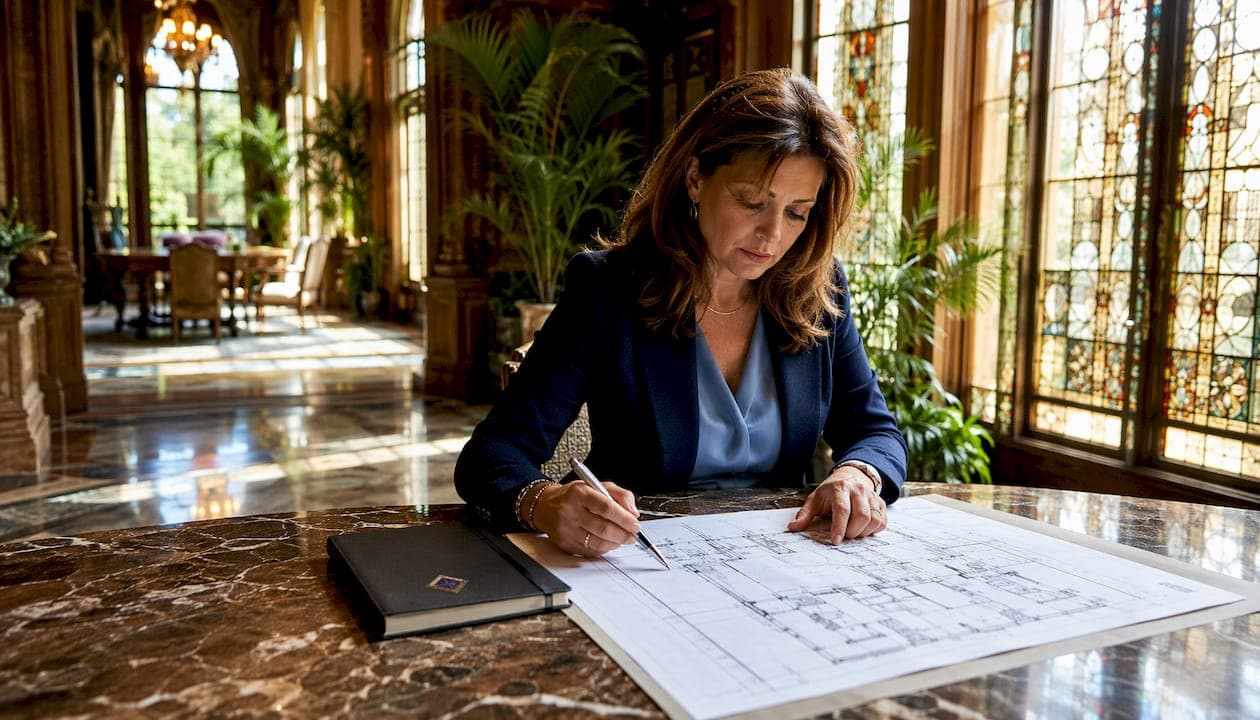
Venue history enhances celebrations by providing built-in authenticity, emotional depth, and a sense of place that no modern ballroom can manufacture. When guests walk into a space shaped by decades of real events, real people, and real craftsmanship, the occasion immediately carries more weight. That shift in atmosphere is not accidental. It is the direct result of what historians and event professionals call "place-based significance," the idea that a location's past actively shapes how people experience the present. Spaces like Ambassadorclubportsmouth, operating since 1933, prove that historical character and practical event needs are not in conflict.
Why venue history enhances celebrations: the core case
Historic venues deliver something modern event spaces cannot replicate: built-in atmosphere and prestige that reduces decoration costs while increasing guest engagement. That means your budget goes further and your guests feel more from the moment they arrive. Original architectural details, ornate ceilings, and grand staircases do the visual work that a blank-box venue requires thousands of dollars in rentals to achieve. The importance of venue history, then, is not sentimental. It is practical, financial, and experiential all at once.
The concept of celebration venue significance goes beyond aesthetics. History in a venue is foundational to guest experience and narrative differentiation, especially in a competitive experience economy where people expect more than food and a dance floor. Guests remember where they were because the place itself tells a story. That story becomes part of the event's memory.
What emotional benefits do historic venues bring to celebrations?
Historic settings ground guests in authenticity and legacy in a way that modern venues simply do not. When a space has hosted generations of weddings, civic gatherings, or community milestones, that accumulated meaning transfers to every new event held there. Guests sense it without being told. The result is deeper engagement and stronger emotional memory.
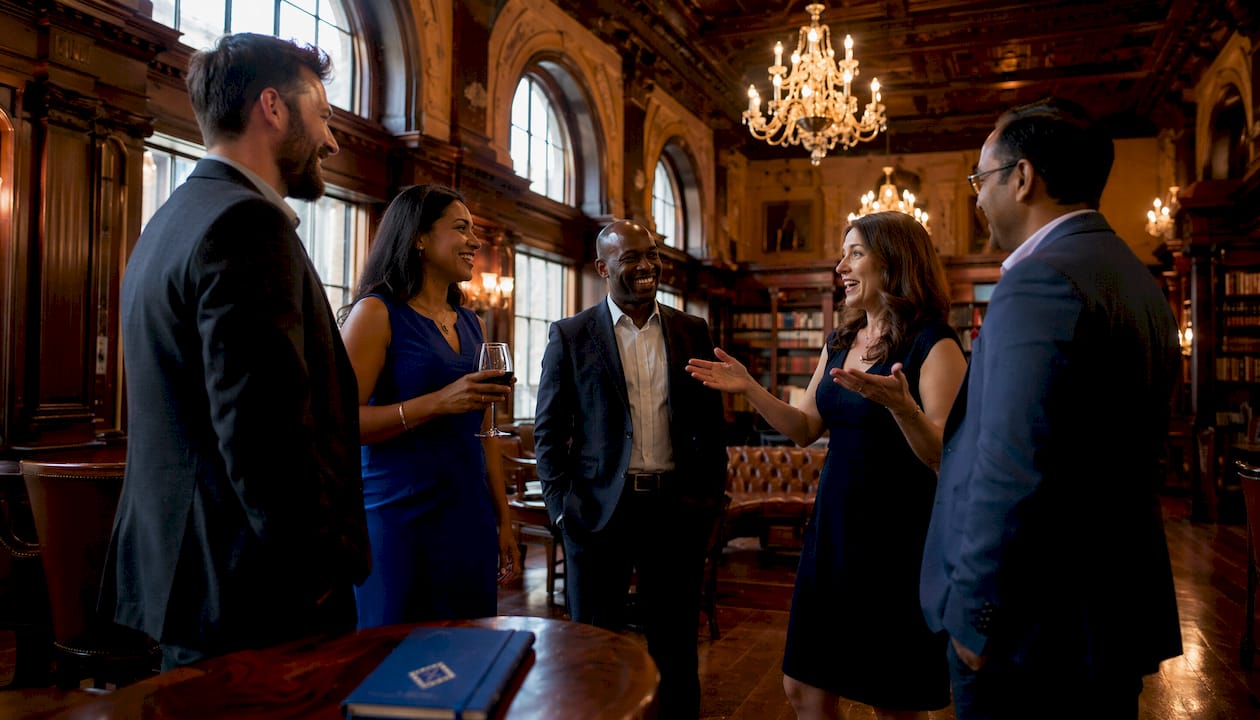
Research confirms that guests in historic venues are more likely to remember the occasion due to the immersive environment shaped by decades of history. Memory researchers call this "context-dependent encoding," where the richness of a physical environment strengthens how the brain stores an experience. A historic venue is, in effect, a memory amplifier.
The emotional benefits show up differently across event types:
- Weddings: Couples gain a sense of legacy and permanence. Vowing in a space that has witnessed a century of celebrations adds weight to the commitment.
- Corporate events: Teams feel connected to a larger narrative. Brand launches in historic settings signal confidence and longevity rather than trend-chasing.
- Milestone celebrations: Birthdays, anniversaries, and retirements gain gravitas. The venue signals that the occasion deserves more than a generic hotel conference room.
- Community gatherings: Attendees feel tied to local identity and shared history, which deepens participation and pride.
Pro Tip: When booking a historic venue, ask staff for two or three specific stories about the space. Share one briefly during your event's welcome remarks. Guests remember events where they learned something they did not expect.
How does historic architecture shape event atmosphere?
Original craftsmanship and cultural significance create atmosphere that does the heavy lifting for event ambiance. Dramatic ceilings, period woodwork, and iconic detailing are not decorative extras. They are the event design. Planners who recognize this spend less on florals and lighting because the room already communicates elegance.
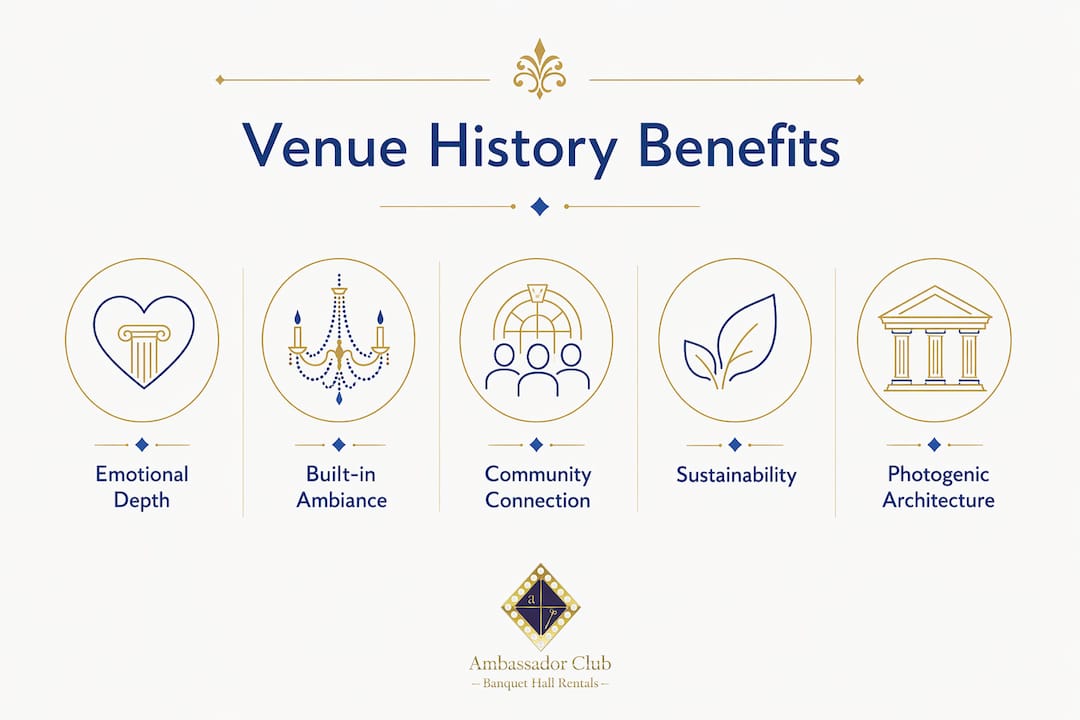
Historic architecture also produces photogenic results that modern venues rarely match. Timeless materials and proportions photograph well in any lighting condition. Event photos taken in historic spaces tend to look like they belong in a magazine rather than a banquet catalog. That visual quality extends the event's life well beyond the night itself, living on in shared photos and social posts for years.
The layout of historic buildings also encourages natural social flow. Rooms with varied ceiling heights, alcoves, and distinct spaces give guests permission to move, explore, and find their own corners of the event. That variety prevents the flat, uniform feel of a single-room modern venue.
| Architectural feature | Effect on event experience |
|---|---|
| Ornate ceilings | Reduces need for overhead décor; creates immediate visual impact |
| Grand staircases | Provides natural focal points for arrivals and photography |
| Period woodwork and detailing | Signals craftsmanship and quality without added cost |
| Varied room layouts | Encourages guest movement and social exploration |
| Large original windows | Provides natural light that flatters guests and photography |
Historic venues' timeless craftsmanship delivers sophistication that trend-driven new builds cannot match. That is not nostalgia. It is a measurable difference in how guests perceive and remember an event. For planners focused on venue aesthetics in weddings, this distinction matters enormously.
How can planners integrate venue history without overwhelming the event?
The most common mistake planners make with historic venues is treating history as costume. Draping every table in period-themed décor or forcing historical references into every speech turns a celebration into a museum tour. Successful integration means letting the architecture frame the event's core message rather than compete with it.
Practical integration works best when it follows a clear structure:
- Choose one historical anchor. Select a single story, date, or detail about the venue that connects naturally to your event's theme. A venue founded in the same decade as a couple's grandparents' marriage, for example, creates an organic link.
- Use storytelling selectively. One well-placed historical anecdote in a welcome speech or printed program adds depth without slowing the event down.
- Engage a venue historian or knowledgeable staff member. Proactive storytelling via resident historians transforms a historic venue from a passive backdrop into an immersive experience. Ask the venue if someone can speak briefly or answer guest questions.
- Align décor with the space, not against it. Let the existing architecture guide color palettes and furniture choices. Fighting the room's character with clashing modern minimalism creates visual tension.
- Balance historical elements with modern event needs. AV equipment, lighting rigs, and catering setups must work within the space's constraints. Plan for this early.
Pro Tip: Print a single-page "venue story" card for each table setting. Keep it to three sentences. Guests read it during cocktail hour and arrive at dinner already connected to the space.
Historical anecdotes and cultural customs foster a sense of place that is especially powerful for brand launches and milestone events. The key is proportion. A light touch of history enriches. An overdose distracts.
What logistical and sustainability factors should planners know?
Historic venues impose unique operational constraints that modern event spaces do not. Every historic space dictates what it will allow, from noise ordinances tied to residential neighbors to load-bearing restrictions that affect staging and equipment. Planners who treat a historic venue like a blank-box rental will run into problems on event day.
Key logistical factors to address early:
- Access and load-in windows: Historic buildings often have narrow corridors, protected flooring, and limited loading docks. Confirm vendor access times at least six weeks out.
- Noise and curfew restrictions: Many historic venues sit in protected districts with strict sound limits. Know the cutoff time before you book entertainment.
- Technology infrastructure: Older buildings may have limited electrical capacity. Confirm amperage requirements with your AV vendor before signing the contract.
- Preservation rules: Some spaces prohibit open flames, certain adhesives, or heavy anchor points in walls. Get a written list of restrictions from venue management.
The sustainability angle is equally significant. Repurposing historic venues supports sustainability by avoiding the carbon footprint of new construction. For organizations with environmental commitments, hosting an event in a preserved historic building aligns the celebration with heritage protection values. That alignment adds a genuine narrative layer to corporate events and community gatherings alike.
How do historic venues connect celebrations to community?
Historic venues serve as community landmarks that foster a sense of tradition and place-based pride. When a celebration happens in a space that locals recognize and value, the event gains meaning beyond the guest list. Attendees feel connected to something larger than the occasion itself.
This community connection has a compounding effect. Organizations that host annual events in the same historic venue build tradition over time. Guests begin to associate the space with the organization's identity. The venue becomes part of the brand. That kind of community event hall advantage is impossible to manufacture in a generic rental space.
Repeated events in historic venues also create personal legacy for families. A family that celebrates a wedding, then a milestone anniversary, then a child's graduation in the same historic hall builds a multi-generational story tied to that place. The venue becomes a character in the family's history, not just a backdrop.
Key Takeaways
Historic venues enhance celebrations by delivering built-in atmosphere, emotional depth, and community connection that modern event spaces cannot replicate.
| Point | Details |
|---|---|
| Built-in ambiance saves cost | Historic architecture reduces decoration needs and elevates visual impact from the moment guests arrive. |
| History strengthens memory | Guests remember events held in immersive historic settings more vividly than those in generic venues. |
| Integration requires a light touch | One well-placed historical anecdote or story card enriches the event without turning it into a museum tour. |
| Logistics need early attention | Noise rules, access windows, and preservation restrictions require planning well ahead of event day. |
| Community ties compound over time | Repeated events in the same historic venue build tradition, brand identity, and lasting family legacy. |
Why I think planners underestimate the power of place
Most event planners I have spoken with focus almost entirely on capacity, catering, and cost per head. Those are real factors. But the question of where an event happens, and what that place means, gets treated as secondary. That is a mistake.
The venues that guests talk about for years are almost never the ones with the newest AV rigs or the most flexible floor plans. They are the ones that felt like somewhere. A room with a story. A space that communicated, without a single word from the host, that this occasion mattered.
What I have found is that the history of a venue does not compete with the event. It amplifies it. A couple's wedding vows carry more weight in a hall that has witnessed a century of community life. A company's anniversary dinner feels more earned in a space that has outlasted trends and recessions. The venue's past becomes a silent endorsement of the event's significance.
The challenge is that planners sometimes overcorrect. They lean so hard into the historical theme that the event loses its own identity. The fix is simple: let the architecture speak and keep the programming focused on the people in the room. History should be felt, not performed.
— MARTIN
Ambassadorclubportsmouth: a historic venue worth celebrating in
Ambassadorclubportsmouth has served the Hampton Roads community since 1933, and that history is visible in every detail of its 6,000 sq ft hall. The space offers the kind of architectural character that modern event venues spend years and significant budgets trying to imitate.
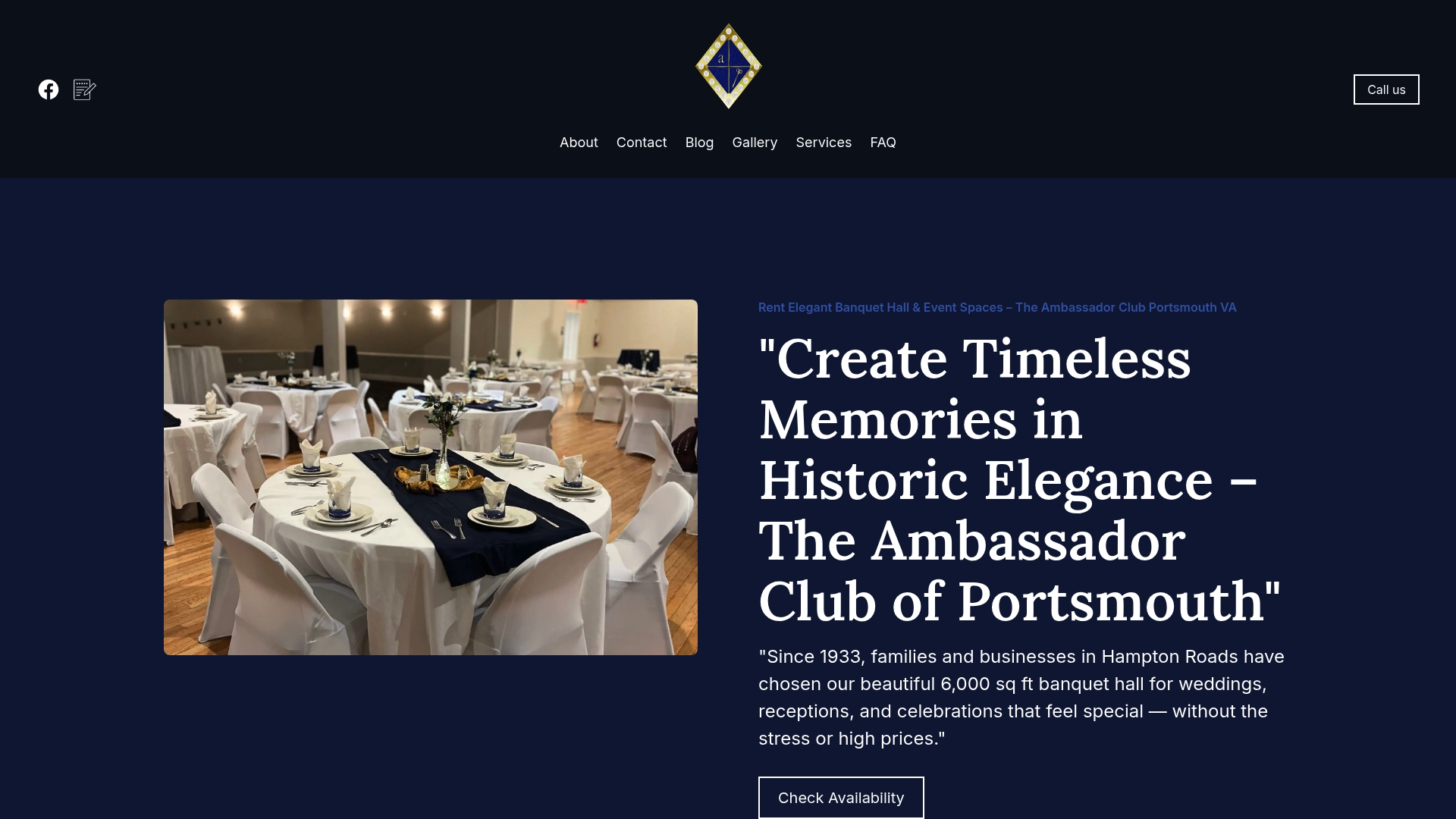
For planners and families looking for a historic venue rental that combines genuine elegance with practical amenities, Ambassadorclubportsmouth delivers. The hall accommodates up to 200 guests, includes a full commercial kitchen, and offers flexible catering options at competitive rates. Whether you are planning a wedding, a corporate reception, or a milestone celebration, the venue's history becomes part of your event's story from the first moment guests walk through the door. Learn more about booking this event hall and what to expect from the planning process.
FAQ
Why does venue history add charm to celebrations?
Historic venues carry decades of real events and craftsmanship that create an immediate sense of occasion. That built-in character makes guests feel the event matters before the program even begins.
Should history matter when selecting a venue?
Yes. Venue history directly affects guest engagement, memory retention, and the overall atmosphere of a celebration. A space with genuine historical significance requires less decoration and delivers more emotional impact.
How does venue history affect event photography?
Historic architecture, original materials, and period detailing photograph well in any lighting condition. Events held in historic spaces consistently produce more timeless imagery than those held in modern, trend-driven venues.
What are the main logistical challenges of historic venues?
Historic venues often have noise restrictions, limited electrical capacity, and preservation rules that restrict certain equipment or décor. Planners should confirm all restrictions in writing at least six weeks before the event.
How can planners use venue history without overdoing it?
Choose one historical anchor point, share it briefly in a welcome remark or table card, and let the architecture do the rest. History should frame the event, not dominate it.