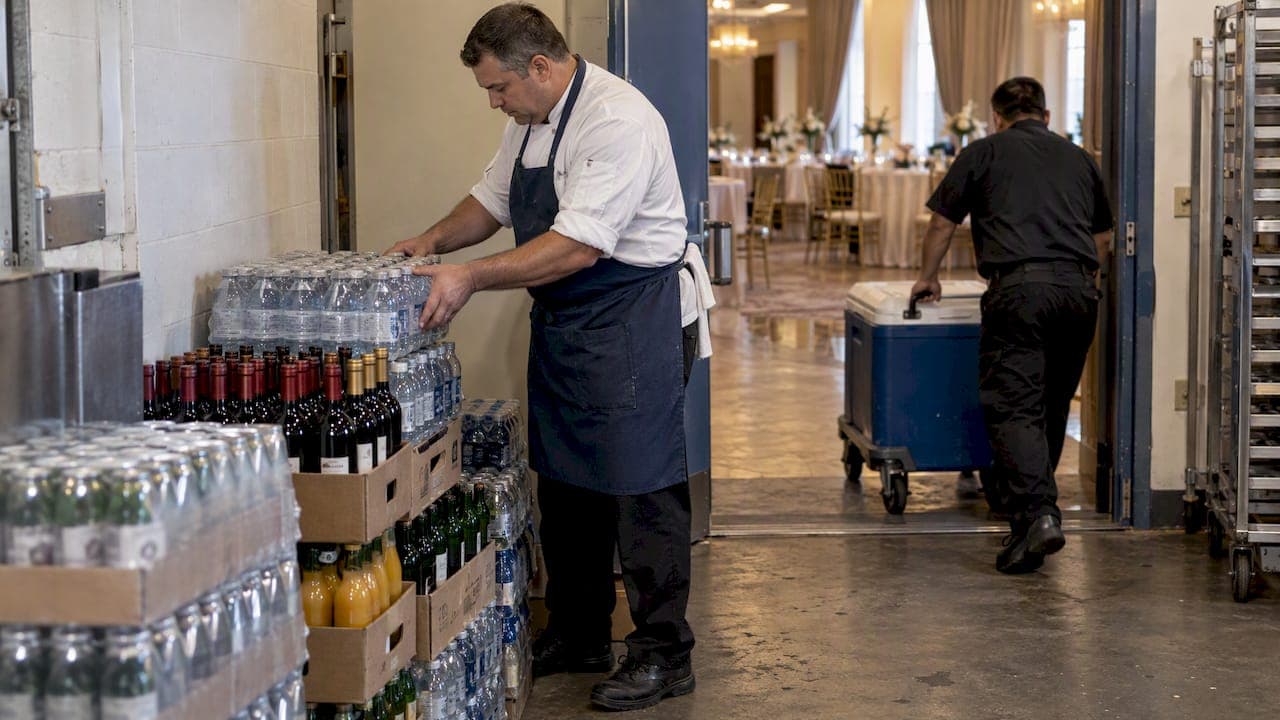
Plan on roughly one alcoholic drink per guest per hour, or two drinks in the first hour if the crowd arrives thirsty, then one per hour after that. Convert that total into bottles using standard-drink equivalents: a 750 ml bottle of wine pours about five glasses, a 12 oz beer is one serving, and a 1.5 oz spirit pour is one serving. Adjust up or down based on event length, guest mix, and whether you're outdoors in the heat.
TL;DR:
- For a four-hour event with 100 guests, expect around 400 total drinks, roughly translating to 39 bottles of wine, 7 cases of beer, and 5 spirits bottles.
- Adjust alcohol volumes based on crowd preferences, with younger or late-night crowds leaning more toward spirits and cocktails, and wine-heavy service for formal dinners.
- Always allocate a 10 to 15 percent buffer for drinks, water, ice, and non-alcoholic options to account for longer events and uncertain turnout.
- Water needs range from 8 to 16 ounces per guest per hour depending on indoor or outdoor setting, leading to thousands of ounces for large groups.
- Prioritize ordering sufficient ice, water, and decaffeinated beverages separately, as they are the most common causes of shortages during the event.
Table of Contents
- How to Calculate Beverage Quantities Fast
- Splitting the Order Between Beer, Wine, and Spirits
- Planning Water, Coffee, Soda, and Juice
- Staffing the Bar: Bartenders, Placement, and Inventory
- Adjusting Your Numbers for Guest Mix, Timing, and Weather
- Sample Tables: Bottles, Gallons, and Cases by Guest Count
- Building a Shopping List and Final Checklist
- Venue-Tested Tips for Smooth Beverage Service
- Planning Around Dietary Restrictions and Preferences
- Matching Your Strategy to the Event Type
- What I've Learned Planning Bar Orders for Large Events
- FAQ
- Sources
How to Calculate Beverage Quantities Fast
The fastest way to size an order is a single formula: guests multiplied by hours multiplied by a baseline rate of one drink per person per hour. A 100-guest, four-hour event lands at 400 total drinks before any adjustments.
Some hosts prefer a front-loaded version of the rule, since guests tend to drink more in the first sixty to ninety minutes while they're mingling and waiting for dinner:
- Count two drinks per guest for the first hour.
- Add one drink per guest for every additional hour.
- Total the result, then round up to the nearest full bottle or case.
Once you have a total drink count, split it into containers using these standard conversions:
- A 750 ml wine bottle yields about 5 glasses (5 oz pours).
- A 12 oz beer bottle or can counts as 1 serving.
- A standard 750 ml spirits bottle yields about 17 servings at a 1.5 oz pour.
Three quick examples show how this scales. For 50 guests over three hours at one drink per hour, you're looking at 150 total drinks, roughly 30 wine bottles if wine alone covered it, or a mixed order split across wine, beer, and spirits. For 100 guests over four hours, the baseline hits 400 drinks, which is the figure most caterers use as a starting point for a wedding reception. For 200 guests over five hours, the math runs to 1,000 drinks, a volume that pushes most hosts toward cases of beer and multiple wine cases rather than counting individual bottles.
These numbers are starting points, not final orders. The next sections break down how to split that total across beer, wine, and spirits, and how to handle the non-alcoholic side of the bar.
Splitting the Order Between Beer, Wine, and Spirits
Once you know the total number of drinks, the next decision is the mix. A standard drink in the United States contains 0.6 fluid ounces of pure alcohol, whether that comes from a 12 oz beer at 5% ABV, a 5 oz glass of wine at 12% ABV, or a 1.5 oz pour of 80-proof liquor. That equivalence is what lets you swap formats without under- or over-pouring.
Younger crowds or late-night receptions tend to push spirits and cocktails higher, sometimes to 30% or more of the total.
Bottle math follows from there:
- Wine: divide total wine servings by 5 to get bottles needed.
- Beer: a standard case holds 24 bottles or cans, so divide total beer servings by 24 for cases.
- Spirits: a 750 ml bottle yields about 17 straight pours, but cocktails that mix multiple spirits or use more liquor per drink will reduce that yield, so budget slightly higher for a full bar with mixed drinks.
One craft beer or a strong cocktail can equal more than one standard drink, depending on alcohol content and pour size, according to NIAAA's guidance on standard drinks.
Champagne and toast planning works on a separate rule: plan for one bottle of champagne per eight guests for a single toast pour, kept apart from the main drink total since it's served once rather than throughout the event. For a seated reception, UCI's catering guidelines suggest planning closer to 2.5 glasses of wine per person for a cocktail-style reception, which gives you a sense of how wine-heavy formal service tends to run compared to the general baseline.
If you're unsure which varietals to stock for a mixed crowd, a practical host's guide to choosing wine covers how to balance reds, whites, and sparkling options without overbuying any single type.
Planning Water, Coffee, Soda, and Juice
Alcohol gets most of the planning attention, but non-alcoholic beverages often run out first, especially at events with dancing, outdoor heat, or a dry crowd.
Water consumption runs about 8 to 12 oz per guest per hour indoors, and 12 to 16 oz per hour outdoors or in warm weather, according to sample planning volumes from Feed the Line. For a 100-guest, four-hour indoor event, that works out to roughly 25 to 37 gallons of water across the day, or about 200 to 300 standard 16 oz bottles.
Coffee math is simpler once you know the yield: one pound of ground coffee makes about 40 to 50 six-ounce cups, a ratio Feed the Line's catering guidance recommends using instead of trying to estimate gallons directly.
- Soda and juice: a 2-liter bottle pours about 8 servings at 8 oz each, and demand climbs noticeably at dry events or family gatherings with children.
- Ice: budget 1 to 1.5 lbs of ice per guest, ordered as its own line item rather than assumed to come free with the venue, a point echoed across university catering guidelines.
- University event-services charts break coffee, tea, and soda demand down by audience gender mix, which is useful for corporate events where the guest list skews heavily one way.
Most venues do not produce enough ice on-site for a 100-plus guest event, which is why ice almost always shows up as a separate delivery or rental line rather than something bundled into kitchen service.
Staffing the Bar: Bartenders, Placement, and Inventory
Getting the drink totals right doesn't help much if the bar can't keep up with the line. UCI's Special Events catering guidelines recommend one bartender per 75 guests for a hosted open bar, and one per 100 guests for a cash bar, since hosted bars move faster and generate more simultaneous orders.
- Staff for the busiest twenty-minute window, not the average hourly rate, since guest arrival and cocktail hour create short, intense spikes in demand.
- Open a second bar station once guest counts pass roughly 150, splitting the line rather than lengthening it.
- Stage backup ice and extra bottles near each bar rather than in a single central storage point, so runners aren't crossing the room mid-rush.
- Decide early on glassware versus disposables, since glassware slows service slightly but changes the overall feel of a formal event.
Pro Tip: Open the bar five to ten minutes before guests are expected to arrive, since the first rush hits faster than most hosts anticipate.
Inventory practices matter as much as staffing. Take an opening count of every bottle and case before service starts, then a closing count at the end, and confirm with your caterer exactly what's included in the beverage package versus billed separately. A clear staffing and run-sheet layout for the event helps avoid confusion about who's responsible for restocking mid-event.
Adjusting Your Numbers for Guest Mix, Timing, and Weather
The baseline formula is a starting point, not a fixed answer. A few measurable factors push the numbers up or down.
- Time of day: morning and early-afternoon events need more coffee and less alcohol, while evening receptions flip that ratio, with alcohol consumption typically peaking between the second and fourth hour.
- Guest demographics: percent-based beverage charts that break down coffee, tea, and soda demand by gender mix are useful for corporate events, where the audience composition is often known in advance.
- Weather and venue: outdoor events in heat push water and soft drink volumes up noticeably, while an air-conditioned indoor hall keeps demand closer to the standard baseline.
- Buffer: add a 10 to 15% buffer to every category as standard practice, and push higher when you're unsure about guest turnout or when the event runs longer than planned.
Family-style events add another wrinkle, since children and non-drinking relatives shift demand heavily toward soda, juice, and water. Planning guidance for family celebrations is worth reviewing if your guest list includes a wide age range.
Sample Tables: Bottles, Gallons, and Cases by Guest Count
These tables translate the formulas above into order-ready quantities for common event sizes, each built on a one-drink-per-person-per-hour alcohol baseline with a 10% buffer applied.
3-hour events:
4-hour events:
Each row assumes a 40/40/20 beer, wine, and spirits split and standard CDC serving equivalents for the alcohol columns. If you're hosting a smaller, self-catered event, a run sheet built for under 100 guests can help you scale these tables down without losing the ratios.
Building a Shopping List and Final Checklist
For a 100-guest, four-hour event, here's a template you can hand directly to a caterer or liquor store:
- Wine: 39 bottles (roughly split red, white, and sparkling for the toast).
- Beer: 7 cases (24 bottles or cans each).
- Spirits: 5 bottles, covering the most requested mixed drinks.
- Water: 40 gallons, or about 320 standard 16 oz bottles.
- Coffee: 4 to 5 lbs of ground coffee, with a 20 to 25% decaf split.
- Soda and juice: 25 to 30 two-liter bottles, more if children are attending.
- Ice: 100 to 150 lbs, ordered separately from the venue.
Before the event, confirm a short checklist:
- Delivery timing for perishables and ice, ideally within 24 hours of the event.
- Cold storage or chiller capacity at the venue, confirmed in writing.
- Glassware or disposable counts matched to the final guest list.
- Final headcount communicated to vendors no later than 72 hours out, since most liquor and rental orders can't be changed after that.
A clear customization conversation with your caterer about what's bundled into a beverage package versus billed separately avoids surprise charges on the final invoice.
Venue-Tested Tips for Smooth Beverage Service
Running beverage service in a large hall comes down to timing the setup around the kitchen, not around the bar alone. Chillers and ice staging should be confirmed with the venue 48 to 72 hours before the event, since last-minute refrigeration requests are harder to fill and often cost more.
Always confirm in the venue contract whether cleaning, security, and chiller access are included or billed separately, since these line items affect how much flexibility you have to adjust the bar setup on short notice.
Pro Tip: Walk the bar layout with your caterer the week before the event, not the day of, so chiller placement and ice staging are settled before deliveries start arriving.
A detailed run sheet for large-event catering is a useful reference for coordinating these timing details across a full event day.
Planning Around Dietary Restrictions and Preferences
Beverage planning isn't only about volume. A growing share of guests at any event will skip alcohol entirely, follow a gluten-free diet, or avoid caffeine, and the bar order should reflect that without singling anyone out.
Offer at least two or three non-alcoholic options beyond water and soda, such as a mocktail version of your signature cocktail, so guests who don't drink still have something that feels intentional rather than an afterthought. Gluten-free guests can usually drink wine and most spirits safely, but beer is the exception, so stocking a gluten-free beer or hard seltzer option covers that gap cheaply.
Caffeine sensitivity matters at daytime and corporate events especially, where a decaf and herbal tea option alongside regular coffee keeps the line moving without forcing anyone to choose between "coffee" and "nothing." Guests following religious or personal restrictions on alcohol altogether are better served by a visible, well-stocked mocktail or juice bar rather than a single pitcher of lemonade tucked at the end of the table.

None of this requires a separate budget line so much as a shift in proportion: trim two or three bottles from the alcohol order and redirect that spend into a wider non-alcoholic selection.
Matching Your Strategy to the Event Type
A casual backyard party and a formal seated dinner call for different beverage math, even at the same guest count. Casual parties lean on the straightforward one-drink-per-hour baseline, with a beer-and-wine-heavy mix and minimal cocktail service, since guests serve themselves and movement is informal.
Formal dinners shift the math toward wine service tied to courses rather than hourly drinking, often landing closer to 2.5 glasses of wine per person across a seated reception, per UCI's planning guidance. Corporate events swing hard toward coffee and soft drinks during the day, then shift to a lighter beer and wine bar if an evening reception follows, which means ordering in two distinct phases rather than one flat total.

Weddings sit in between: cocktail hour runs hot on mixed drinks and sparkling wine, dinner slows to wine-by-the-glass, and the dance floor hours afterward spike beer and spirits again. Planning each phase separately, rather than applying one flat hourly rate across the whole event, produces a far more accurate order than a single guests-times-hours calculation.
What I've Learned Planning Bar Orders for Large Events
The single most common mistake I see isn't running out of wine or beer, it's underordering ice and decaf. Hosts obsess over the alcohol count and then treat ice as an afterthought, only to find the chiller can't keep 300 bottles cold through a four-hour reception, or the coffee line backs up because there's only one small pot of decaf for forty guests who specifically asked for it.
The fix is simple: treat ice and decaf as their own line items with their own buffer, not as a rounding error tacked onto the main order. If you remember one thing from all the formulas above, it's this: the drinks people actually want fast, water, ice, and decaf, are the ones most likely to run short, not the ones you spent the most time calculating.
— MARTIN
FAQ
How many gallons of drinks do I need for 20 guests?
For a three-hour event with 20 guests, plan on roughly 6 gallons of water using the 8 to 12 oz per person per hour indoor rate, plus a separate coffee order based on expected cup counts rather than a gallon figure. Alcohol at the one-drink-per-hour baseline would run about 60 total drinks, split across wine, beer, and spirits based on your crowd's preferences.
What is the 3:2:1 drinking rule?
There's no single standardized "3:2:1" rule in CDC, NIAAA, or university catering guidance, and definitions vary depending on the source. If you've seen it referenced as a beer-wine-spirits ratio, treat it as a rough starting point rather than an official standard, and adjust using the 40/40/20 split and standard-drink equivalents covered above.
How many sodas do I need for 100 guests?
A 2-liter bottle of soda yields about 8 servings at 8 oz each, so for 100 guests at a roughly one-serving-per-hour rate over a four-hour event, plan for 40 to 50 bottles, more if children or non-drinkers make up a large share of the list. Dry events or family gatherings typically push that number toward the higher end.
How many bottles do I need for 100 guests?
For a 100-guest, four-hour event with a 40/40/20 beer, wine, and spirits split, plan around 39 wine bottles, 7 cases of beer, and 5 bottles of spirits, based on standard serving yields from the CDC's standard-drink definitions. Add a champagne toast at one bottle per eight guests if that's part of the event.
Sources
- CDC — Standard drink sizes
- NIAAA — What is a standard drink?
- Marquette University event services — Food & beverage planning tips
- UCI Special Events — Catering guidelines
- Feed the Line — Beverage quantities by guest count for catering