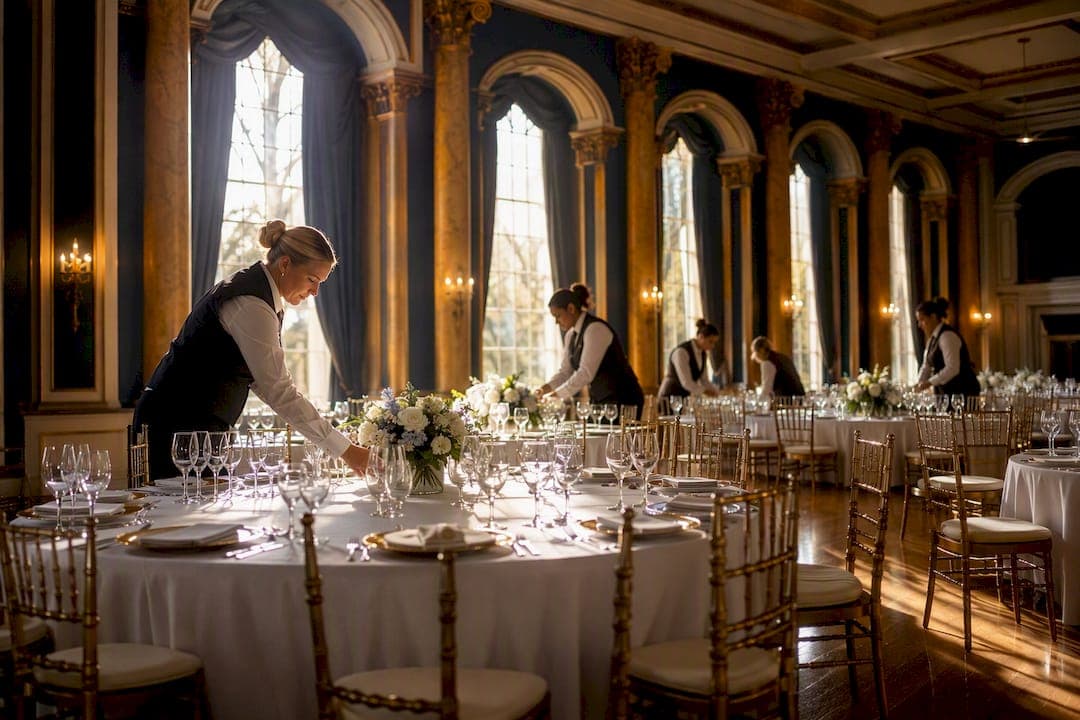
Catering staffing includes servers, bartenders, food runners, bussers, kitchen support, and an event captain to oversee the room. The exact headcount shifts with service style, guest count, course complexity, and how fast you want the room to move.
A few quick ratios make this concrete:
- Plated dinner service: approximately 1 server for every 10 to 12 guests
- Cocktail or tray-passed events: approximately 1 server for every 20 to 30 guests
- Bar service: approximately 1 bartender for every 75 to 100 guests
Statistic to remember: any event running five or more staff needs a dedicated captain or service lead to manage timing and troubleshoot without waiting for a guest to notice a problem first.
Key Takeaways
Catering staffing works when the team mix matches your service style, guest count, and course complexity, not a fixed formula.
| Point | Details |
|---|---|
| Core roles | Servers, bartenders, food runners, bussers, kitchen support, and a captain form the standard team. |
| Ratios shift by style | Plated dinners run about 1 server per 10 to 12 guests; cocktail events run closer to 1 per 20 to 30. |
| Captain becomes essential at scale | Any event with five or more staff needs a dedicated lead managing timing and troubleshooting. |
| Build in backup staff | Float workers covering roughly 1 per 8 to 10 booked staff protect against last-minute no-shows. |
| Menu complexity drives headcount | Multi-course plated menus and multi-station buffets need more staff than simple, single-line service. |
Table of Contents
- Why Do You Need Backup Staff and No-Show Coverage?
- How Does Event Size Change Your Staffing Needs?
- What Should You Staff Differently for Weddings, Corporate Events, and Private Parties?
- How Should Catering Staff Coordinate With Venue Staff?
- Does Menu Complexity Really Change Your Staffing Count?
- What Do the Core Catering Roles Actually Do?
- How Does Service Style Change Your Staffing Mix?
- How Do You Turn a Guest Count Into a Staffing Number?
- When Should You Book Staff, and What Belongs in the Contract?
- Who Handles Setup, Service, and Breakdown?
- What Should You Ask Before You Book a Caterer?
- How Does a Real Venue Plan Staffing for a Large Event?
- What Most Planners Get Wrong About Catering Staffing
- Sources
- FAQ
Why Do You Need Backup Staff and No-Show Coverage?
Staff cancel. Cars break down, people get sick, and a caterer who books exactly the number of workers a 150-guest wedding requires has no margin when one server calls in an hour before doors open. Professional staffing operators budget for this by keeping float staff, extra workers who aren't assigned a fixed station and can slide into any gap that opens up.
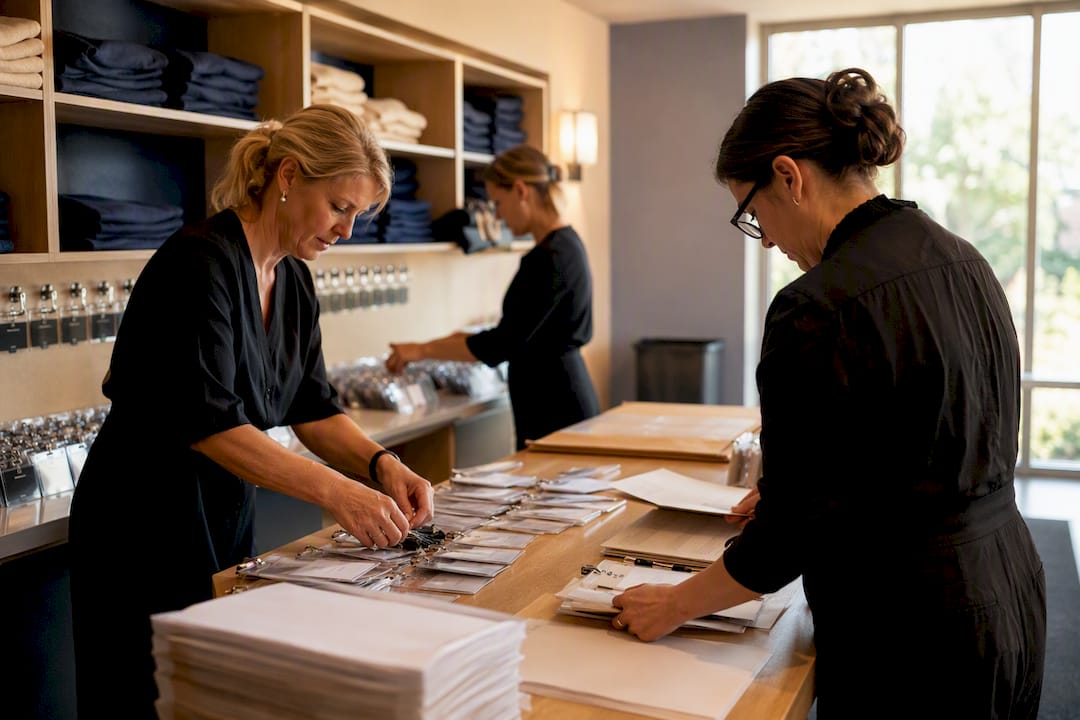
A reasonable contingency plan adds one float worker for every 8 to 10 booked staff, more on holiday weekends when part-time catering workers have competing gigs. This matters most during peak wedding season (May through October in most of the country) and around major holidays, when staffing agencies see the highest rate of last-minute drop-offs.
Ask your caterer directly: what happens if a server doesn't show? A vague answer, or one that shrugs and says "we'll figure it out," is a red flag. A solid answer names a specific on-call list, a shift lead who reassigns tasks in real time, or a partnership with a staffing agency that can send a replacement within an hour. Build this question into your contract conversation, not into a panicked phone call the morning of your event.
Float staff cost somewhat more upfront. They cost far less than a stalled dinner service or a bar with no one behind it during cocktail hour.
How Does Event Size Change Your Staffing Needs?
A 40-guest backyard dinner and a 300-guest gala don't just need different quantities of the same roles. They need a different shape of team entirely.
Small events (under 50 guests) often run on multi-role staff. One person might set up the buffet, serve, and bus tables between courses. This keeps costs down and works fine because the timing pressure is low and one person can realistically see the whole room.
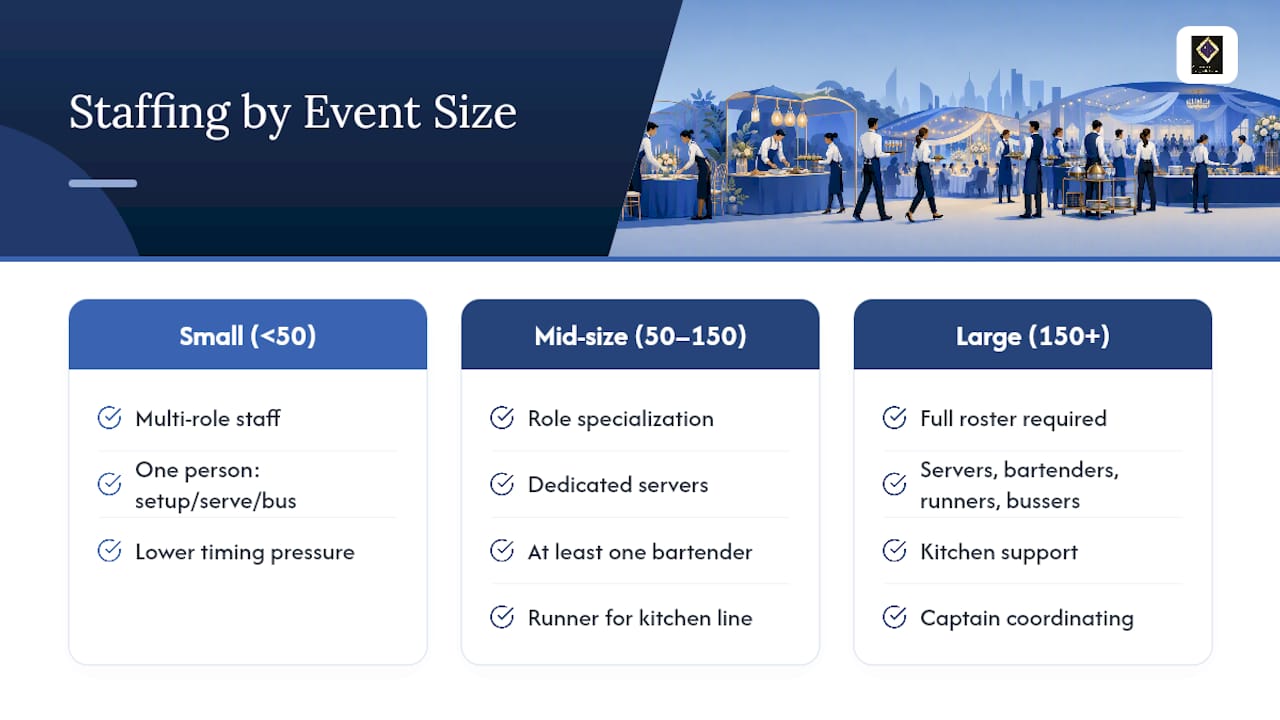
Mid-size events (50 to 150 guests) start requiring role specialization. You'll want dedicated servers, at least one bartender, and a runner feeding the kitchen line, because no single worker can cover setup, service, and cleanup without something slipping.
Large events (150 to 200-plus guests, near the capacity many banquet halls handle) need the full roster: servers, bartenders, runners, bussers, kitchen support, and a captain coordinating all of it. Duration matters too. A four-hour reception needs a different staffing rhythm than an eight-hour wedding with a cocktail hour, dinner, and a late-night dessert station, since the same staff working eight hours need meal breaks and shift overlaps built into the schedule.
What Should You Staff Differently for Weddings, Corporate Events, and Private Parties?
Weddings carry emotional weight and moving parts that corporate events don't. Cake cutting, a first dance that pauses food service, a receiving line that bunches guests near the bar. Wedding staffing typically adds a dedicated staff member for cake service and someone briefed specifically on the couple's timeline, so service doesn't collide with the toast.
Corporate events run on the clock in a different way. A lunch-and-learn or awards dinner usually has a hard end time tied to a flight schedule or a follow-on meeting, so staffing leans toward speed and predictability over ceremony. Buffet or family-style service with strong attendant coverage often works better than a slow plated sequence.
Private parties (milestone birthdays, anniversaries, holiday gatherings) tend to be smaller and more flexible, but they still benefit from at least one designated lead if the guest count crosses 40 or 50. Hosts underestimate how much they end up doing themselves when nobody on staff is explicitly in charge of the room.
Across all three, dietary restrictions and food allergies need one clear owner. Someone on staff, usually the captain, should know which guests have allergy notes before service starts, not learn about it mid-course from a panicked guest.
How Should Catering Staff Coordinate With Venue Staff?
Miscommunication between the catering team and the venue is one of the most common sources of day-of delays, and it's almost entirely preventable with a walkthrough before the event.
Venue staff typically control the building: room setup timing, access windows, HVAC, security, and sometimes AV. Catering staff control the food and beverage experience. The friction shows up when nobody confirms which side handles what, like who sets up tables and linens (often venue), who stages chafing dishes and bar equipment (caterer), and who's responsible for trash removal during service.
A short pre-event call or walkthrough should nail down four things: kitchen access windows, load-in and load-out times, where catering staff park and stage equipment, and who the on-site point of contact is for each team. Venues with an in-house commercial kitchen simplify this considerably, since the caterer isn't hauling in portable cooking equipment or negotiating for stove access.
The Ambassador Club's commercial kitchen setup checklist covers this kind of coordination from the venue side, including staging areas and service flow. Getting this right before the event saves you from watching two teams figure out logistics in real time while your guests wait for dinner.
Does Menu Complexity Really Change Your Staffing Count?
Yes, and planners underestimate this more than any other variable. A three-course plated dinner with a choice of protein needs meaningfully more staff than a single-entree buffet for the same guest count, because every extra course multiplies the number of timed touchpoints.
Think about what a server actually does during a four-course plated meal: deliver each course, time it against the kitchen's pace, clear plates before the next course lands, and manage special dietary swaps without disrupting the table. Each additional course adds a full cycle of that work. A wedding with a plated salad, soup, entree, and dessert can require close to double the service staff of a simple two-course buffet at the same guest count.
Multiple food stations at a cocktail reception (a carving station, a raw bar, a pasta station) each need their own attendant, separate from the tray passers working the room. A reception with four stations and tray-passed hors d'oeuvres needs more staff than one with a single buffet line, even at identical guest counts.
Kitchen complexity matters just as much as front-of-house complexity. A menu with items requiring last-minute plating or temperature-sensitive finishing needs more kitchen support staff than a menu built around dishes that hold well. When you're comparing catering quotes, ask what's actually on the menu before you compare staffing numbers. Two quotes with the same headcount can represent very different levels of coverage.
What Do the Core Catering Roles Actually Do?
Every role on a catering roster has a specific job, and knowing the difference helps you spot gaps in a proposal before you sign it.
- Servers deliver plated food, take drink orders where applicable, and clear courses at plated events.
- Tray passers circulate through cocktail receptions carrying hors d'oeuvres, a role that only exists at events with a passed (not stationary) appetizer format.
- Buffet attendants staff serving lines, replenish chafing dishes, and keep the line moving so guests aren't stuck waiting.
- Food runners shuttle plates from kitchen to server, the connective tissue between back-of-house and front-of-house that keeps plated service from bottlenecking.
- Bussers clear and reset tables, usually working just behind the servers rather than interacting much with guests.
- Bartenders build and pour drinks and, at higher-end events, manage bar inventory during service.
- Kitchen support staff handle prep, plating, and dishwashing, work that stays invisible to guests but determines how fast everything else moves.
- The event captain doesn't serve tables directly. They manage timing, liaise with the kitchen, and troubleshoot problems before a guest ever notices something went wrong.
Overlap happens constantly at smaller events, where one worker might run trays during cocktail hour then bus tables during dinner. At a wedding, cake service is a good example of a task that needs a clear owner. Sometimes a server handles it, sometimes it's the captain, but someone should be assigned before the reception starts, not decided in the moment. The same goes for dietary requests: whoever takes them needs a direct line to the kitchen, not a guess.
How Does Service Style Change Your Staffing Mix?
- Plated service demands the tightest server-to-guest ratios, roughly one server per 10 to 12 guests, because timing and simultaneous plate delivery to a full table matter more than in any other format.
- Buffet or station service shifts the emphasis toward attendants who manage replenishment, chafing dish temperature, and line speed rather than table-side timing. You'll typically want fewer servers but dedicated attendants at each station.
- Family-style or shared-plate service needs extra runners and bussers, since large platters land on the table and get cleared more often than individual plates do.
- Cocktail and tray-passed events flip the model entirely, adding more tray passers and cutting the number of traditional plated servers, while bar staffing needs often go up since cocktail hours concentrate drink orders into a short window.
Ratio to note: bar service generally runs about one bartender per 75 to 100 guests, but a cocktail-heavy reception with a full bar (rather than a simple wine-and-beer setup) often needs a lower ratio to avoid a line forming five minutes into the party.
How Do You Turn a Guest Count Into a Staffing Number?
Start with your service style ratio, then layer in support roles rather than treating servers as the whole headcount.
- Plated dinner for 100: about 8 to 10 servers, 2 to 3 bussers, 2 runners, and 1 captain.
- Buffet for 100: about 5 to 6 attendants and servers combined, 2 bussers, and 1 captain.
- Cocktail reception for 100: about 4 to 5 tray passers, 2 bartenders, and 1 captain if the event runs longer than two hours.
A worked example: a 120-guest plated dinner typically lands around 10 servers, 3 bussers, 2 runners, and 1 captain, roughly 16 staff total, before kitchen support is added.
Pro Tip: Ask your caterer to break down the quote by role, not just total headcount. A proposal that lists "12 staff" without specifying how many are servers versus kitchen support makes it impossible to compare against another quote fairly.
When Should You Book Staff, and What Belongs in the Contract?
- Book small events (under 50 guests) at least 4 to 6 weeks out.
- Book mid-size events (50 to 150 guests) 8 to 12 weeks out, longer during peak wedding season.
- Book large events (150-plus guests) 3 to 4 months ahead, since qualified staff for big weddings and galas get claimed early.
Your contract should spell out call times, shift end times, overtime rates, and exactly what happens if a booked worker doesn't show. Confirm staging areas, kitchen access windows, and where staff check in on arrival well before the event date, ideally during a walkthrough rather than over email the week before.
Who Handles Setup, Service, and Breakdown?
Setup covers table and linen placement, plateware staging, buffet chafing dish arrangement, and bar setup, usually handled by a mix of venue staff and early-arriving catering crew. Service covers course timing, plating, wine and water service, and ongoing table clearing, the work most guests actually notice. Breakdown covers dishwashing, packing equipment, and a lost-and-found sweep of the room, duties commonly listed in standard catering job descriptions alongside station restocking and closing checklists.
- Setup: linens, plateware, chafing dishes, bar stock
- Service: course timing, plating, clearing, drink refills
- Breakdown: dishwashing, equipment packout, trash removal, lost-and-found
Cleanup and equipment breakdown are frequently billed as a separate line item from service staffing, so a quote that looks cheaper on headcount alone may be shifting that cost elsewhere.
Confirm in writing who owns each phase. A caterer who assumes the venue handles trash removal, paired with a venue that assumes the caterer does, leaves nobody actually doing it.
What Should You Ask Before You Book a Caterer?
- Who manages service flow on the day, and is a captain included in the quote?
- What exactly is covered under setup and breakdown, and what's billed separately?
- What's the backup plan if a staff member doesn't show?
- Can you provide proof of food handler certification for kitchen staff?
- What's your uniform and presentation standard for front-of-house staff?
Extra staff matter most at plated, multi-course events and cocktail receptions with several stations. You can often trim counts safely at simple buffet events with a short guest list. A caterer who can't clearly answer the backup-staffing question, or who dodges the certification question, is worth reconsidering. Resources like Wild Foodz's hospitality service guide outline the certification and presentation standards worth holding any provider to.
How Does a Real Venue Plan Staffing for a Large Event?
A historic hall with a full commercial kitchen changes the staffing math because caterers aren't hauling in cooking equipment or negotiating stove access on arrival.
For a 150 to 200-guest plated wedding, a typical plan includes multiple servers, bussers, runners, bartenders, and a captain. A 200-person buffet corporate event usually has fewer plated-service roles, replaced by buffet attendants and servers, with bartenders and a captain managing the event timeline.
- Venue typically provides: kitchen access, staging space, tables and dance floor
- Caterer typically supplies: staffing, food, service equipment, and post-event cleanup coordination
Figure worth noting: a 6,000 sq ft hall accommodating up to 200 guests gives caterers enough staging room to run a full-service plated event without cramming kitchen support into a hallway.
What Most Planners Get Wrong About Catering Staffing
Most staffing advice treats ratios as rules instead of starting points, and that's the biggest mistake I see in how this topic gets discussed. A ratio of one server per 10 guests works fine for a straightforward two-course dinner. It falls apart the moment you add a fourth course, a tight venue turnover time, or a wedding timeline with a first dance interrupting service.
The conventional advice also underweights the captain role, treating it as optional overhead rather than the person who prevents a dozen small delays from becoming one visible disaster. Any event running more than five staff without a designated lead is running without a safety net, whether or not the client realizes it.
If you take one thing from this guide, prioritize getting your service style and course count locked before you ask for a staffing quote. Everything else, the ratios, the contingency staff, the contract language, follows from that decision. Planners who nail down the menu and format first get accurate quotes. Planners who ask "how many staff do I need" without answering that question first get guesses.
— MARTIN
Sources
- Catering Job Description Sample | Monster.com
- What does a caterer do? (Plus salary and requirements) | Indeed
- 7 essential roles & responsibilities of catering staff in any event | RunwayWaiters
- Catering staff — ZipRecruiter explanation
FAQ
What Does a Catering Staff Consist Of?
A catering staff typically consists of servers, bartenders, food runners, bussers, kitchen support staff, and an event captain who manages timing and coordination on-site.
What Are the Responsibilities of Catering Staff?
Catering staff handle setup (linens, plateware, bar and buffet stations), service (plating, timing, clearing, drink service), and breakdown (dishwashing, equipment packout, and site cleanup).
How Many Catering Staff Do I Need?
It depends on service style and guest count: plated dinners need roughly 1 server per 10 to 12 guests, while cocktail or buffet events can run closer to 1 per 20 to 30, with a captain added once staff totals exceed five.
What Are the Main Functions of Catering?
Catering functions generally cover menu planning and food preparation, delivery and setup, service execution, beverage service, staffing coordination, and post-event cleanup, roles job-board summaries describe as often overlapping at smaller events.