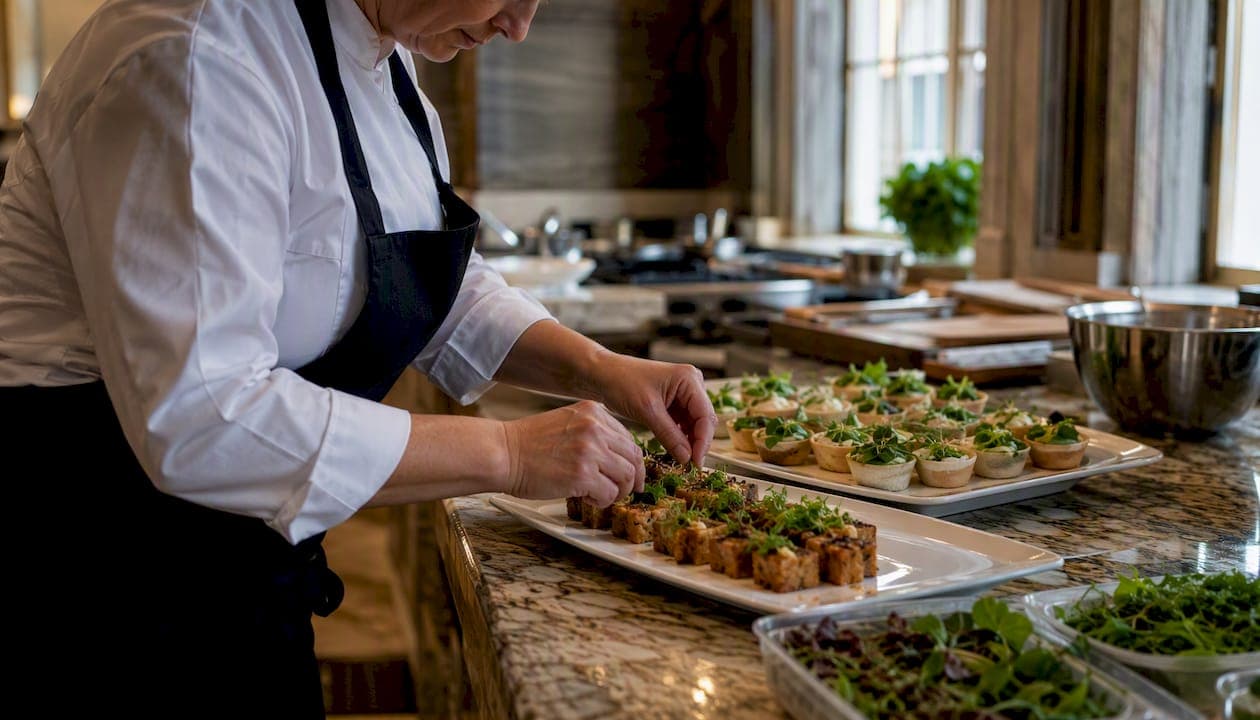
Plan a venue-hosted family celebration menu in six steps: confirm venue catering policies, lock your guest count, choose a service style, calculate portions, coordinate the logistics timeline, then finalize contracts and tastings. Following a stepwise menu-planning process reduces last-minute changes and keeps food service running smoothly on the day.
Quick-reference checklist:
- Confirm venue catering rules, kitchen access, and vendor requirements
- Set a realistic guest count with a 5–10% buffer and break it into categories
- Choose service style (plated, buffet, family-style, or stations) and build the menu around it
- Calculate per-person portions for every course and beverage
- Build a food timeline and share it with the venue and caterer
- Finalize contracts, run a tasting, and confirm day-of contacts
Venues like Ambassadorclubportsmouth in Portsmouth, VA, offer a full commercial kitchen and flexible catering policies that make each of these steps easier to execute.
Key Takeaways
A reliable family celebration menu starts with venue policy confirmation and ends with a signed contract, a completed tasting, and a shared day-of contact list.
| Point | Details |
|---|---|
| Confirm venue rules first | Kitchen access, outside-caterer policies, and vendor insurance must be verified before menu planning begins. |
| Build in a 5–10% guest buffer | Add 5–10% over your confirmed RSVP count to protect against last-minute additions and prevent shortages. |
| Buffets need ~20% more food | Buffet service requires roughly 20% more total food than plated service to keep lines full throughout the event. |
| Lock head count 10–14 days out | Submit the final guest count to your caterer and venue 10–14 days before the event to avoid overage charges. |
| Ambassadorclubportsmouth simplifies coordination | The venue's commercial kitchen, flexible catering policies, and package amenities reduce planning complexity for hosts booking events in Portsmouth, VA. |
Table of Contents
- 1. Understand the venue's catering rules before you plan anything
- 2. Set a reliable guest count and convert it into a budget
- 3. Choose a service style that fits your event tone and venue layout
- 4. Calculate per-person portions for every course
- 5. Plan for dietary restrictions and label every dish
- 6. Build a food timeline and coordinate it with both vendors
- 7. Confirm equipment, rentals, and staffing ratios
- 8. Follow food-safety holding temperatures during service
- 9. Use these tactics to keep catering costs under control
- 10. Finalize contracts, run a tasting, and confirm day-of contacts
- What venue hosts often get wrong about menu planning
- Ambassadorclubportsmouth makes venue-hosted menu planning simpler
- Sources
- FAQ
1. Understand the venue's catering rules before you plan anything
Different venues carry different policies for outside caterers, kitchen access, and vendor requirements. Sorting this out before you build a single menu idea saves you from redesigning everything later.
Confirm these specifics with the venue coordinator:
- In-house catering only, or can you bring an outside vendor?
- Kitchen access windows (when can the caterer arrive and when must they be out?)
- Required vendor insurance certificates and food-handler certifications
- Alcohol service rules and whether the venue holds the liquor license
- Load-in and load-out logistics, including elevator or dock access
A full commercial kitchen changes what your caterer can cook on-site versus what must arrive pre-prepared. A warming pantry, by contrast, limits you to dishes that hold well at temperature. Understanding venue catering options before you finalize a menu prevents mismatches between what you want to serve and what the space can actually support.
Pro Tip: Ask the venue for a kitchen diagram, their preferred-vendor list, and a written vendor-access timeline. That single document eliminates most load-in confusion.
Ambassadorclubportsmouth's 6,000 sq ft hall includes a full commercial kitchen and accepts outside caterers, which gives hosts genuine flexibility without the usual vendor headaches.
2. Set a reliable guest count and convert it into a budget
Categorizing attendees and building in a 5–10% buffer is the single most reliable way to avoid running short on food or overspending on portions you don't need.
Break your guest list into planning categories:
- Adults vs. children (children typically eat 50–60% of an adult portion)
- Dietary categories: vegetarian, vegan, gluten-free, nut-free, halal/kosher
- Confirmed RSVPs vs. likely-to-attend vs. maybes
A simple worked example: 80 confirmed RSVPs plus a 10% buffer equals 88 portions to order. If 15 of those guests are children, you order 73 full adult portions and 15 reduced portions. That breakdown lets the caterer price accurately and prevents a scramble when three extra cousins show up.
Lock the final head count with your caterer and venue 10–14 days before the event. Most venues require a final number by that point to confirm staffing and food orders. Missing that window often triggers overage charges or forces last-minute substitutions.
3. Choose a service style that fits your event tone and venue layout
Service style directly affects staffing needs, food volume, and guest flow, so this decision shapes the entire menu structure.
| Service Style | Guest Experience | Staffing Need | Food Volume | Best Fit |
|---|---|---|---|---|
| Plated | Formal, controlled pacing | Higher (one server per around 8 to 10 guests) | Precise portions | Formal anniversary, wedding reception |
| Buffet | Casual, guest-directed | Lower (one per 25–30 guests) | ~20% more than plated | Reunions, large family gatherings |
| Family-style | Warm, communal | Moderate | Shared platters per table | Milestone birthdays, casual celebrations |
| Stations | Interactive, social | Moderate-high (staff per station) | Variable by station | Cocktail receptions, mixed-age events |
Three quick menu-structure examples by event tone:
- Formal anniversary (plated): passed appetizers during cocktail hour, two entrée choices (beef/fish), one vegetarian option, plated dessert
- Casual reunion (buffet/stations): salad station, two protein mains, three sides, dessert table
- Milestone birthday (family-style): shared starters, two large-format proteins, four sides per table, cake service
Interactive stations add engagement but require additional floor space and dedicated staff. Factor that into your venue layout conversation early.
4. Calculate per-person portions for every course
Standard portion guidelines give you the numbers to convert a guest count into actual food quantities. Buffets typically require about 20% more total food than plated service to keep lines looking full for later guests.
| Course | Plated (per person) | Buffet (per person) |
|---|---|---|
| Cocktail appetizers | 3–4 pieces/hour | 4–5 pieces/hour |
| Cocktail-only event | 8–12 pieces total | 10–14 pieces total |
| Main entrée | 6–8 oz protein | 8–10 oz protein |
| Sides | 4–5 oz per side (2 sides) | 5–6 oz per side (3 sides) |
| Dessert | 1 standard serving | 1 serving |
| Non-alcoholic beverages | 2–3 drinks/hour | 2–3 drinks/hour |
| Alcoholic beverages | 1–2 drinks/hour | 1–2 drinks/hour |
Pro Tip: When offering two entrée choices, order on a 60/40 split favoring the more popular option. If you expect 100 guests and beef and chicken are the choices, order 60 beef and 40 chicken — then add your 10% buffer on top.
Children eat less; late-night crowds and outdoor summer events eat more. Flag both to your caterer when you share the guest breakdown.
5. Plan for dietary restrictions and label every dish
For family events, plan at least one meat, one fish, and one vegetarian option and include child-friendly dishes. Clear labeling reduces host stress and keeps guests with allergies safe.
Default portions to reserve by dietary category:
- Vegetarian/vegan: 10–15% of total portions unless your RSVP data says otherwise
- Gluten-free: 5–8% of total portions
- Nut-free: flag the entire menu to the caterer; cross-contact prevention is the priority
Labeling best practices:
- Use tent cards at buffet stations with the dish name, main ingredients, and allergen icons
- Mark the top eight allergens (milk, eggs, fish, shellfish, tree nuts, peanuts, wheat, soybeans) using standard icons
- For plated menus, include a printed menu card at each place setting
Sample buffet label text you can copy:
Herb-Roasted Chicken | Contains: None of the top 8 allergens | Gluten-free | Ask staff about preparation
Cross-contact prevention starts before service: caterers should use separate utensils, cutting boards, and prep surfaces for allergen-sensitive dishes. Ask your caterer to confirm this in writing.
Pro Tip: Assign one staff member at the buffet specifically to answer allergen questions. It takes one person off general service but prevents a serious incident.
6. Build a food timeline and coordinate it with both vendors
Early coordination between venue and caterer prevents the most common day-of problems: kitchen access conflicts, power needs, and vendor overlap.
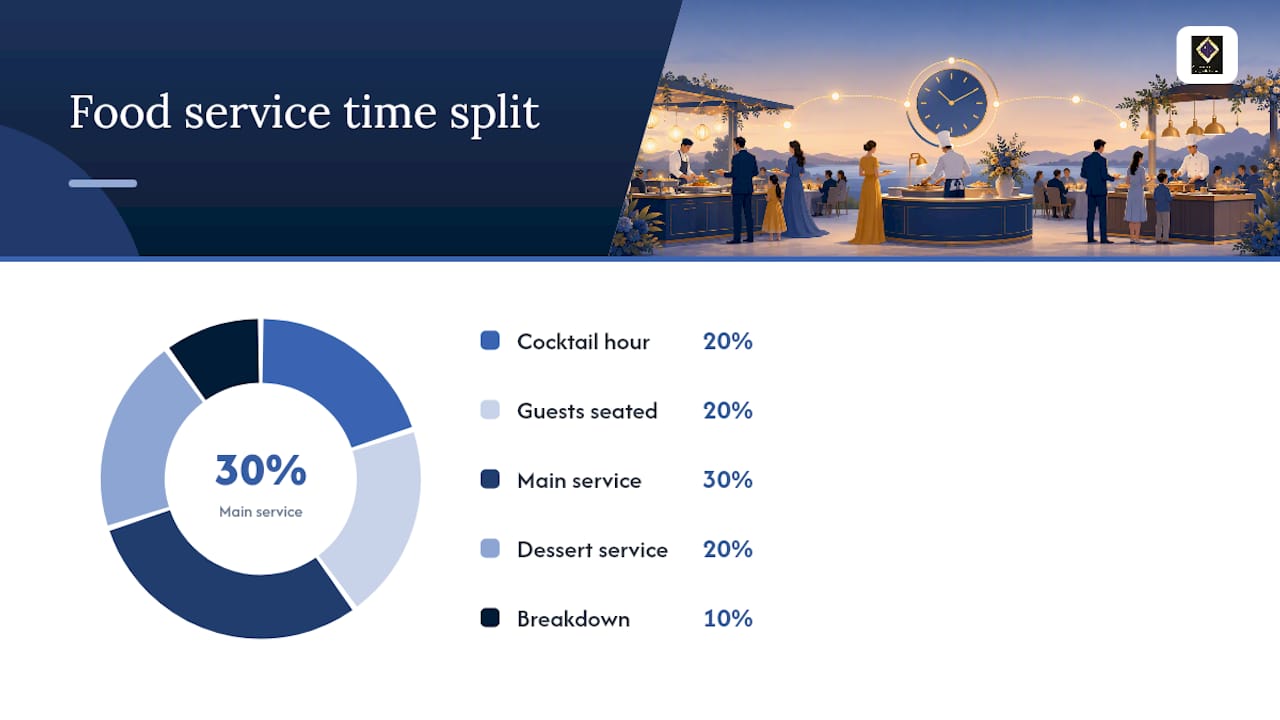
Sample timeline for a 5-hour celebration (4:00 PM–9:00 PM):
- 2:00 PM — Caterer arrives; venue coordinator confirms kitchen access and power outlets
- 3:00 PM — Setup complete; warmers on, cold items in refrigeration
- 4:00 PM — Doors open; cocktail hour begins, passed appetizers in service
- 5:00 PM — Guests seated; first course or buffet opens
- 6:00 PM — Main service; align with toasts and speeches (pause service during toasts)
- 7:30 PM — Dessert service; cake cutting if applicable
- 8:30 PM — Buffet closed; caterer begins breakdown
- 9:00 PM — Event ends; venue cleanup begins
Vendor confirmation checklist before the event:
- Load-in time confirmed in writing with venue
- Power outlet locations and amperage verified with caterer
- Staging space for warmers and cold storage confirmed
- Caterer lead's cell number shared with venue coordinator
- Backup plan for late deliveries documented
Align food service pauses with ceremony moments. Cold plates during a 20-minute speech are avoidable with a simple heads-up to the catering lead.
7. Confirm equipment, rentals, and staffing ratios
What the venue provides versus what you must rent determines both your budget and your setup complexity. A venue with a full commercial kitchen reduces rental needs significantly.
Common rental items when the venue lacks full kitchen support:
- Chafers and fuel cans for hot-holding
- Portable refrigeration units for cold storage
- Beverage dispensers and ice bins
- Serviceware (plates, flatware, glassware) if not venue-provided
- Portable dishwashing station for longer events
Staffing ratios to use as a baseline:
- Plated dinner: 1 server per 8–10 guests
- Buffet service: 1 server per 25–30 guests
- Bar service: 1 bartender per 50 guests (alcoholic); 1 per 75 for non-alcoholic only
Outside bartenders often require a licensed alcohol server certification in Virginia. Confirm permit and insurance requirements with the venue before hiring independently. The catering space layout also affects how many staff you need to move food efficiently from kitchen to table.
8. Follow food-safety holding temperatures during service
Safe food handling at a catered event means keeping hot food hot and cold food cold throughout the entire service window.
| Food Type | Safe Holding Temp | Maximum Hold Time |
|---|---|---|
| Hot foods (meats, casseroles, soups) | 140°F or above | 4 hours |
| Cold foods (salads, dips, cut fruit) | 40°F or below | 4 hours |
| Danger zone (do not hold food here) | 40°F–140°F | 2 hours maximum |
Practical steps for buffet service:
- Check chafer temperatures with a probe thermometer every 30–60 minutes
- Replenish buffet pans with fresh hot food rather than topping off depleted ones
- Remove cold items from ice beds and replace ice if it melts below the food container level
- Label all food items with the time they were set out
Ask your caterer to confirm USDA food-safety compliance, including whether staff hold current food-handler certifications. Local health department requirements in Virginia may also apply to catered events at rented venues.
9. Use these tactics to keep catering costs under control
Seasonal and local ingredients cost less and hold better than out-of-season imports. That single swap can reduce food costs noticeably without touching quality.
Cost-saving tactics that work at venue-hosted events:
- Replace one premium protein with a mixed-protein option (e.g., chicken and beef skewers instead of filet mignon)
- Reduce course count from four to three; guests rarely miss a separate fish course at a family gathering
- Use shared platters (family-style) instead of individual plated portions to cut serviceware and labor
- Limit open-bar hours or switch to beer/wine only for the first two hours
- Negotiate package add-ons with the venue rather than sourcing rentals separately
For event catering cost savings, bundling venue amenities with catering coordination typically beats sourcing each vendor independently.
| Service Model | Typical Per-Head Shape | Notes |
|---|---|---|
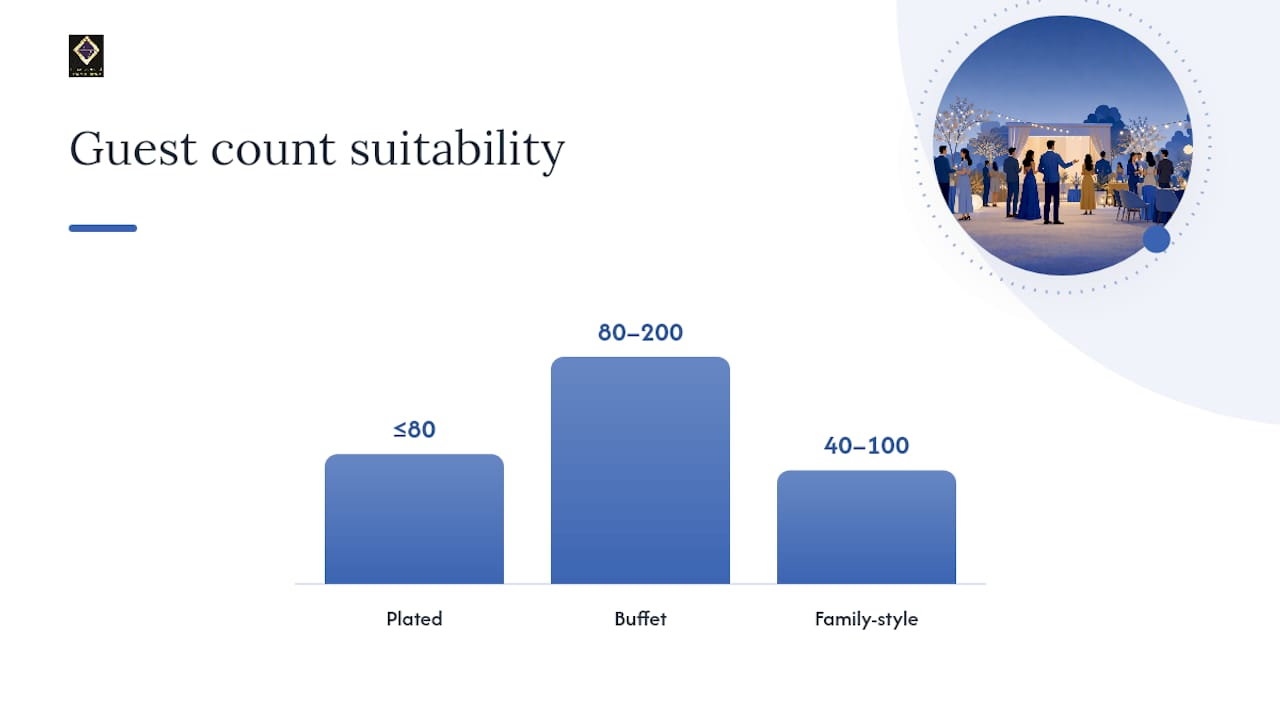
| Plated (3-course) | Higher labor, precise food cost | Best for formal events under 80 guests |
| Buffet (2 proteins, 3 sides) | Lower labor, higher food volume | Scales well for 80–200 guests |
| Family-style (shared platters) | Moderate labor, flexible food volume | Strong for 40–100 guests |
10. Finalize contracts, run a tasting, and confirm day-of contacts
A thorough finalization process locks in every detail and eliminates the most common sources of day-of confusion.
Final confirmation checklist (complete 7–10 days before the event):
- Finalized guest count submitted to caterer and venue
- Menu choices, portion allocations, and dietary accommodations confirmed in writing
- Beverage selections and bar setup confirmed
- Staffing numbers and arrival times confirmed with caterer
- Rental delivery and pickup windows confirmed
- Payment schedule reviewed and final balance noted
Contract clauses to verify before signing:
- Cancellation and rescheduling policy (what triggers a penalty and how much)
- Final head-count deadline and overage charge structure
- Who is liable for food-safety incidents during service
- Day-of change authorization (who can approve substitutions on-site)
- Cleanup responsibilities and timeline
At the tasting, bring your printed menu and note portion sizes against what you're served. If a plated entrée looks small for a four-hour event, say so then, not on the day. Build a day-of contact list and share it with everyone involved:
- Venue manager (name and cell)
- Caterer lead (name and cell)
- Rental company contact
- Family point person for guest questions
What venue hosts often get wrong about menu planning
Three issues come up repeatedly at events hosted in rented venues: timing misalignments between the caterer and the event program, insufficient power outlets for warmers and refrigeration, and unlabeled allergen items at the buffet.
The fix for all three is a vendor packet prepared before the event. It should include the full event timeline, a venue floor plan with outlet locations marked, the confirmed menu with allergen labels, and the day-of contact list. Hand it to the caterer lead and the venue coordinator at least 48 hours before the event. That one document eliminates most of the back-and-forth that slows setup and creates service gaps.
The other thing hosts underestimate: the gap between a tasting for two and service for 120. Portion sizes that looked generous at a private tasting can feel thin when a buffet line has been running for 45 minutes. Build the 10% buffer into your order and confirm with the caterer that replenishment pans are staged and ready.
Ambassadorclubportsmouth makes venue-hosted menu planning simpler
Planning a catered family celebration at a venue with a full commercial kitchen, flexible outside-caterer policies, and built-in amenities removes the most friction-heavy parts of this process. Ambassadorclubportsmouth has hosted events in Portsmouth, VA since 1933, and the 6,000 sq ft hall is built for exactly this kind of coordination.
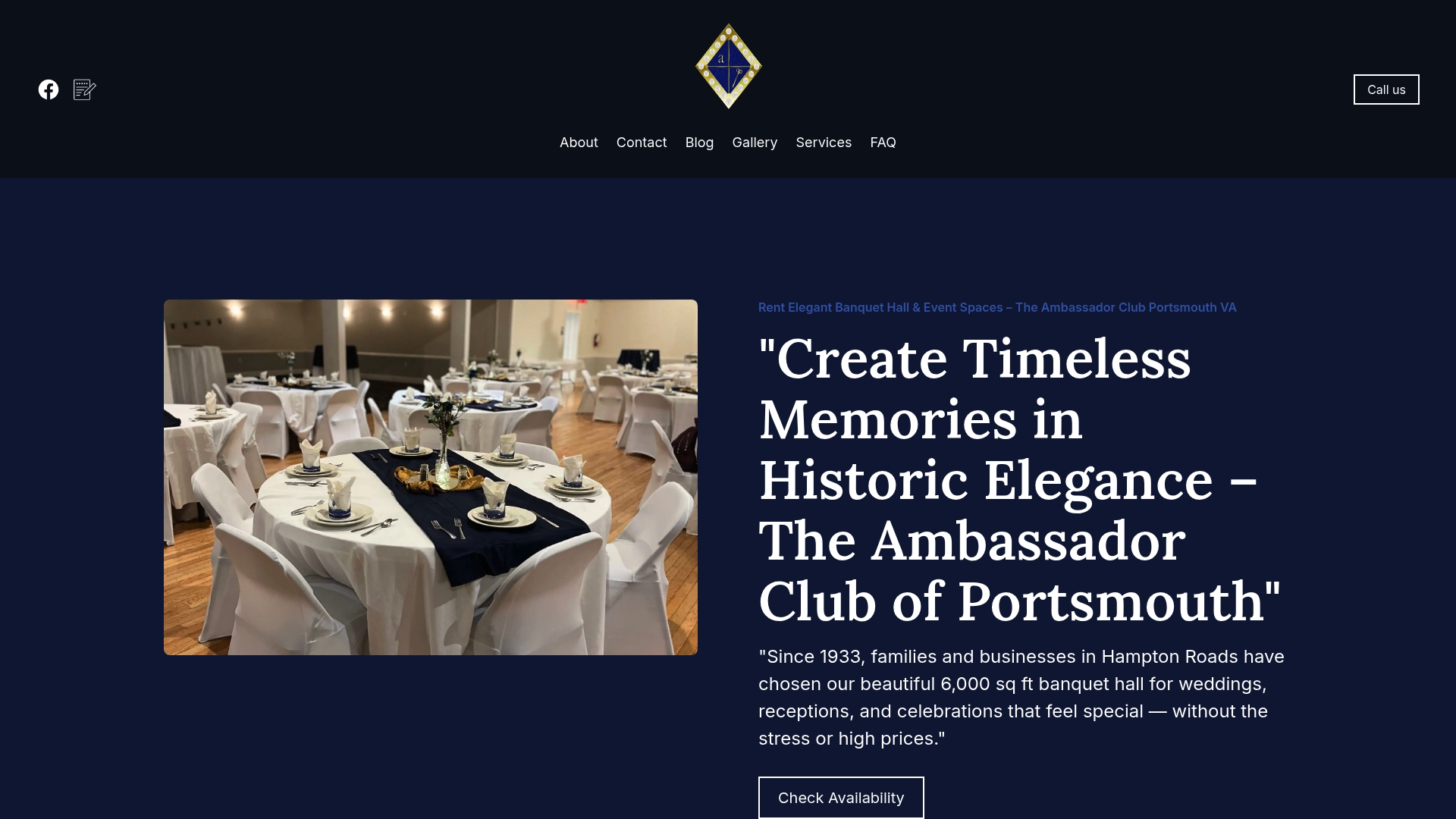
What the venue includes for hosts:
- Full commercial kitchen available to your caterer
- Tables, chairs, dry bar, and dance floor included
- Built-in projector and large projection wall
- Setup, cleaning, and security covered in packages
- Capacity for up to 200 guests
Flexible catering policies mean you can bring your preferred caterer or work with the venue's network. Either way, the kitchen is ready. Contact Ambassadorclubportsmouth to check availability and request a sample menu consultation for your event date.
Sources
- How to Coordinate Catering with Your Venue | Smokin' Bones
- Step-by-step guide on how to plan catering for large events
- How to plan a catering menu in 6 steps
- A step-by-step guide menu planning with your caterer
- Catering for Weddings in Grand Junction | Redlands Mesa
- Fsm
- Family event coming up? Here’s how to plan the food without the stress - Plyvine Catering
FAQ
How far in advance should you plan a catered family celebration menu?
Start the family celebration menu planning steps at least 8–12 weeks before the event. Lock the final menu and guest count 10–14 days out to avoid overage charges and last-minute substitutions.
How much food do you need per person for a buffet?
Plan for roughly 20% more total food on a buffet than you would for plated service, since later guests take larger portions to compensate for depleted trays. Use 8–10 oz of protein and 5–6 oz per side dish as a baseline per adult.
What dietary options should every family celebration menu include?
Plan at least one meat, one fish, and one vegetarian option, plus child-friendly dishes. Reserve 10–15% of portions as vegetarian/vegan and 5–8% as gluten-free unless your RSVP data indicates otherwise.
Does Ambassadorclubportsmouth allow outside caterers?
Yes. Ambassadorclubportsmouth offers flexible catering policies that allow outside vendors to use the venue's full commercial kitchen, which gives hosts control over menu choices without sacrificing kitchen capability.
What is the danger zone for food safety at catered events?
The danger zone is 40°F–140°F. Food held in that temperature range for more than two hours enters unsafe territory. Keep hot foods at 140°F or above and cold foods at 40°F or below throughout the entire service window.