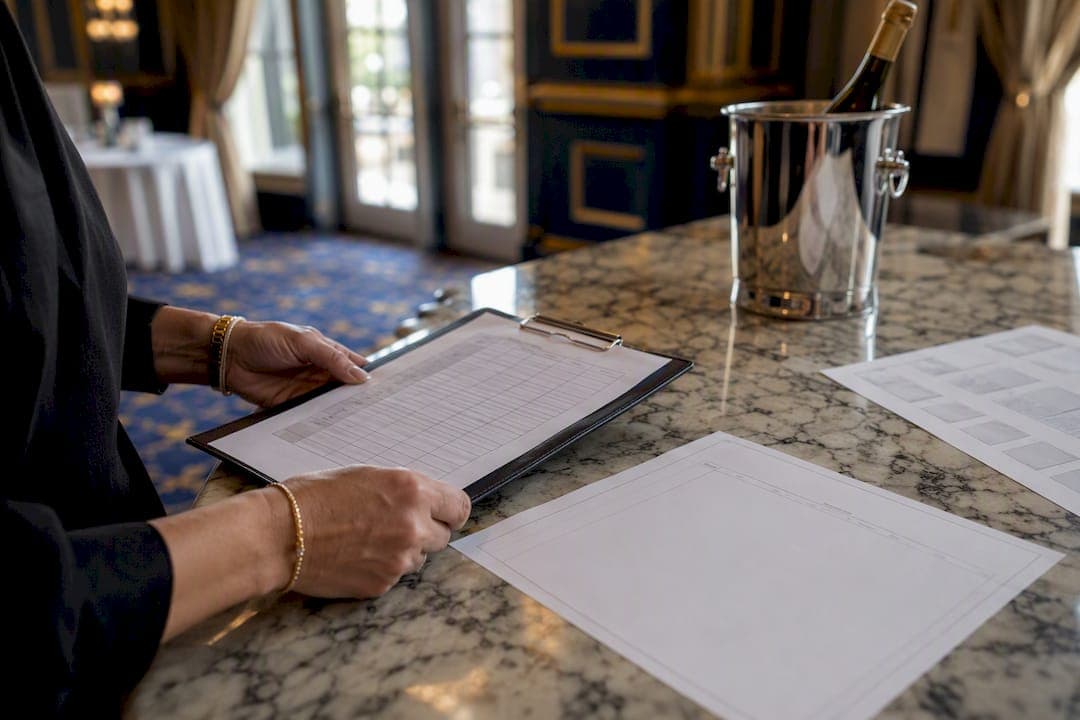
Event staffing includes five core role categories, guest services, hospitality, production, brand ambassadors, and security, plus the services a vendor wraps around them: recruiting, vetting, training, on-site team lead management, branded attire, and post-event reporting. That's the full package you should expect from any staffing quote, whether you're hiring three servers for a memorial or coordinating a 200-person corporate gala.
Before you sign anything, confirm these in writing:
- Specific roles and headcount per shift
- Uniform or dress code requirements
- Any required certifications (bartending licenses, AV credentials)
- A named on-site supervisor or team lead
- What post-event reporting looks like (photos, metrics, incident notes)
Vetting matters more than most planners realize. Some staffing networks report that less than 30% of applicants pass a multi-step vetting process, which tells you screening is tighter than it looks from the outside. That's the standard AmbassadorClubportsmouth expects when we advise clients booking staff for events in our hall.
Key Takeaways
Event staffing succeeds when roles, headcount, vetting, and reporting are confirmed in writing before the event, with a 10 to 15% staffing buffer built in.
| Point | Details |
|---|---|
| Confirm role categories early | Lock guest services, hospitality, production, brand, and security needs before requesting quotes. |
| Get inclusions in writing | Vetting, training, team lead management, and reporting should appear as line items, not verbal promises. |
| Plan headcount with buffers | Add a buffer above baseline ratios to cover no-shows and peak-hour demand. |
| Require documented vetting | Ask for a written vetting policy given tight pass rates in some networks. |
| Add a supervisor at scale | Events near or above 100 guests need an onsite lead managing real-time communication. |
Table of Contents
- What Does Event Staffing Include in Terms of Roles?
- What A Typical Staffing Booking Actually Includes
- How Many Staff Do You Actually Need?
- When Should You Book Event Staff?
- What Drives Event Staffing Costs?
- How Do Vendors Vet And Train Staff?
- Who Handles What On Event Day?
- What Specialized Roles Should You Consider?
- Checklist Before You Sign With A Staffing Vendor
- A Venue-Aware Take On Staffing Priorities
- Sources
- FAQ
What Does Event Staffing Include in Terms of Roles?
Every event breaks staffing into a handful of functional buckets, and knowing them helps you request the right mix instead of guessing.
- Guest services: registration, check-in, host or hostess duties, wayfinding
- Hospitality: servers, bartenders, catering assistants, buffet attendants
- Production and operations: load-in and load-out crews, stage hands, AV technicians
- Brand-facing roles: brand ambassadors, product demonstrators, sampling staff
- Security and crowd management: entrance control, bag checks, floor monitors
Guest services, hospitality, production, and specialized roles form the backbone of nearly every booking, according to staffing industry breakdowns. Roles overlap more than people expect. A floor manager at a banquet often does what a team lead does at a festival: watches timing, fields problems, and keeps the client informed. A conference needs heavy registration staffing and light bartending; a wedding reception flips that ratio. Ask for specialists when the event calls for it, bilingual staff for multicultural guest lists, licensed bartenders where local law requires it, or certified AV techs for anything with a stage and a sound system.
What A Typical Staffing Booking Actually Includes
A staffing quote is more than warm bodies showing up on the day. A typical booking includes recruiting and candidate curation, background checks, custom brand training, on-site team lead management, branded attire coordination, and post event reporting. That's the baseline you should hold every vendor to.
Here's what tends to be bundled in versus billed separately:
- Usually included: sourcing, identity verification, interviews, product or brand training, shift supervision, wardrobe coordination
- Often billed as add-ons: staff travel beyond a local radius, overtime past scheduled hours, specialty equipment, rush certifications
Pro Tip: Ask the vendor to itemize every inclusion on the quote itself, not just describe it verbally, and get the name and direct phone number of whoever handles on-site escalation if something goes sideways mid-event.
If your event runs through a commercial kitchen, understanding catering coordination alongside your staffing plan keeps service timing tight.
How Many Staff Do You Actually Need?
There's no universal formula, but a few ratios hold up across most event types.
- One check-in agent per roughly 50 to 75 guests for standard registration
- One server per roughly 20 to 25 guests for plated service; one per 30 to 40 for buffet
- One bartender per roughly 50 to 75 guests, depending on drink complexity
- One security or crowd staffer per roughly 75 to 100 guests at events with alcohol
A quick sample: for 150 guests with a buffet dinner and open bar, that's roughly two check-in agents, four to five servers, two bartenders, and one floater to cover breaks and surprises.
- Build in a staffing buffer for no-shows and peak-hour crunches
- Once guest count approaches or exceeds 100, add an onsite supervisor or event captain to manage real-time communication
Pro Tip: Round headcount up, not down. An extra server costs far less than a stalled buffet line during your keynote.
When Should You Book Event Staff?
Booking early protects you from the scramble that happens when a vendor's roster fills up. For a standard local event, start requesting staff four to six weeks out. For multi-city activations or anything requiring specialized certifications, push that to eight to twelve weeks.
Calendar these milestones:
- Initial staffing request and role list submitted
- Candidate shortlist reviewed and confirmed
- Contracts and shift confirmations signed
- Uniform and attire orders finalized
- Final roster locked and pre-event briefing scheduled
- Day-of call times distributed to every team member
Smaller weddings and family gatherings can move faster; booking an event hall for a wedding often means locking staffing at the same time you confirm your venue date.
What Drives Event Staffing Costs?
Pricing swings on a handful of predictable factors: role skill level, local market rates, total event hours, how last-minute the booking is, and whether staff need certifications. Overtime and rush fees can add up fast if you book inside a two-week window.
Most vendors price one of a few ways:
- Per-hour, per-role rates, common for smaller single-day events
- Flat shift rates, often used for standardized roles like registration or bartending
- Package pricing that bundles a full team (servers, bartenders, a lead) into one quote
- Volume discounts for organizations running staff across multiple markets or dates
Before you accept a number, confirm what it covers. Registration teams, hospitality staff, technical support, and setup crews are the services organizers should expect built into a comprehensive quote, not tacked on afterward. Watch for taxes, payroll fees, and uniform costs quietly added as separate line items. If catering is part of your event, cost-saving strategies for event catering can offset some of what you spend on hospitality staffing.
How Do Vendors Vet And Train Staff?
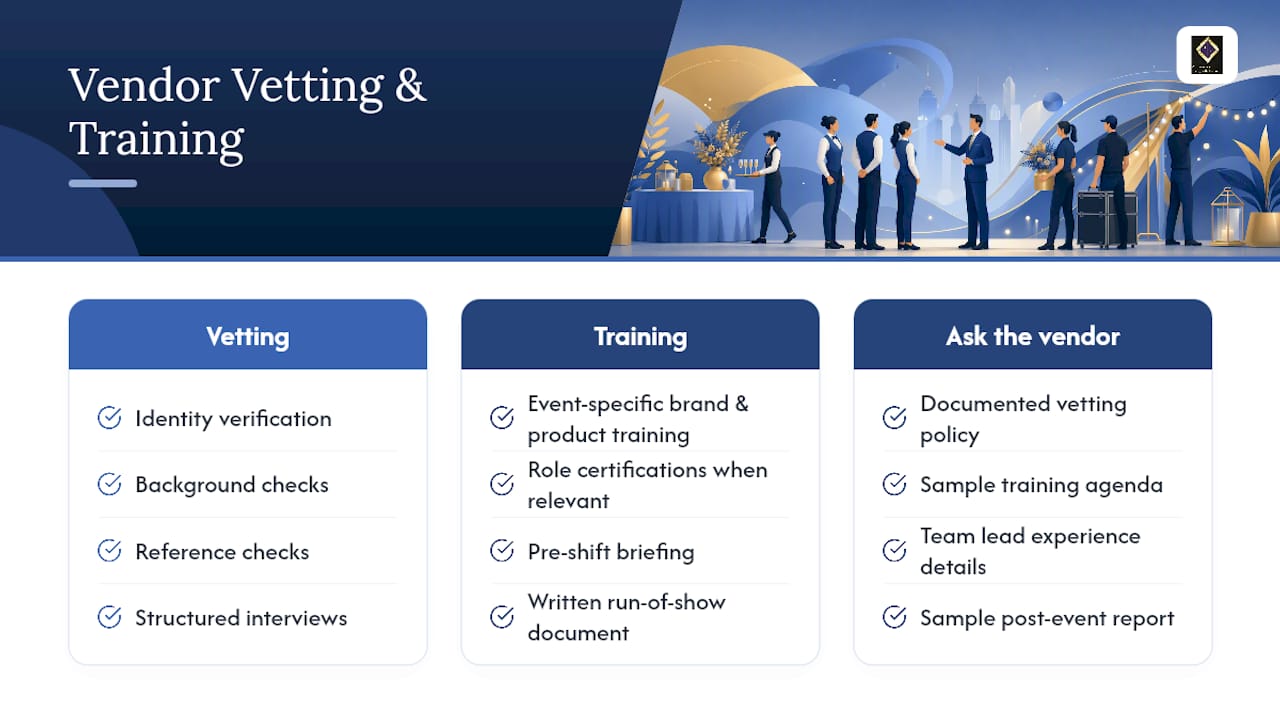
Vetting is where a staffing partner earns its reputation, and it's worth asking hard questions here before you sign. Standard steps include identity verification, background checks, reference checks, structured interviews, and skill assessments matched to the role, bartenders get different testing than registration staff.
Training should go beyond a five-minute pep talk. Expect brand and product training specific to your event, role certifications where relevant, a pre-shift briefing, and a written run-of-show document every staffer can reference.
Ask any vendor for their documented vetting policy, a sample training agenda, details on their team lead's experience level, and an actual sample of a past post-event report. If they hesitate on any of those four, that's your answer.
Many staffing guides recommend floaters, team leads, and documented run-of-show briefings specifically to handle the peak-demand moments that catch under-prepared teams off guard.
Who Handles What On Event Day?
Clear ownership prevents the finger-pointing that happens when something breaks mid-event.
| Role | Typical Day-Of Duty |
|---|---|
| Registration staff | Check-in, badge printing, guest list management |
| AV technician | Sound checks, projector setup, live troubleshooting |
| Servers/bartenders | Food and beverage service, bar management |
| Security/crowd staff | Entry control, capacity monitoring, incident response |
| Team lead/supervisor | Shift coordination, escalation, client communication |
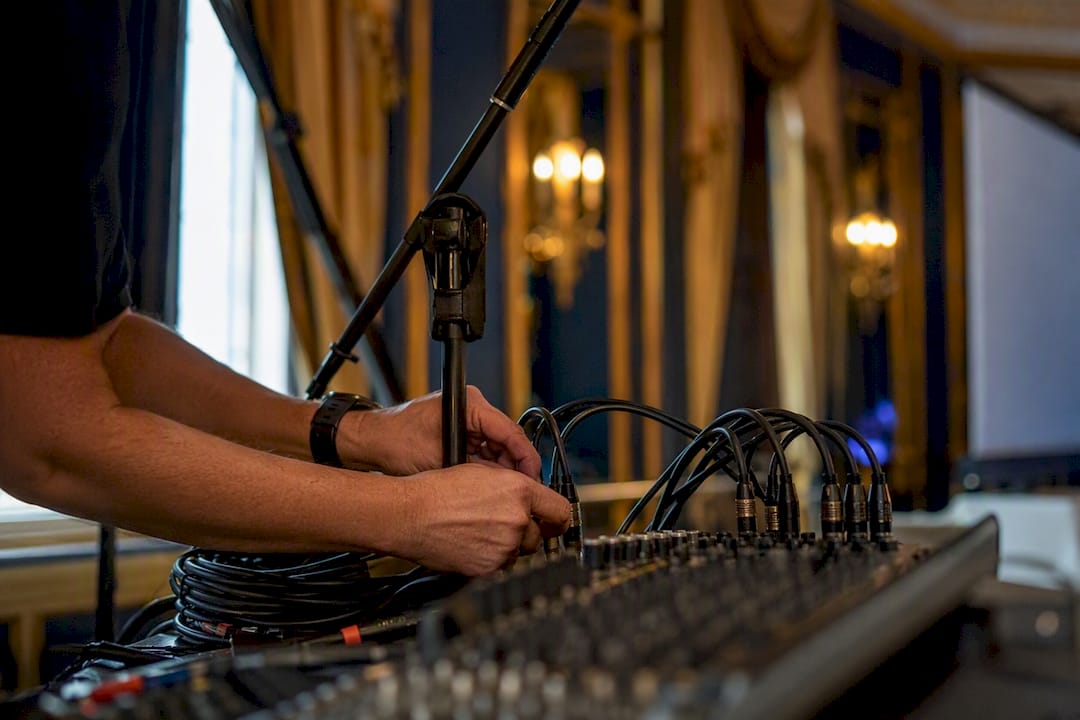
The vendor supplies trained people and shift supervision. You, as the organizer, supply venue access, event-specific materials, credentials, and any signage staff need to do their jobs. Keep communication simple: radios or a group chat for the team lead, scheduled check-ins every hour or two, and a named backup staffer in case someone doesn't show.
What Specialized Roles Should You Consider?
Beyond the core categories, certain events call for staff with specific skills you won't find on a general roster.
- Bilingual staff for multicultural or international guest lists
- Certified AV or lighting technicians for complex production needs
- Emcees or hosts to run programming and keep timing on track
- Photographers and videographers for content capture
- Mobile drivers for shuttle or transportation logistics
- Medical staff for large public gatherings
- Costumed or character performers for themed events
Ask for proof before you commit, certifications, sample past work, or a direct reference you can call.
Pro Tip: Running staff across multiple markets? Request consolidated reporting and a single operations contact so you're not chasing five separate account managers for one campaign.
Checklist Before You Sign With A Staffing Vendor
Run through this before any contract goes final:
- Confirmed roles and headcount, in writing
- Full list of inclusions and exclusions
- Proof of insurance and liability coverage
- Cancellation and rescheduling terms spelled out
- Named on-site supervisor confirmed
- Reporting format and KPIs agreed upon in advance
- Invoicing structure and payment terms
Ask the vendor directly: What does your vetting and training process look like? Who's my on-site escalation contact? What's your backup plan for no-shows? Are uniforms included in the rate? How do you report results after the event?
If you're staffing an event at a specific venue, confirm access times, load-in procedures, and any venue-specific rules around security or credentialing. Reviewing how banquet halls differ from general event venues can clarify which staffing rules apply to your space.
A Venue-Aware Take On Staffing Priorities
Confirm your kitchen and load-in staffing first, everything else can flex, but a jammed kitchen or a blocked loading dock stalls the whole event. A commercial kitchen changes what your catering staff need to do compared to an outside caterer setting up cold stations. Stage placement and door width dictate how many production hands you need before the first guest arrives. Get those two right, and the rest of your roster falls into place.
Sources
- Event Staff Roles Explained: Which Staff You Actually Need
- Comprehensive Guide to Event Staffing Services
FAQ
What Does Event Staffing Include?
It includes core role categories (guest services, hospitality, production, brand ambassadors, security) plus vendor services like recruiting, vetting, training, on-site team lead management, and post-event reporting.
How Far In Advance Should I Book Event Staff?
Book four to six weeks out for standard local events and eight to twelve weeks for multi-city or specialized activations.
How Many Staff Do I Need For 150 Guests?
A buffet dinner with an open bar for 150 guests typically needs about two check-in agents, four to five servers, two bartenders, and one floater.
What's The Difference Between A Team Lead And A Floor Manager?
They perform nearly identical functions, watching timing, solving problems, and communicating with the client, just under different titles depending on the event format.
Is Background Checking Standard For Event Staff?
Yes. Reputable vendors run identity verification, background checks, and reference checks, and some networks report a pass rate under 30% for applicants.