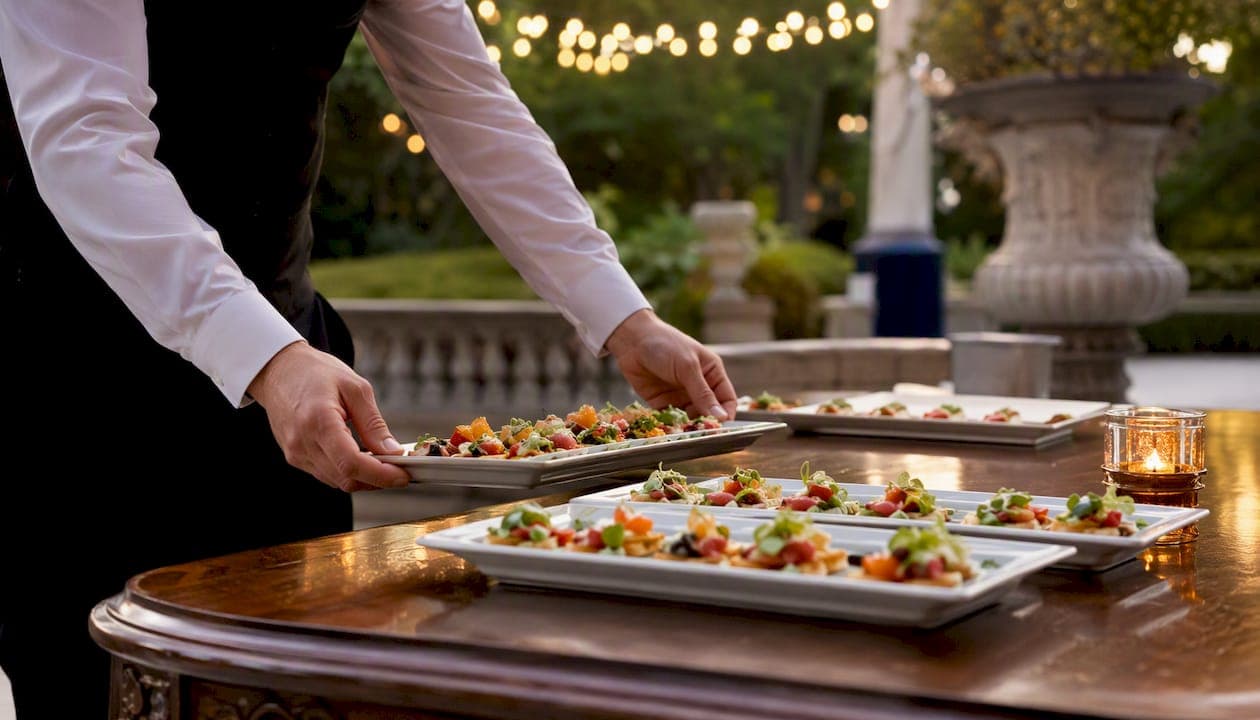
Catering shapes attendee experience, brand perception, and event flow — not just appetite. The role of catering in business events goes far beyond food delivery: it signals professionalism before a word is spoken, creates the conditions for networking, and keeps energy levels steady across a full program. Treat it as a strategic element from day one, not a line item to finalize last.
The core roles catering plays at any corporate gathering:
- Atmosphere and brand signaling: Presentation, service style, and menu quality communicate your organization's standards to every guest in the room.
- Energy and productivity: Well-timed meals and breaks prevent the mid-afternoon slump that kills afternoon sessions.
- Networking moments: Shared food creates natural conversation openings that a panel or keynote alone cannot manufacture.
- Operational flow: A well-briefed catering team keeps the run-of-show on track and reduces the number of decisions staff must make on the day.
- Inclusivity: Dietary accommodations signal that every attendee was considered, not just the majority.
The practical checklist for coordinating all of this starts in the logistics section below.
Key Takeaways
Catering is a strategic element of business event design that directly affects brand perception, attendee energy, networking outcomes, and operational flow.
| Point | Details |
|---|---|
| Catering signals brand standards | Menu quality and service style communicate organizational professionalism before any speaker takes the stage. |
| Service style drives social dynamics | Passed appetizers and action stations encourage networking; plated service signals formality and suits high-stakes client events. |
| Dietary inclusivity is risk management | Collect restrictions at RSVP, require labeled menus, and confirm cross-contact protocols in writing before signing the contract. |
| Vendor timing is non-negotiable | Caterers should arrive 30–45 minutes before service; reconfirm headcount and run-of-show no later than 72 hours out. |
| Ambassadorclubportsmouth supports full coordination | The Ambassador Club's commercial kitchen, flexible catering policies, and 200-guest capacity simplify the logistics this guide covers. |
Table of Contents
- 1. Why catering matters more than most planners budget for
- 2. Choosing the right catering service style for your event
- 3. How catering drives attendee engagement and networking
- 4. Managing dietary needs and inclusivity through catering
- 5. Logistics, timing, and budgeting: what you must coordinate
- 6. How to choose and brief a caterer for a business event
- 7. Catering coordination at The Ambassador Club: a practical example
- What experienced venue hosts know that planners often skip
- The Ambassador Club makes catering coordination straightforward
- Sources
- FAQ
1. Why catering matters more than most planners budget for
Event catering significantly influences guest satisfaction, brand perception, and the overall atmosphere, making it one of the highest-leverage decisions in any corporate event plan. That is not a soft claim. The food and service style guests encounter in the first fifteen minutes sets a tone that shapes how they receive everything that follows.
Early hospitality moments — quality coffee service, a welcome drink — contribute directly to perceived professionalism and establish credibility before the first speaker takes the stage. A generic coffee station with powdered creamer at a client appreciation event sends a message, and it is not the one you intended.
Beyond first impressions, catering supports:
- Attendee focus: Predictable meal timing prevents hunger-driven distraction and keeps energy consistent across multi-hour programs.
- Networking and lead generation: Shared meals and food stations create low-pressure moments for introductions that a structured agenda rarely provides.
- Operational efficiency: A catering team that knows the run-of-show reduces the number of ad hoc decisions event staff must handle during the program.
- Brand differentiation: Menu quality that matches the stakes of the event reinforces the message that the organizing company pays attention to detail.
Generic food at a high-stakes client event can damage impressions more than it saves in budget. That is the calculus planners need to take to stakeholders when justifying catering spend.
2. Choosing the right catering service style for your event
Service style is not just a logistics decision — it shapes the entire social dynamic of the room. Catering influences event flow, staffing needs, rentals, timing, and guest satisfaction, so the format you choose should follow directly from your event goals.
Delivery-only / boxed service works for working lunches, training days, and multi-track conferences where attendees eat between sessions. Low staffing overhead, easy to time, and simple to label for dietary needs. The tradeoff is minimal social interaction.
Buffet service suits receptions and mid-size gatherings of 50–200 guests where some mingling is expected. It requires enough space to prevent bottlenecks and at least one staff member per station to maintain presentation and manage allergen questions.
Plated / seated service signals formality. Use it for board dinners, client appreciation events, and award ceremonies where the meal is part of the program rather than a break from it. Staffing ratios are higher, and the run-of-show must be tighter.
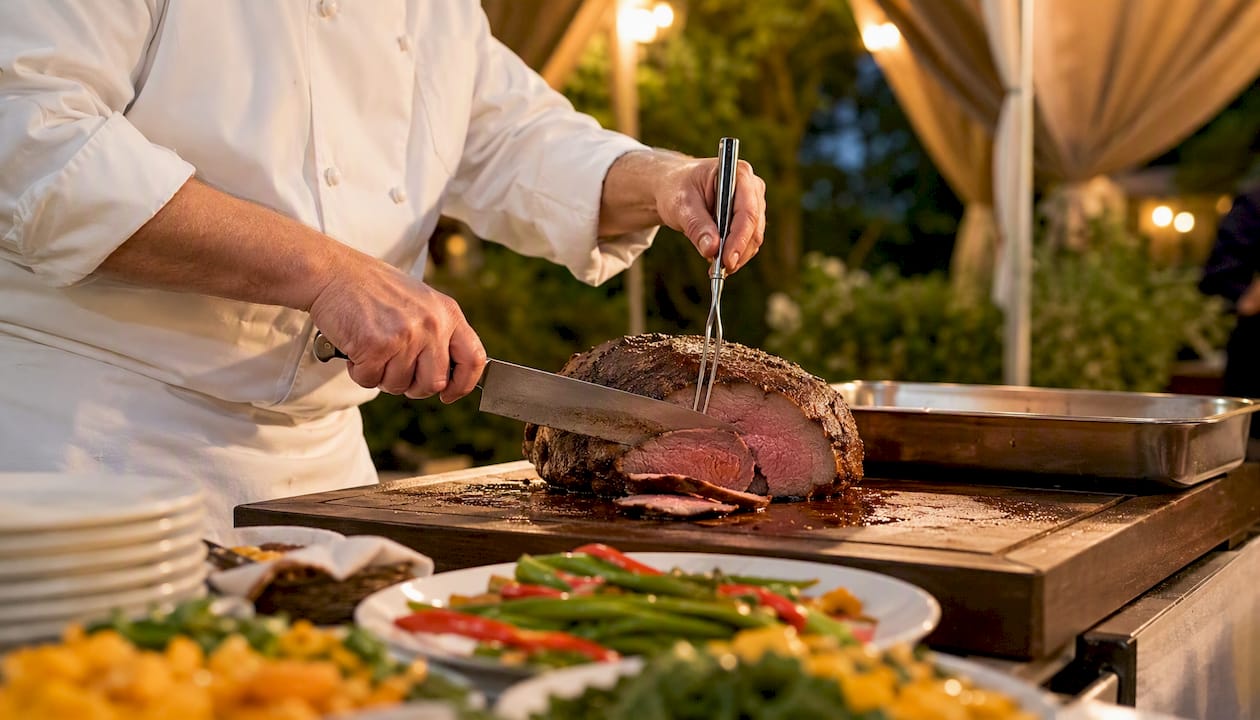
Action stations (carving, pasta, or chef-attended bars) drive engagement and give guests a reason to move around the room. They work especially well at receptions where networking is the primary goal.
Passed appetizers keep guests mobile and conversations flowing during cocktail hours. Small-format food that does not require utensils is the practical standard for standing networking events.
Beverage-only / break service fits multi-session conferences where full meals are not needed but energy management is. Coffee, water, and light snacks between sessions prevent the attention drop that derails afternoon programming.
Pro Tip: For a 200-guest client reception, combine passed appetizers during the first 45 minutes with two or three action stations that open after the welcome remarks. Guests who arrived early have something to do; latecomers walk into an active, social room rather than a seated crowd.
3. How catering drives attendee engagement and networking
Well-designed menus and catering formats create natural conversational moments that lead to business connections and improved attendee engagement. The mechanism is straightforward: shared food lowers social barriers. Standing at a carving station or reaching for the same appetizer tray gives two strangers a reason to make eye contact and say something.
Sensory design amplifies this. A signature welcome drink, a visually distinctive dessert display, or a locally sourced menu item gives guests something to comment on. Those comments become conversations. Presentation and aroma are not decorative choices — they are memory anchors that guests associate with your brand long after the event ends.
Formats that encourage networking, ranked by mobility they create:
- Passed appetizers: Highest mobility; servers bring food to guests, so no one is anchored to a station.
- Action stations: Guests move to the food, which creates natural gathering points and queuing conversations.
- Communal tables: Seated but social; long shared tables work better for networking than rounds of eight where guests only talk to immediate neighbors.
- Buffet lines: Moderate; the line itself is a conversation opportunity, but guests tend to disperse once they have a plate.
Bar configuration matters more than most planners realize. A single bar at one end of a 200-person room creates a traffic jam and a dead zone at the opposite end. Two bars positioned at opposite corners distribute guests and keep the whole room active.
Pro Tip: Place sponsor materials, product samples, or conversation-prompt cards near food stations rather than at a separate display table. Guests linger at stations; they walk past display tables.
4. Managing dietary needs and inclusivity through catering
Dietary accommodation is a risk management issue as much as a hospitality one. Medically necessary diets — including gluten-free requirements — demand clear labeling and appropriately designed substitutions to reduce health risks and prevent exclusion. An attendee with celiac disease who cannot safely eat anything on the buffet will remember that event for the wrong reason.
A practical inclusivity checklist for planners:
- Collect dietary restrictions and allergies during the RSVP process, not the week of the event.
- Require the caterer to provide labeled menus identifying the top allergens (gluten, nuts, dairy, shellfish, soy) on every dish.
- Confirm that clearly identified alternatives exist for vegan, gluten-free, and nut-free guests — not just "we can remove the cheese."
- Ask the caterer to describe their cross-contact protocols in writing before signing the contract.
- Brief front-of-house staff on which dishes are safe for which restrictions so they can answer guest questions accurately.
- For events with religious dietary requirements (halal, kosher), confirm certification and preparation protocols with the caterer at least three weeks out.
For menu planning steps that walk through how to build an inclusive menu from the ground up, a structured planning checklist can help you brief caterers with the specificity they need.
| Dietary need | Minimum requirement | What to confirm with caterer |
|---|---|---|
| Gluten-free | Labeled dishes, dedicated utensils | Cross-contact protocol, separate prep area |
| Vegan | At least one full entrée option | No hidden animal products (broths, butter) |
| Nut-free | Full nut-free station or labeled alternatives | Kitchen-wide nut policy for severe allergies |
| Halal / Kosher | Certified supplier | Certification documentation, prep separation |
5. Logistics, timing, and budgeting: what you must coordinate
The corporate event catering checklist from catering industry practice is clear: issue vendor briefs weeks ahead, finalize menu selections a few weeks prior, and reconfirm headcounts and run-of-show details shortly before the event. Vendors should arrive 30–45 minutes before service and complete a final on-site walkthrough with the catering lead.
Pre-event milestone timeline:
| Weeks before event | Planner action | Caterer deliverable |
|---|---|---|
| 8 weeks | Issue RFP and vendor brief | Proposal, sample menus, staffing plan |
| 6 weeks | Confirm caterer, sign contract | Finalized menu draft, equipment list |
| 3–4 weeks | Confirm dietary restrictions count | Allergen-labeled menu, substitution plan |
| 1–2 weeks | Reconfirm headcount, share run-of-show | Final staffing confirmation, rental list |
| Day before | On-site walkthrough with catering lead | Setup plan, station placement confirmed |
| Day of | Vendor arrival 30–45 minutes pre-service | Final quality check, staff briefed |
Primary cost drivers to discuss with your caterer:
- Service style: Plated service costs more in labor than buffet or stations; factor in staffing ratios.
- Staffing: One server per 10–15 guests for plated service; one per station for buffet or action formats.
- Rentals: Linens, chafing dishes, and station tables are often not included in base quotes — request a full inclusions list.
- Bar service: Licensed bartenders, glassware, and alcohol licensing add significant cost; clarify what is included.
- Sustainability choices: Compostable serviceware and waste-sorting stations add cost but reduce venue cleanup fees and align with corporate sustainability commitments.
- Venue restrictions: Some venues charge corkage fees or require approved vendor lists; confirm before finalizing the caterer.
For cost-saving strategies that do not compromise guest experience, planners can find specific tactics for briefing caterers on budget parameters without sacrificing quality.
6. How to choose and brief a caterer for a business event
Selection criteria should be non-negotiable before you evaluate menus or pricing.
- Licensing and insurance: Require proof of food handler certification, general liability insurance, and liquor licensing if alcohol is served. No documentation, no contract.
- Commercial kitchen access: Confirm the caterer has access to a licensed commercial kitchen for prep, not just a home operation.
- Sample menus and tastings: Request a tasting for events of 50 or more guests. A caterer unwilling to offer one is a red flag.
- Staffing ratios: Ask specifically how many servers, bartenders, and supervisors will be on-site for your guest count.
- References from similar events: Ask for two or three references from corporate events of comparable size and format, not just weddings or private parties.
Questions to ask during vendor interviews:
- What is included in the base quote, and what is billed separately?
- How do you handle last-minute headcount changes?
- What is your contingency plan if a key staff member calls out the day of the event?
- Who is the on-site point of contact during the event?
- How do you manage allergen protocols during service?
Red flags: vague or all-inclusive pricing with no itemization; inability to provide insurance certificates; references who cannot be contacted; staffing estimates that seem low for the guest count.
Contract checklist items to require:
- Cancellation and force majeure policy with specific timelines
- Final headcount amendment window (typically 72 hours before the event)
- Liability insurance certificate naming your organization
- Health and safety commitments in writing
- Waste and disposal responsibilities
Pro Tip: Ask the caterer to walk you through what happens if the main entrée runs short 30 minutes into service. Their answer tells you more about operational competence than any portfolio photo.
For a full catering booking checklist covering vendor interviews and contract terms, a structured template can save significant time during the RFP process.
7. Catering coordination at The Ambassador Club: a practical example
The Ambassador Club in Portsmouth, VA, has hosted business events for the Hampton Roads community since 1933. Its 6,000 sq ft hall, full commercial kitchen, and flexible outside-catering policy make it a practical case study in how venue infrastructure supports catering coordination.
For a corporate reception accommodating up to 200 guests, the coordination timeline typically follows this sequence:
- Menu sign-off: Three to four weeks before the event, the planner and caterer confirm the menu, dietary substitutions, and station layout using the venue's kitchen specifications.
- Kitchen access confirmation: One week out, the caterer confirms prep timing and access windows for the commercial kitchen so setup does not conflict with other venue operations.
- Staff brief: Two to three days before, the catering lead and venue coordinator align on the run-of-show, station placement, and allergen protocols.
- Rehearsal walkthrough: The day before or morning of the event, the catering lead walks the room with the venue coordinator to confirm bar placement, traffic flow, and equipment staging.
The Ambassador Club's commercial kitchen and flexible catering policies mean planners are not locked into a single approved vendor. That flexibility lets you match the caterer to the event's specific needs — a formal plated dinner for a board meeting, or a high-energy station setup for a client reception — without renegotiating venue terms.
The venue's capacity for up to 200 guests, combined with built-in amenities like tables, chairs, a dry bar, and a dance floor, reduces the number of rental line items a caterer needs to source independently, which keeps coordination simpler and costs more predictable. For guidance on matching venue size to catering service style, the venue's planning resources cover the specific considerations for mid-size corporate events.
What experienced venue hosts know that planners often skip
The week before the event is where most catering failures are prevented. Reconfirm headcount with the caterer no later than 72 hours out, and build a small buffer into that number — walk-ins happen, and running short on food at a client event is not recoverable. Include support staff (photographers, AV technicians, decorators) in the final count so the catering team is not caught short.

Stage servers near high-traffic zones, not near the kitchen. Guests cluster around bars and food stations; servers positioned near those areas can respond faster and keep lines moving. A single dedicated catering point person on the planner's side — someone whose only job is to communicate with the catering lead — prevents the crossed signals that cause timing failures.
On sustainability: designating one staff member to manage waste sorting during the event is more effective than relying on guests to self-sort. Compostable serviceware helps, but it only reduces landfill impact if it ends up in the right bin.
The Ambassador Club makes catering coordination straightforward
Planning a business event for up to 200 guests in the Hampton Roads area means finding a venue that does not add friction to the catering process. The Ambassador Club in Portsmouth, VA, offers a historic 6,000 sq ft hall with a full commercial kitchen, flexible outside-catering policies, and built-in amenities that reduce the number of vendors a planner needs to coordinate.
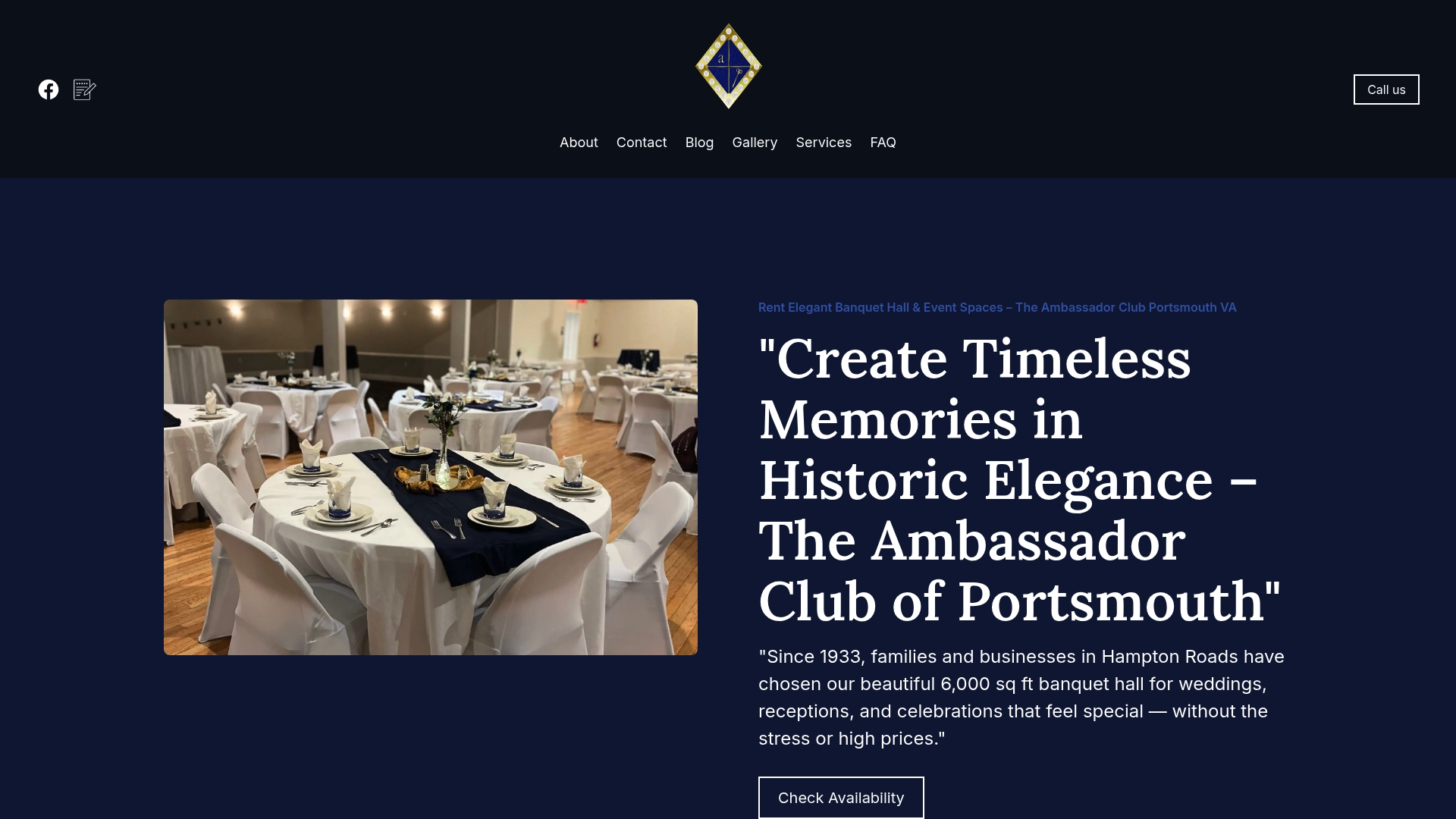
The venue's infrastructure supports the coordination steps this guide covers: kitchen access for caterer prep, on-site walkthroughs, and a layout that accommodates buffet, plated, and station formats without reconfiguring the room from scratch. Packages include setup, cleaning, and security, so the catering team can focus on service rather than logistics.
To check availability or request a site visit for your next corporate event, visit The Ambassador Club and submit an inquiry directly.
Sources
- Corporate event catering checklist
- Why Is Event Catering So Important? 5+ Reasons
- Catering Services: How They Transform Corporate Events
- Corporate Event Catering: What Hosts Often Overlook (and Why It Matters More Than You Think)
- Gluten-free diet guidance (Mayo Clinic)
- How to make a great first impression
FAQ
What is the role of catering in business events?
Catering shapes brand perception, attendee energy, and networking opportunities at corporate gatherings. It is a strategic element of event design, not just a food delivery function.
How early should a caterer arrive before a business event?
Caterers should arrive 30–45 minutes before service begins to complete setup and conduct a final walkthrough with the catering lead, confirming station placement and allergen protocols.
What questions should I ask a caterer before hiring them?
Ask about what is included in the base quote, their contingency plan for staff no-shows, their allergen protocols, and request references from corporate events of comparable size.
How does catering affect networking at corporate events?
Passed appetizers, action stations, and communal tables create natural conversation openings. Shared food lowers social barriers in ways that a structured agenda alone cannot replicate.
Can The Ambassador Club accommodate outside caterers for business events?
Yes. The Ambassador Club in Portsmouth, VA, offers flexible outside-catering policies and a full commercial kitchen, giving planners the freedom to match their caterer to the specific event format and guest count.