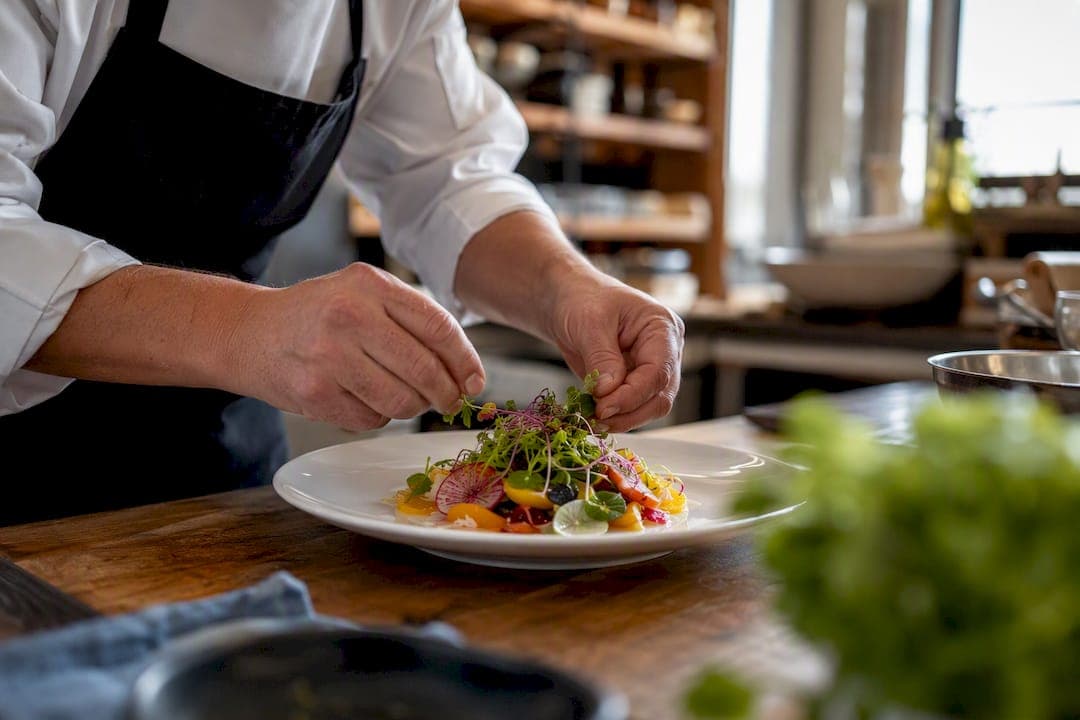
Decide your service style first, then set the course count, build a light-to-rich menu arc, and lock in your pacing before you touch a single recipe. That order matters more than the food itself, because pacing and staffing decisions upstream determine what your kitchen can actually deliver downstream.
- Pacing: budget about ten to fifteen minutes per course for restaurant-style plating, and about twenty to twenty-five minutes for events with full course changeovers.
- Vendor lead time: contact caterers and venues at least six months out for better rates and open dates.
- Next move: book a tasting and confirm the venue's kitchen equipment before you finalize a single dish.
Key Takeaways
Successful multi-course event menus follow a fixed sequence: service style and course count first, then menu arc, pacing, and vendor logistics, all backward-scheduled from the first course.
| Point | Details |
|---|---|
| Order matters | Decide service style and course count before choosing dishes or a caterer. |
| Pace by course type | Budget 10–15 minutes per course for restaurant service, 20–25 minutes for event changeovers. |
| Total table time scales | A 5-course event runs 105–120 minutes; a 7-course event runs 135–165 minutes. |
| Dietary needs go on the RSVP | Separate allergies from preferences and cap alternate meals for guest counts over 100. |
| Book venue and kitchen early | Contact vendors six or more months out; verify kitchen capacity before finalizing service style, as Ambassadorclubportsmouth's on-site commercial kitchen allows for a wide range of service styles up to 200 guests. |
Table of Contents
- How Do You Plan a Multi-Course Event Menu?
- How Long Should Each Course Take?
- What Order Should Courses Follow?
- How Should You Handle Guest Dietary Needs?
- Does Your Venue's Kitchen Match Your Service Style?
- When Should You Schedule the Tasting?
- What Planners Get Wrong Most Often
- Book a Tasting at a Venue Built for Multi-Course Service
- Sources
- FAQ
How Do You Plan a Multi-Course Event Menu?
The sequence matters more than any individual dish choice. Skip a step here, and you'll find yourself renegotiating with a caterer two weeks before the wedding, or worse, watching plates come out fifteen minutes apart because nobody mapped the kitchen's capacity against the guest count.
- Set the brief. Nail down guest count, per-person budget, and formality level before anything else. A backyard family reunion and a black-tie corporate gala need entirely different menu logic, even with the same number of courses.
- Choose service style and course count. Plated, buffet, family-style, or a hybrid, then decide whether you're building a 3, 5, or 7-course experience. Each course should have a defined role: amuse-bouche, starter, palate reset, main, cheese course, dessert.
- Collect dietary requirements on the RSVP itself. Don't wait for guests to mention allergies at check-in. Build the field into your invitation response and set a realistic cap on alternate meal choices based on total headcount.
- Schedule your vendor timeline. Reach out to caterers and venues six or more months ahead, according to guidance from the Event Management Institute. Book your tasting two to four weeks before you need to sign off on the final menu, and lock in guest counts and service details 7 to 14 days before the event.
- Build a production run sheet. Assign day-of roles (kitchen lead, service captain, bar) and map exactly when each component needs to hit heat or plating.
A few things trip up even experienced planners:
- Forgetting that dietary substitutions need their own prep timeline, not a last-minute swap.
- Assuming a caterer's "standard" menu scales past 100 guests without checking oven and hot-holding capacity.
- Skipping a written run sheet because "everyone knows the plan."
The GroupMenus five-step framework echoes this order almost exactly: define purpose, assess dietary needs, collaborate with the venue, organize the menu, then test and finalize. If you're planning a smaller family event, our family celebration menu checklist walks through a scaled-down version of the same process.
How Long Should Each Course Take?
Two timing standards dominate professional event planning, and mixing them up is one of the fastest ways to blow your schedule. Restaurant-style service, where a kitchen brigade fires each course to order, runs 10 to 15 minutes per course. Event service, where courses have to clear, get bussed, and reset across a room of 100 or more guests, needs 20 to 25 minutes per course including that changeover time.
Timing benchmark: A 5-course event typically runs 105 to 120 minutes total; a 7-course event runs 135 to 165 minutes, according to timing guidelines built around real event changeovers.
Map your totals against the rest of the evening before you commit to a course count:
- A 3-course dinner runs roughly 75 to 90 minutes, leaving room for speeches, a first dance, or a keynote.
- A 5-course wedding dinner eats up close to two hours, which pushes dancing or presentations later than many hosts expect.
- Build in a 10 to 15 minute buffer for late arrivals, toasts, and any pauses where the room needs to reset.
A tasting-menu builder tool built for professional kitchens generally recommends staying in the 5 to 9 course range for tasting-style events, precisely because table time and food cost both climb fast past that point.
What Order Should Courses Follow?
Good menus follow an arc: start light, build toward richness, then reset the palate before the finish. A menu that opens with a heavy braised short rib and follows it with foie gras leaves guests fatigued by course four, no matter how good each individual plate tastes.
Culinary instructors at the Auguste Escoffier School put it plainly: a clean 3 to 5 course menu executed well beats an ambitious 7-course menu that stretches the kitchen past what it can reliably plate. Here's how that plays out in practice:
- Casual 3-course: Seasonal salad, herb-roasted chicken with vegetables, fruit tart. Simple enough for a family reunion or small corporate lunch.
- Wedding 5-course plated: Amuse-bouche, chilled soup or crudo, palate-cleansing sorbet, beef or fish entrée, plated dessert. The sorbet does real work here, resetting the palate between a rich starter and the main.
- Formal 7-course tasting: Canapé, cold appetizer, soup, palate cleanser, fish course, meat course, dessert with a small cheese pairing. This works for a corporate gala or milestone anniversary with a longer evening built around it.
Small courses, especially the amuse-bouche and palate cleanser, should be genuinely small: two to three bites. Oversized "small" courses defeat the pacing you just built, and they fill guests up before the main course arrives.
Pro Tip: Plate presentation does more for perceived value on a small course than portion size ever will. A three-bite amuse on a striking plate reads as generous; the same three bites dumped in a bowl reads as an afterthought.
How Should You Handle Guest Dietary Needs?
Separate allergies from preferences on your RSVP form, and treat them differently. Allergies are non-negotiable safety issues; preferences (vegetarian, no red meat) are accommodations you can batch and simplify.
- Ask specifically: food allergies, severity, and any cross-contact sensitivities, not just "dietary restrictions" as a catch-all field.
- For events under 50 guests, you can usually offer a full alternate plate per allergy type. Past 100 guests, cap alternates at two or three standardized options (vegetarian, gluten-free, allergy-safe) rather than customizing per guest.
- Label every dish on your printed menu or place cards, note any cross-contact risk in your kitchen instructions, and confirm the final allergy list with your caterer in writing before the event, not verbally the day of.
This documentation step matters more than most planners expect. A verbal heads-up to a kitchen line during a 150-guest event gets lost. A written list attached to the final headcount does not.
Does Your Venue's Kitchen Match Your Service Style?
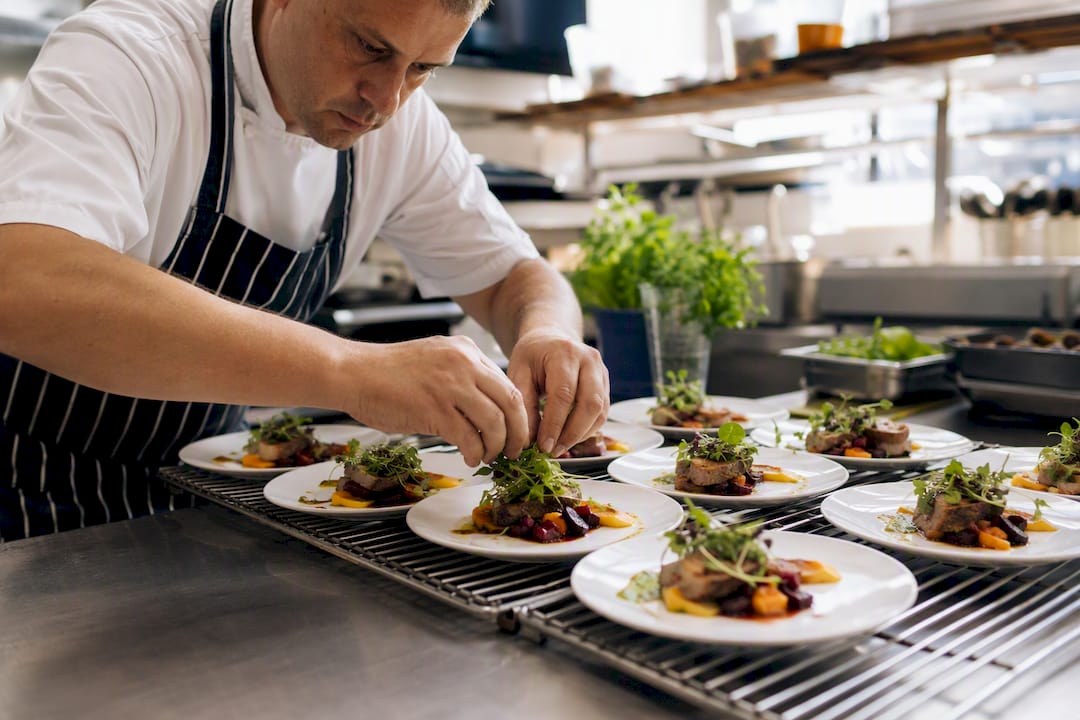
Before you finalize a service style, walk the venue kitchen against a real checklist. Plated service demands more staging space and hot-holding capacity than buffet or family-style, and a venue that looks fine empty can bottleneck fast at full capacity.
- Confirm equipment: ovens, hoods, hot-holding units, refrigeration, and enough plating counter space for your course count.
- Check line setup: is there room to stage five or seven courses in sequence, or does everything compete for the same six feet of counter?
- Match staffing to service style. Plated service typically needs one server per 12 to 16 guests for smooth timing; buffet and family-style can run leaner but need extra staff monitoring temperature and replenishment.
- Build your backward timeline. Start from your first course's service time and work backward, mapping exactly when each component needs heat, plating, or final assembly, a method chefs rely on to avoid service bottlenecks.
Pro Tip: Walk the kitchen with your caterer at least once before signing a contract. A kitchen that "should work" on paper often reveals a missing hood vent or a single working oven once someone actually stands in it. Our venue kitchen size guide covers the specific equipment questions worth asking.
When Should You Schedule the Tasting?
Book your tasting two to four weeks before your final sign-off date, and bring the actual decision-makers: the host or couple, plus whoever is running service logistics. A tasting without the person approving the final menu just delays the real decision.
At the tasting, evaluate more than taste:
- Portion size against your planned pacing, not just flavor.
- Plating consistency, since a beautiful single plate doesn't guarantee 150 identical ones.
- Dietary alternate versions, tasted separately, not assumed equivalent.
- Timing cues: how long each component actually takes to fire and plate.
Send your final confirmation 7 to 14 days before the event, covering guest count, portion adjustments, the service timeline, and an emergency contact for the day-of team. Our catering coordination guide breaks down who should own each piece of that final checklist.
What Planners Get Wrong Most Often
Most menu disasters trace back to skipping the kitchen walk-through, not the food itself. Planners obsess over the menu arc and forget to ask whether the venue can actually hold seven plates at temperature simultaneously. Check our catering package customization guide before you finalize a course count.
Book a Tasting at a Venue Built for Multi-Course Service
Ambassadorclubportsmouth removes the biggest risk in this whole process: guessing whether an outside kitchen can execute your menu. Our 6,000 square foot hall in Portsmouth, VA comes with a full commercial kitchen on-site, so your caterer isn't working around a borrowed hot plate and a single extension cord.
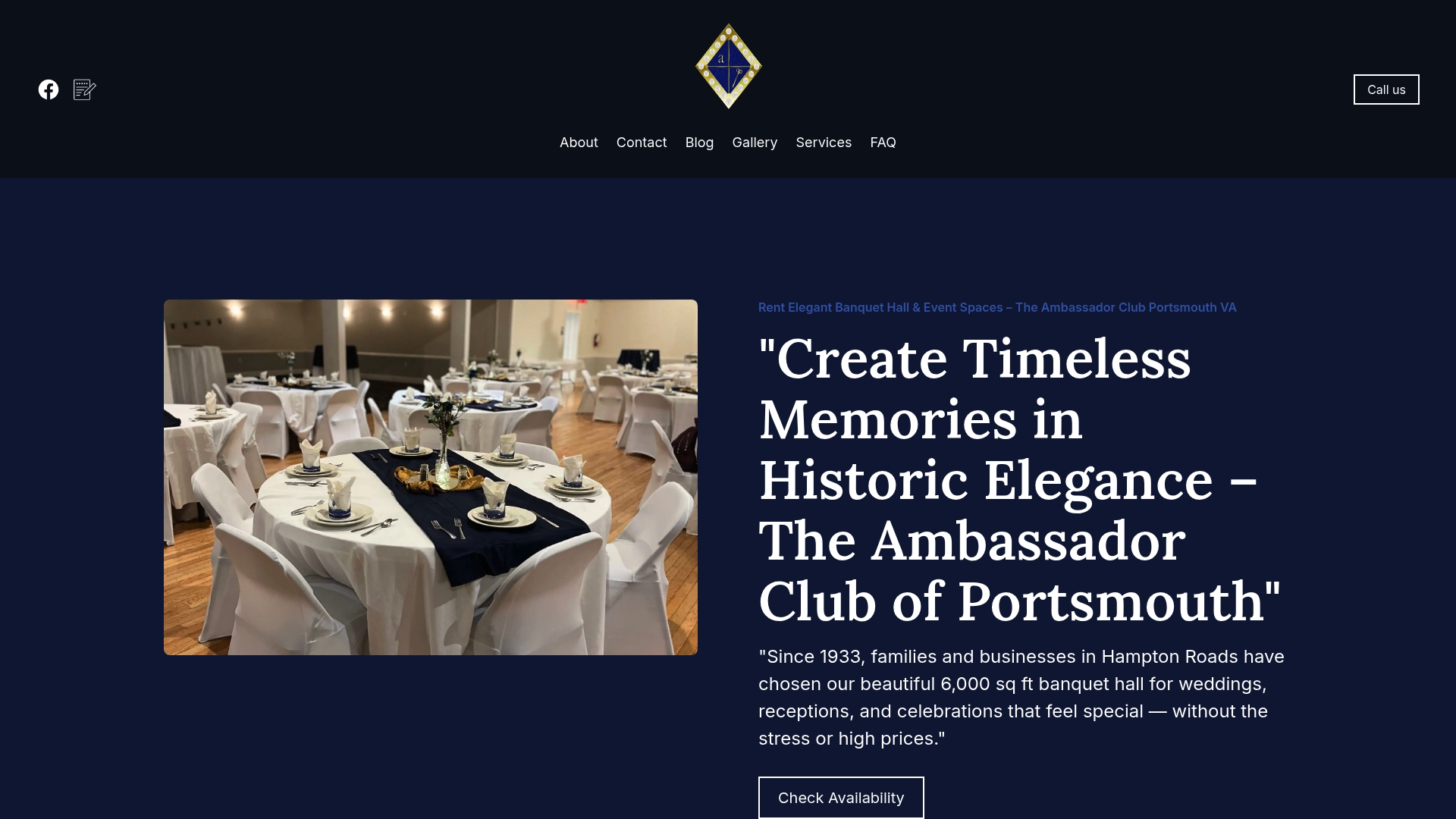
The hall accommodates up to 200 guests, and flexible outside catering policies mean you can bring in the caterer whose tasting you already loved, or work from our package options that bundle setup, cleaning, and security into one arrangement. Either way, the equipment checklist from earlier in this guide, ovens, hot-holding, plating space, is already answered before you sign anything. That's one less unknown between your menu plan and your event date.
Ready to see the kitchen and hall in person? Schedule a tour or tasting at Ambassadorclubportsmouth and walk through your course count and service style with our team before you commit to a caterer.
Sources
- How to plan a multi-course tasting menu at home — Take a Chef
- Tasting Menu Builder: Free Course & Pairing Planner | HappyChef
- 5 Steps to Create a Custom Event Menu | GroupMenus Blog
- Designing Event Menus: Tips for Success • Event Management (EVM) Institute
FAQ
How Many Courses Should an Event Menu Have?
Most professional planners recommend 3 to 5 courses for casual to mid-formality events and up to 7 for formal tasting-style dinners, since a well-executed shorter menu tends to outperform an overstretched longer one.
How Far in Advance Should You Book a Tasting?
Schedule your tasting 2 to 4 weeks before your final menu sign-off date, and bring the actual decision-makers rather than delegating the choice.
How Many Minutes Should You Plan Per Course?
Plan 10 to 15 minutes per course for restaurant-style plating and 20 to 25 minutes per course for events that require full changeovers between plates.
When Should Guests Submit Dietary Restrictions?
Collect dietary information directly on the RSVP form, separating true allergies from general preferences so your caterer can plan alternate plates accurately.
Does Ambassadorclubportsmouth Offer On-Site Catering Support?
Ambassadorclubportsmouth provides a full commercial kitchen and flexible outside catering policies at its Portsmouth, VA hall, accommodating events up to 200 guests.