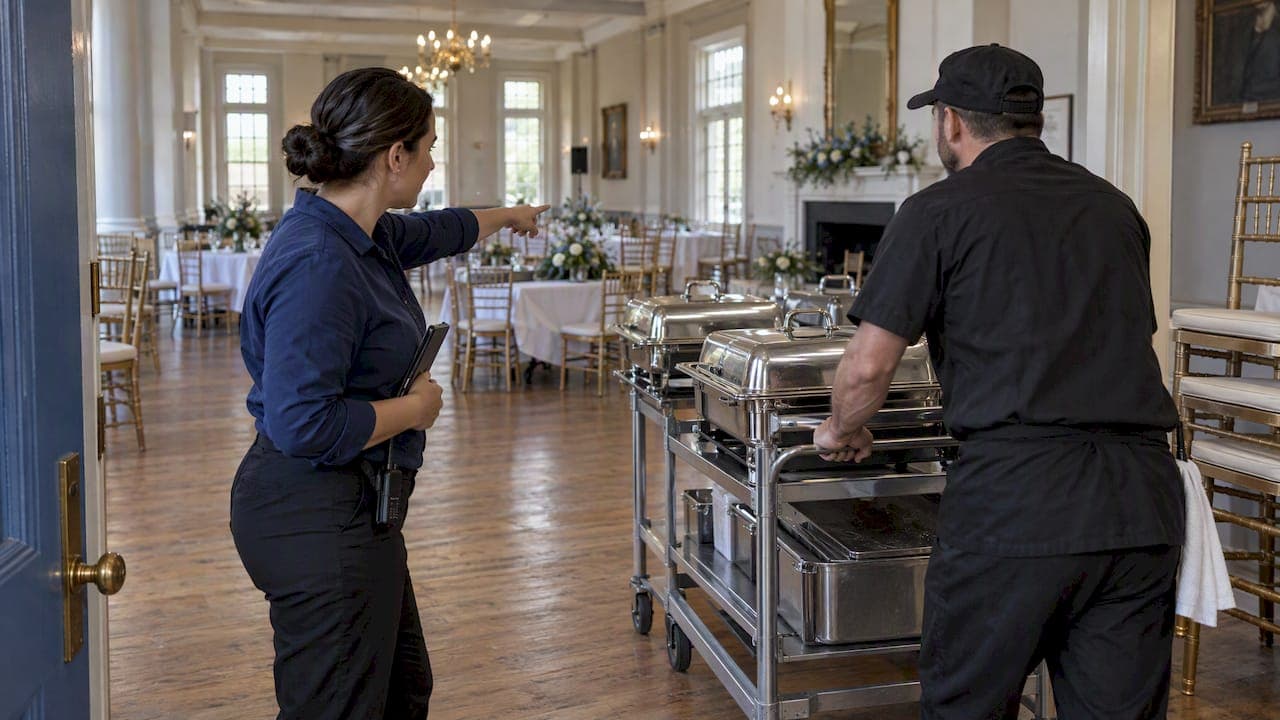
Yes, a morning wedding reception, a brunch or lunch celebration that follows a morning ceremony, is a practical choice that tends to cost less and wraps up early. You get softer natural light for photos, better vendor availability, and a shorter day overall. A typical snapshot looks like this: ceremony around 11:00 a.m., reception from 11:45 a.m. to 2:30 p.m.
TL;DR:
- Build 15 to 20 minutes of slack between major blocks, and send the final timeline to every vendor at least one week ahead.
- Keep buffet perishables out no longer than two hours at room temperature, or one hour above 90°F; hold hot food at 140°F or higher.
- List ceremony and reception times, plus any venue transfer window, on invitations and the wedding website; out of town guests should arrive the night before.
- Buffets and stations keep service moving at short receptions; plated lunch controls timing and portions but requires more serving staff on site.
- Choose a photographer experienced with midday light, schedule outdoor portraits within 30 minutes after the ceremony, and add live music or an interactive activity.
Table of Contents
- Sample Morning Wedding Timeline for Ceremony and Reception
- Brunch and Lunch Menu Ideas with Food-Safety Rules
- Guest Logistics, Travel, and Daytime Etiquette
- Entertainment and Atmosphere for a Daytime Reception
- Vendor Checklist and Timeline Template for Morning Receptions
- A Venue Host's View on Morning Receptions
- Plan Your Brunch Reception at The Ambassador Club
- FAQ
- Sources
Sample Morning Wedding Timeline for Ceremony and Reception
A morning wedding depends on buffers built into the schedule before anything else. Vendors who start before sunrise need extra margin, and a tight morning plan without slack time tends to collapse by 9 a.m.
Here is a 10 a.m. ceremony timeline you can hand to your photographer, stylist, and venue contact:
- 5:30 a.m.: Hair and makeup team arrives for the bride and wedding party.
- 7:30 a.m.: Photographer arrives for getting-ready shots.
- 9:00 a.m.: Wedding party dresses and travels to ceremony site.
- 9:30 a.m.: First look or final touch-ups, if scheduled.
- 10:00 a.m.: Ceremony begins.
- 10:30 a.m.: Ceremony ends; family and wedding party portraits begin.
- 11:15 a.m.: Guests move to reception venue for welcome coffee and light bites.
- 11:45 a.m.: Reception begins with brunch service.
- 2:00 p.m.: Toasts, cake cutting, and final send-off.
An 11 a.m. ceremony shifts everything roughly an hour later, which gives the wedding party a slightly more humane wake-up call:
- 6:30 a.m.: Hair and makeup begins.
- 8:30 a.m.: Photographer arrives.
- 10:00 a.m.: Wedding party travels to ceremony site.
- 11:00 a.m.: Ceremony begins.
- 11:30 a.m.: Portraits and family photos.
- 12:15 p.m.: Reception begins with lunch service.
- 2:30 p.m.: Toasts and send-off.
Planner guidance often points to an 11 a.m. ceremony start as the practical sweet spot between an early day and a timeline the wedding party can actually keep up with.
A few things to flag with vendors before you finalize either schedule:
- Confirm your hair and makeup team will accept a pre-dawn call time, since some stylists charge a premium or decline early starts altogether.
- Build a 15 to 20 minute buffer between each major block (getting ready, travel, ceremony, portraits) rather than scheduling back to back.
- Ask your photographer about their experience shooting midday light, since harsh overhead sun behaves differently than golden-hour evening light.
- Give your caterer a firm "doors open" time at least 30 minutes before guests arrive so hot and cold items are already staged.
Pro Tip: Send your final timeline to every vendor at least one week before the wedding, not the night before, so anyone with a scheduling conflict can flag it early.
Brunch and Lunch Menu Ideas with Food-Safety Rules
A morning reception menu works best when it matches the clock. Full plated dinners feel out of place at 11:30 a.m., while a well-built brunch or light lunch spread fits the mood and keeps kitchen timing manageable.
Buffets and stations give guests variety and keep service moving quickly, which matters when your reception window is only two to three hours. Plated lunch service feels more formal and controls portions and timing precisely, but it needs more serving staff. Food stations, such as a waffle or omelet bar, add an interactive element guests remember, though they require more space and a cook on-site.
A few menu directions that work well for daytime receptions:
- A build-your-own waffle or omelet station with toppings guests choose themselves.
- A plated lunch built around a protein, a composed salad, and a light starch.
- A pastry, donut, or mini-dessert table instead of a traditional cake-only dessert course.
- A coffee and espresso bar as the centerpiece beverage station, paired with a short cocktail list (mimosas, Bloody Marys) and clearly labeled nonalcoholic options.
Food safety matters just as much at 11 a.m. as it does at 7 p.m., and the rules do not loosen because it is daytime. Perishable buffet food should never sit out longer than two hours at room temperature, or one hour above 90°F, and hot items need to stay at or above 140°F in chafing dishes or warming trays while cold items sit on ice. Egg-based dishes, common at brunch, need to reach an internal temperature of 160°F, and anything reheated should hit 165°F, verified with a food thermometer rather than a guess.
Before booking a caterer for a brunch reception, ask directly: how far in advance is food prepared, how is it transported, how will hot and cold items be held during service, and what is the reheating plan for egg casseroles or quiches. Our guide to coordinating menus with a venue and caterer walks through these questions in more detail.

Guest Logistics, Travel, and Daytime Etiquette
Morning weddings confuse guests more than evening ones, mostly because people assume a wedding starts in the afternoon or evening unless told otherwise. Clear invitation wording solves most of this before it becomes a problem.
List the ceremony start time plainly on the invitation and wedding website, and separately note when the reception begins if there is any gap. If guests need to travel between venues, give an exact departure window rather than a vague "right after the ceremony."
A few practical points worth building into your planning:
- Out-of-town guests should plan to arrive the night before, since an early ceremony leaves no room for a same-morning flight or long drive.
- A shuttle or carpool suggestion on your wedding website helps guests coordinate transportation without guessing.
- Families with young children often appreciate a morning event, since it avoids late nights and overtired kids.
- Older guests tend to prefer daytime events too, since travel and parking feel easier in daylight.
Dress code for a morning reception tends to run lighter than an evening affair: think garden-party or daytime cocktail attire rather than formal evening wear, and it helps to say so directly on your invitation suite. A small hospitality touch, like coffee and light bites available as guests arrive, bridges the gap between ceremony and full reception service and keeps people comfortable while photos wrap up.
Entertainment and Atmosphere for a Daytime Reception
Daylight changes what entertainment actually works. Club-style dancing under string lights does not translate well at noon, so daytime receptions lean on different kinds of energy.
Live music options like a string quartet, solo piano, or jazz trio fit the brunch mood and keep the room lively without requiring a packed dance floor. Our partners at Alex Levin Music book exactly this kind of live ensemble for daytime receptions, with options ranging from solo piano to full string quartets. Lawn games, a caricature artist, or a live illustrator give guests something to do between courses, which matters more at a brunch reception where the dance floor may stay quieter.
Layout matters too. Arrange seating in clusters that encourage conversation rather than rows facing a stage, and leave a clear, open space near the music in case guests do want to dance later in the reception.
Harsh midday sun is the other challenge. A photographer experienced with daytime weddings will plan around shade, use reflectors or portable diffusers, and adjust the shoot schedule to avoid flat overhead light during the hardest hours.
- Schedule outdoor portraits for the first 30 minutes after the ceremony, before the sun climbs higher.
- Keep background music low during toasts and speeches, then raise the energy afterward with upbeat live sets.
- Plan one interactive activity (games, a photo booth, a live artist) to carry guests through any lull before dessert.
Pro Tip: Ask your photographer which shaded spots at your venue work best at your ceremony time, not just in general, since shade position shifts with the season and hour.
Vendor Checklist and Timeline Template for Morning Receptions
A morning wedding runs on vendor order. Book your hair and makeup team and your photographer first, since both need to confirm they will accept an early call time before you lock anything else in.
- Confirm hair and makeup start time and whether early-morning fees apply.
- Book a photographer who lists daytime or midday weddings in their portfolio.
- Set a firm load-in window with your venue and caterer, including kitchen handoff time.
- Build a warming and cooling plan into the catering contract, not just a delivery time.
- Share the final timeline with every vendor at least one week ahead, with named contacts and phone numbers for each block.
- Leave a 15 to 20 minute buffer around every transition point in the day.
Our venue timeline guide includes a fill-in template with slots for vendor arrival times, kitchen handoff, and buffer windows you can adapt to your own ceremony time.
A Venue Host's View on Morning Receptions
Morning receptions run smoothly when a venue's kitchen and access hours cooperate with an early schedule. A full commercial kitchen means a caterer can finish hot items on-site instead of transporting them long distances, which keeps food-safety margins comfortable. Early access for load-in, paired with a clear package, removes most of the guesswork from a tight brunch turnaround.
— MARTIN
Plan Your Brunch Reception at The Ambassador Club
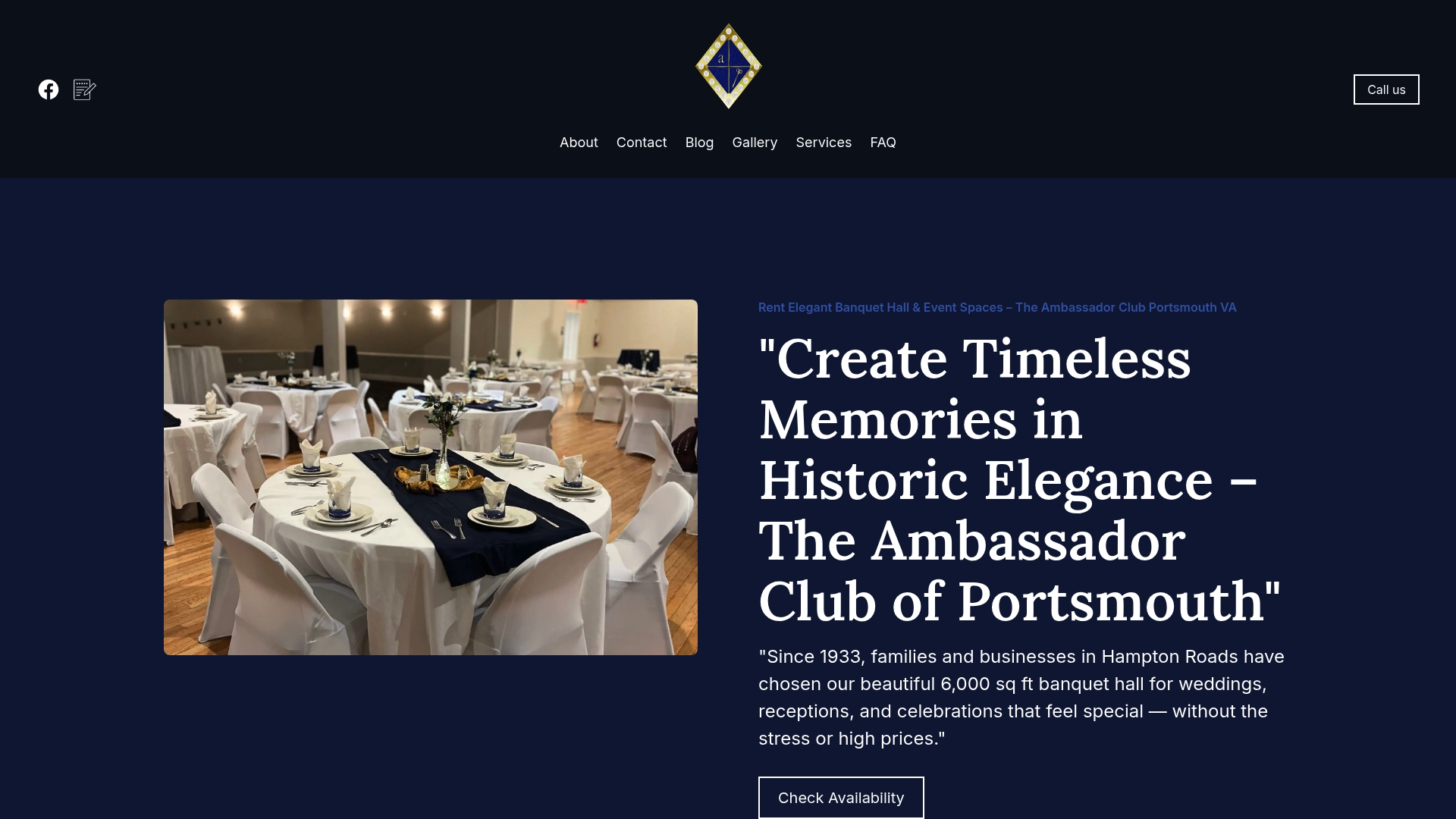
A large hall with a full commercial kitchen helps reduce logistical challenges for a morning or brunch reception by allowing caterers to prep, hold, and finish food on-site instead of racing a transport clock. Flexible catering policies can allow clients to choose their preferred menu options.
- Explore the Standard Event Package for a straightforward starting point on booking your date.
- Review Elegant Wedding Receptions and other services to see what's included for a daytime celebration.
- Check security deposit and cleaning fee details before you budget your event.
Reach out to check availability for your date and start planning your brunch reception at The Ambassador Club.
FAQ
What should you serve on the morning of a wedding?
A light brunch or lunch menu works best: think a waffle or omelet station, a plated salad with protein, pastries, and a coffee bar with a short cocktail option like mimosas. Keep hot egg dishes at an internal temperature of 160°F and reheated items at 165°F to stay food-safe.
Does a wedding reception have to happen at night?
No, a reception can happen any time of day, and a morning or midday brunch reception is a common, practical alternative to an evening event. Daytime receptions often run about three to four hours, shorter than a typical evening celebration.
What is the rarest month to get married?
Definitions vary by region and venue booking patterns, but winter months, particularly January and February, tend to see the fewest weddings in most markets. Availability and pricing both tend to reflect that lower demand.
What should you do seven days before a wedding?
Confirm final headcounts with your caterer, send the finalized timeline to every vendor with named contacts, and reconfirm arrival and load-in times with your venue. This is also the point to confirm transportation arrangements for out-of-town guests.
How far apart should the ceremony and reception be?
A gap of 30 to 45 minutes between ceremony and reception usually gives enough time for portraits and guest transition without leaving people waiting too long. Longer gaps work only if you plan a hosted cocktail hour or activity to fill the time.
Sources
- Food Safety Tips for Catered and DIY Wedding Food | FSIS
- A Safer Way to Host Mother's Day Brunch | USDA
- Calling All Early Risers — Here's how to plan a morning wedding — The Knot