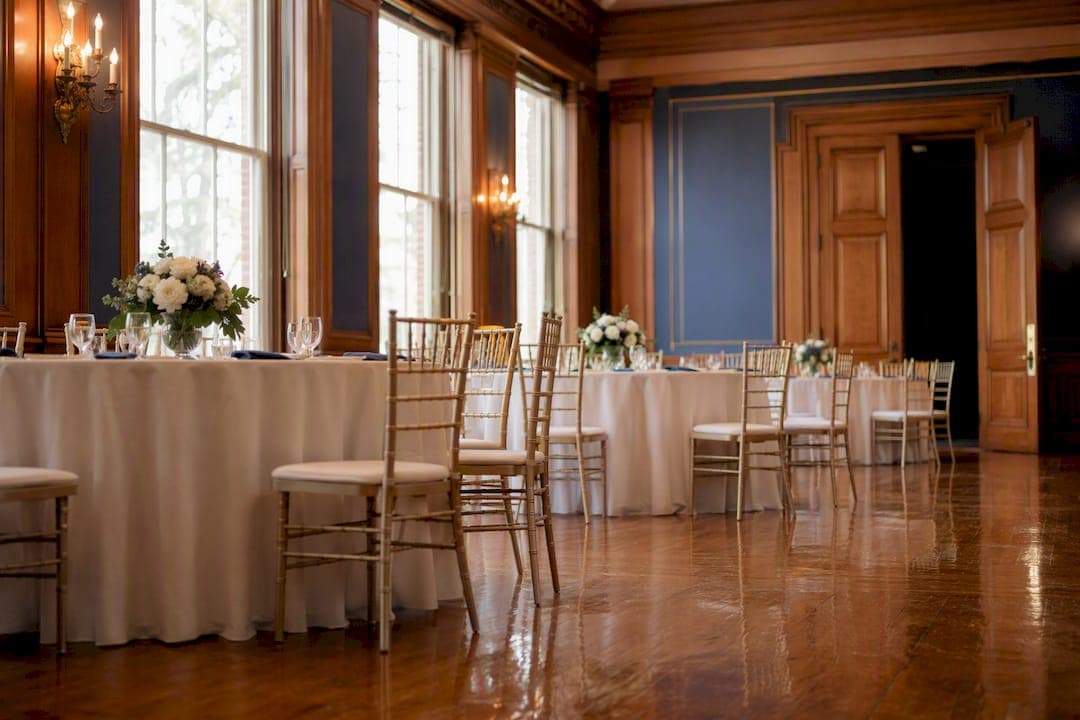
Build your venue timeline by working backward from the ceremony time and locking venue access first. That single step prevents most day-of overruns. Everything else, hair and makeup call times, vendor load-in, photo windows, cocktail hour, are math you do once you know when the ceremony starts and when the venue kicks everyone out.
Your master timeline needs seven fields for every single block, or it isn't usable on the day: time, task, location, owner, dependency, contact, and backup plan. Skip any of these and someone ends up guessing at 4:45 pm whether the DJ is supposed to be plugged in yet.
Here's the practical rhythm to follow:
- Draft the timeline as soon as your venue and core vendors are booked.
- Lock the final version about one month before the wedding.
- Circulate the vendor-facing copy one week out, with no more edits after that except emergencies.
TL;DR:
- Confirm venue access hours, load-in rules, and kitchen availability in writing before building your timeline, as these details are critical to prevent delays.
- Distribute about 15 minutes of buffer time across key transition points, including post-hair and makeup, before the reception, and after cocktail hour, rather than concentrating it at the end.
- Lock the final schedule one month before the wedding and recheck all vendor contacts, accommodations, and logistics one week prior to ensure smooth execution.
- Build your timeline backward from the ceremony start time, making it the fixed point, and schedule all preceding activities around it based on confirmed venue facts.
- Use a detailed master schedule for vendors, a simplified one-pager for the wedding party, and a basic ceremony card for guests to ensure each audience receives appropriate information.
Table of Contents
- Master Timeline Principles: Dependencies, Owners, and Buffers
- Sample Hour-by-Hour Timelines by Ceremony Start Time
- Coordinating Vendor Access, Load-In, and Handoffs
- Photography Timing: First Look or Not?
- Templates: What Vendors Need vs. What Guests Need
- When to Lock the Timeline and What to Check
- Ambassador Club's Take on Access Windows and Load-In
- Ready to Build Your Timeline Around a Venue That Works With You?
- Key Takeaways
- What the Research Actually Supports About Wedding Timelines
- Sources
- FAQ
Master Timeline Principles: Dependencies, Owners, and Buffers
The ceremony is the one thing on your wedding day that cannot move. Guests are seated, an officiant is standing there, and every other block, hair and makeup, florist delivery, photographer arrival, has to work backward from that fixed point. Planners who start from "getting ready begins at 9 am" and build forward tend to end up with a ceremony that starts late because nothing upstream had a hard deadline pulling it into line.
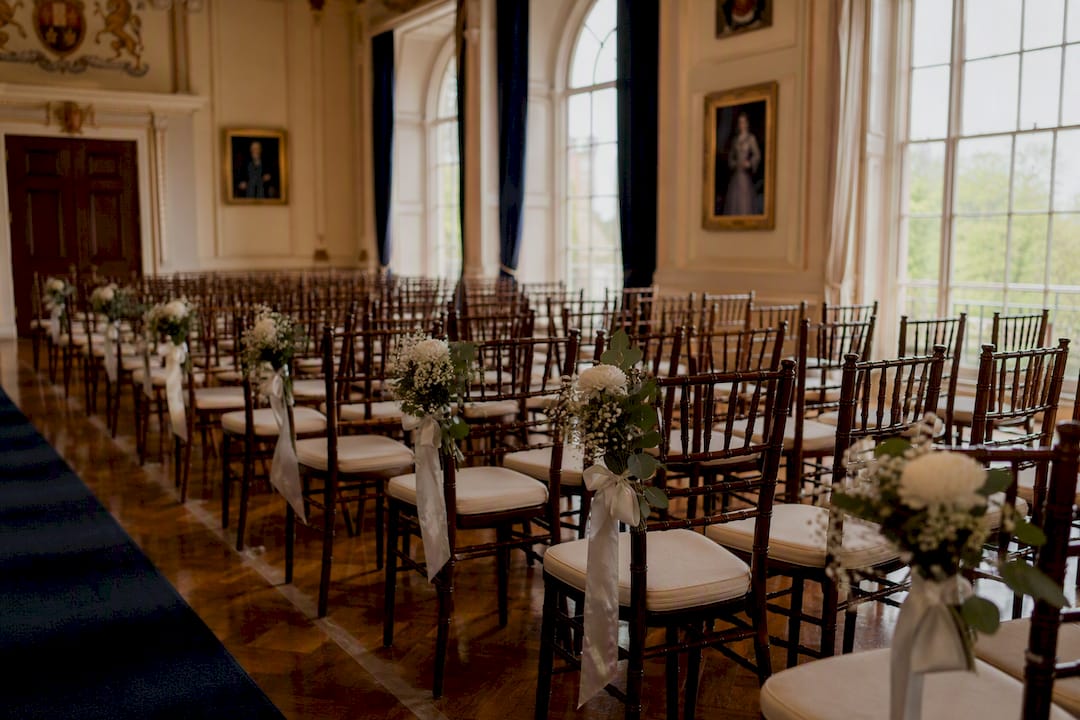
Before you write a single time slot, get four facts from your venue in writing: access and load-in windows, the hard-out time, any noise curfew, and when the kitchen becomes available to your caterer. Venue-specific access rules are, according to venue operators themselves, the most common practical cause of a timeline falling apart, not weather, not a late guest, but a florist showing up before the loading dock opens.
Buffer time isn't padding you add because you're nervous. It's a rule: plan roughly 15 minutes of unscheduled cushion for every two hours of scheduled time, which works out to about 75 minutes total across a 10-hour wedding day. Don't dump all 75 minutes into one slot near the end. Spread them across a few key seams instead:
- At the end of hair and makeup, before anyone starts changing into formalwear.
- Right before the grand entrance into the reception.
- Immediately after cocktail hour, before guests are asked to sit.
Every block also needs a named owner, not "the vendors" as a category, but a specific person: your coordinator owns the master schedule, your florist's lead owns the ceremony arch installation, your caterer's captain owns the room flip. The dependency chain typically runs venue access, then rentals and florals move in, then hair and makeup finishes, then the photographer starts, then formal portraits happen, then the ceremony begins. Building the schedule around these dependencies rather than around a generic template is what separates a timeline that survives contact with reality from one that doesn't.
Pro Tip: Give your coordinator authority to shift blocks by up to 15 minutes without checking with you first. If every micro-delay requires the couple's approval, you've turned your buffer into a bottleneck.
Sample Hour-by-Hour Timelines by Ceremony Start Time
These four samples assume a 120 to 150 guest count, a plated or family-style dinner, and one hour of dedicated photography before the ceremony for detail shots and getting-ready coverage. Adjust the cocktail hour length if you're doing a full open bar with passed appetizers versus a simpler setup.
2 pm ceremony (assumes a first look):
- 9:00 am: Hair and makeup begins
- 12:30 pm: First look and couple's portraits
- 1:30 pm: Guests begin arriving
- 2:00 pm: Ceremony (30 minutes)
- 2:30 pm: Cocktail hour, family formals
- 3:30 pm: Reception entrance and dinner
- 5:00 pm: Toasts, cake, first dances
- 6:00 pm: Open dancing
- 10:00 pm: Hard-out
3 pm ceremony (no first look):
- 9:30 am: Hair and makeup begins
- 1:30 pm: Detail and getting-ready photos wrap
- 2:45 pm: Guests arrive
- 3:00 pm: Ceremony (30 to 45 minutes)
- 3:45 pm: Cocktail hour while wedding party takes portraits (60 to 75 minutes)
- 5:00 pm: Reception entrance
- 5:30 pm: Dinner service begins
- 7:00 pm: Toasts and dances
- 11:00 pm: Hard-out
4 pm ceremony (assumes a first look, golden-hour portraits after):
- 11:00 am: Hair and makeup begins
- 2:30 pm: First look
- 3:45 pm: Guests arrive
- 4:00 pm: Ceremony
- 4:30 pm: Cocktail hour
- 5:45 pm: Golden-hour portrait break (15 to 20 minutes, pulled from cocktail hour)
- 6:00 pm: Dinner
- 8:00 pm: Dancing
- 11:00 pm: Hard-out
5 pm ceremony (evening, no first look, tighter portrait window):
- 12:00 pm: Hair and makeup begins
- 4:00 pm: Getting-ready photos finish
- 4:45 pm: Guests arrive
- 5:00 pm: Ceremony
- 5:30 pm: Family formals and wedding party portraits (45 to 60 minutes, run concurrent with cocktail hour)
- 6:45 pm: Reception entrance and dinner
- 8:15 pm: Toasts, cake, dances
- 11:30 pm or midnight: Hard-out (confirm against curfew)
| Ceremony Time | First Look? | Portrait Window | Dinner Style |
|---|---|---|---|
| 2 pm | Yes | 20 to 30 min post-ceremony | Plated |
| 3 pm | No | 60 to 75 min post-ceremony | Family-style |
| 4 pm | Yes | Golden-hour break, 15 to 20 min | Buffet |
| 5 pm | No | 45 to 60 min, concurrent with cocktails | Plated |
Coordinating Vendor Access, Load-In, and Handoffs
None of these sample timelines work if your vendors show up to a locked loading dock or a kitchen that isn't cleared yet. Confirm these items in writing before you finalize anything:
- Access hours: exact start and end times the venue allows on your contract
- Loading dock or entrance rules, including whether an elevator needs to be reserved
- Parking restrictions for vendor vehicles and guest vehicles
- Kitchen access windows for your caterer
- Noise limits and the hard-out time
Each vendor needs a specific arrival window and a clear idea of what they're walking into. Rental companies need tables and chairs placed before florals arrive. Florists need a clear ceremony space before they start installing arches or centerpieces. Your caterer needs kitchen access confirmed before their first delivery truck shows up, and your AV or DJ team needs power and setup space locked down before sound check.
- Assign one person, usually your coordinator, to own the ceremony-to-reception transition and room flip.
- Name a specific person responsible for opening the bar at the exact minute cocktail hour starts, not "whenever the bartender's ready."
- Put load-in vendor names, backup contact numbers, parking instructions, and entrance directions on a single-page production sheet.
- Distribute that production sheet to every vendor at least a week before the wedding.
A well-formatted vendor sheet removes almost all day-of guesswork, which is exactly the point. The complete venue setup checklist from event operations specialists is a useful model for structuring load-in tasks by vendor type.
Photography Timing: First Look or Not?
This decision reshapes your entire afternoon, so make it early and build the rest of the timeline around it. A first look compresses your post-ceremony portrait window down to roughly 20 to 30 minutes, because the bulk of couple's portraits already happened before the ceremony. Skip the first look and expect 45 to 75 minutes of portrait time after the ceremony, which pushes cocktail hour later and compresses dinner service.
Neither choice is wrong. Couples who want more time mingling at cocktail hour tend to prefer a first look. Couples who want the emotional moment of seeing each other for the first time at the aisle skip it and simply plan a longer cocktail hour to absorb the portrait time.
If you're shooting outdoors, work backward from sunset rather than forward from the ceremony. A 4 pm ceremony often lines up naturally with golden hour in spring and fall, but check your specific date's sunset time and scout the light at your venue in advance.
Give your photographer a written production note covering:
- Exact portrait locations at the venue
- The family formals shot list, ideally organized by combination, not by name
- Coverage end time
- Whether a golden-hour break is planned mid-reception
Templates: What Vendors Need vs. What Guests Need
Not everyone needs the same timeline. Your production schedule and your guests' printed ceremony program are different documents built for different readers.
| Version | Who Gets It | What It Includes |
|---|---|---|
| Master production schedule | Coordinator, all vendors | Every field: time, task, location, owner, dependency, contact, backup |
| Wedding party one-pager | Bridal party, family in the timeline | Simplified block times, no vendor contacts or dependencies |
| Guest ceremony card | Guests | Ceremony start time and general reception flow only |
Your vendors need the full master schedule with named contacts, arrival windows, and backup plans built in. Your wedding party needs a simplified one-pager with just the times that involve them. Guests need almost nothing beyond the ceremony start time and maybe a printed program.
Share the master schedule as a PDF with vendors a week out. Print physical copies for anyone without reliable phone access on the day, especially older family members helping coordinate.
When to Lock the Timeline and What to Check
Treat your timeline like a living document until it isn't. A working draft typically starts around six months before the wedding, once your venue and key vendors are booked. Refine it at the two to three month mark as headcount and vendor details firm up.
- Lock the timeline one month out. Confirm final headcount, vendor arrival windows, menu and service pacing, setup and strike windows, and any transportation logistics.
- Run a final check one week out. Reconfirm every vendor contact, parking arrangements, and entrance points.
- Hold a day-of production meeting where your coordinator walks through the schedule with key vendors before guests arrive.
- Distribute physical and phone copies to vendors, the wedding party, and at least one family member who isn't in the bridal party.
Ambassador Club's Take on Access Windows and Load-In
At Ambassadorclubportsmouth, timelines live or die on the same details couples often overlook until it's too late: how big the space is, when the kitchen opens, and how many people the room can actually hold. The Ambassador Club's 6,000 square foot hall accommodates up to 200 guests, which means florist and rental load-in usually needs a longer window than couples budget for at smaller venues, simply because there's more square footage to dress.
The venue's full commercial kitchen gives caterers flexibility on plated versus buffet service, but that access still has to be scheduled, not assumed. Common conflicts include floral deliveries arriving before rental setup finishes, or a caterer needing kitchen access earlier than the contract's default window allows.
Extra load-in time and early floral coordination resolve nearly every scheduling conflict venues see repeatedly. Building that flexibility into the contract before the wedding week is far easier than negotiating it on the day.
- Confirm your access window against your actual vendor count, not a generic estimate
- Ask about kitchen availability separately from general venue access
- Check dance floor and AV setup requirements against your room flip time
For more on how access windows work in practice, see what venue access time means for your wedding and the venue's amenities list for couples.
Ready to Build Your Timeline Around a Venue That Works With You?
A timeline only holds up if the venue behind it gives you room to breathe, literally and logistically. Ambassadorclubportsmouth's historic hall in Portsmouth, VA has hosted weddings and receptions since 1933, with a full commercial kitchen, flexible outside catering policies, and packages that include setup, cleaning, and security so your vendor coordination doesn't fall entirely on you. If you're choosing a venue with your timeline in mind, start with the Ambassador Club's booking process and ask directly about access windows, kitchen hours, and load-in logistics before you sign.
Key Takeaways
A wedding venue timeline works when it's built backward from the ceremony, anchored to confirmed venue access hours, and padded with buffers at key transition points rather than one block at the end.
| Point | Details |
|---|---|
| Build backward from the ceremony | Treat ceremony start time as fixed, then schedule every earlier block around it. |
| Confirm venue facts before drafting | Get access hours, hard-out time, noise limits, and kitchen availability in writing first. |
| Distribute buffers, don't concentrate them | Add about 15 minutes per two-hour block, spread across getting-ready, entrance, and post-cocktail seams. |
| Lock the schedule one month out | Finalize headcount, vendor windows, and service pacing, then recheck contacts one week before. |
| Match the document to the audience | Vendors get the full production schedule; guests get a simple ceremony card. |
What the Research Actually Supports About Wedding Timelines
Most timeline advice treats every wedding day like it follows the same template, nine hours, same blocks, same order, regardless of ceremony start time or venue. That's backward. The venue's contract terms, not a generic hour-by-hour chart, should set your first draft.
The conventional wisdom oversells buffer time as a single cushion near the end of the night. It works far better distributed across three or four specific seams, because delays compound. A 15-minute slip during hair and makeup becomes a 30-minute slip by cocktail hour if nothing absorbs it along the way.
What couples should prioritize first isn't the pretty printable timeline template floating around wedding blogs. It's a phone call to the venue asking four blunt questions: when can vendors access the space, when does the kitchen open, what's the noise curfew, and what's the actual hard-out time. Everything else on the schedule is negotiable. Those four answers aren't, and they should shape every hour that follows.
— MARTIN
Sources
Timing norms and buffer guidance draw on The Wed's timeline mistakes guide, Fiore Designs' planning framework, and WeddingProsRated's buffer rules. Booking timing comes from Zola's venue booking guide.
FAQ
What Is the 50/20/30 Rule for Weddings?
It's a budget allocation guideline, not a timeline rule. Roughly 50% of the budget goes to venue and catering, 20% to photography and entertainment, and 30% to everything else, though actual splits vary by couple.
What Is a Typical Timeline for a Wedding Ceremony?
Most ceremonies run 20 to 45 minutes depending on religious or cultural traditions included. Non-religious ceremonies with a single officiant often finish closer to 20 minutes, while ceremonies with multiple readings or rituals run longer.
What Is the 30-5 Rule for Weddings?
Definitions of this rule vary across sources, so treat it as informal guidance rather than an industry standard. Some couples use it to mean sending final headcount 30 days out and confirming details 5 days before.
What Is the Order of Events at a Wedding?
The typical sequence runs ceremony, cocktail hour, reception entrance, dinner, toasts, cake cutting, first dances, open dancing, and send-off. Exact order can shift based on venue hard-out times and cultural traditions.