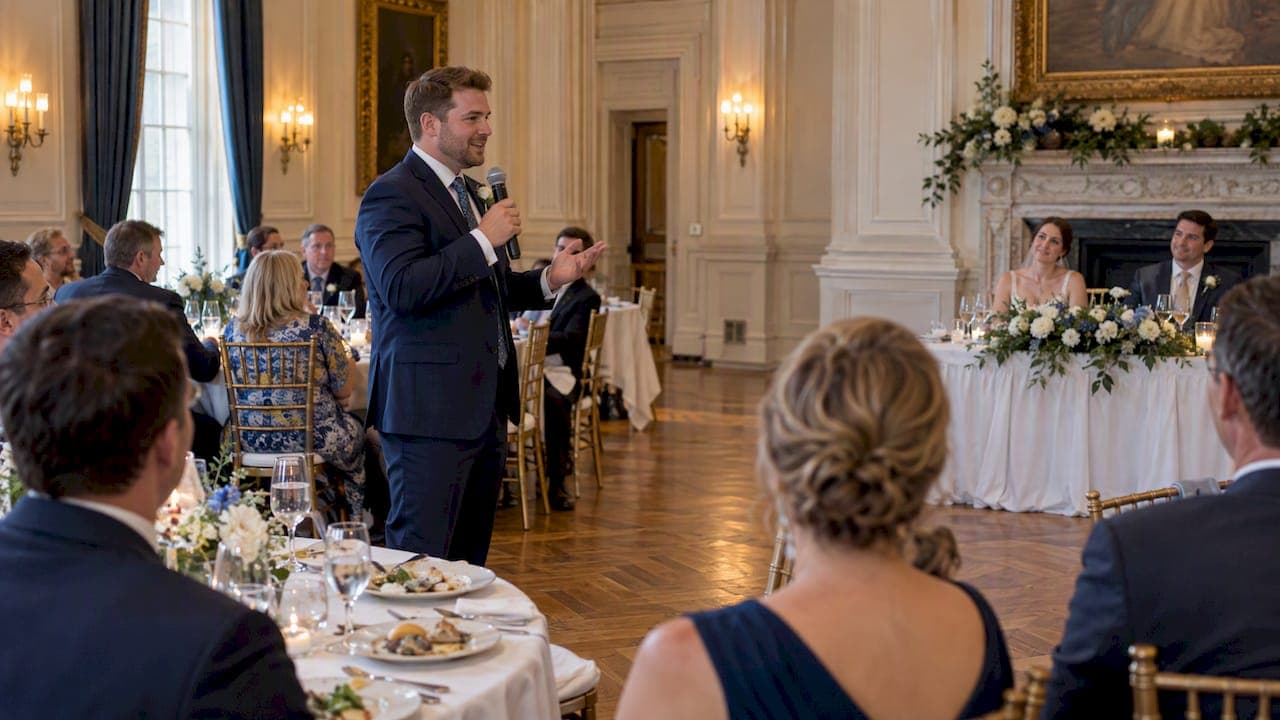
Start the welcome toast as guests take their seats, then spread the remaining speeches between courses or land them around 75% through dinner, according to The Knot's reception timeline guidance. The traditional order runs hosts, then wedding party, then the couple, with each toast kept to a few minutes. The right placement still depends on whether dinner is plated, buffet, family style, or a cocktail format.
TL;DR:
- Most speeches should occur around the 75% mark of dinner, with timing tailored to service style and venue flexibility, to maintain flow.
- Coordination with catering and venue staff is crucial to hold plating and clear windows during toasts, preventing disruptions.
- Speakers should be limited to 1-2 minutes each, with a clear order and rehearsal to keep transitions smooth and energy high.
- Moving some speeches to the rehearsal dinner or welcome event can preserve dancing time and adapt to long or numerous speaker lists.
- The traditional speech order is host, family, then wedding party, but flexibility is common and encouraged based on family dynamics and personality.
Table of Contents
- Traditional speech order and modern variations
- When to schedule speeches during the reception
- Sample timelines you can copy
- Keeping speeches short and speakers prepared
- Moving speeches to the rehearsal dinner or welcome party
- Venue-hosted coordination notes
- Balancing etiquette with personality
- How Ambassador Club keeps your speech timeline on track
- FAQ
- Sources
Traditional speech order and modern variations
The classic sequence exists for a reason: it moves from the people hosting the event down to the people closest to the couple, so the energy builds instead of fizzling. Emily Post's toast guidance notes that the host traditionally gives the first toast, a custom that signals welcome and ushers guests into the meal.
A typical order looks like this:
- Host or father of the bride opens with a welcome toast.
- Parents or other family members follow, if they're speaking separately.
- The best man and maid of honor speak next, often in either order.
- The couple closes, thanking guests and wrapping the block.
This sequence flexes easily. Both parents can speak together or split their toasts across the reception. Same-sex couples often swap roles for whoever holds those responsibilities, and weddings without a formal wedding party can shift the honor to siblings or close friends. Emily Post frames the host-first rule as tradition, not law, so adjusting it for family dynamics is expected practice rather than a breach of etiquette.
When to schedule speeches during the reception
Timing matters as much as order. The Knot's guidance on speech placement recommends a welcome toast right as guests sit down, when they're attentive but servers haven't started plating yet.
Service style changes the math. Plated dinners give you natural pauses between courses to slot in toasts. Buffets and family-style meals create more movement, so speeches work best once most guests are seated with food. Cocktail receptions without a formal seated dinner often move the whole toast block earlier, right after the couple's entrance.
Pro Tip: Tell your caterer the exact toast times during your final planning call, not just the day before, so kitchen staff can hold plating around the mic.
Before the big day, confirm these with your venue and caterer:
- Exact toast times relative to course service.
- A mic check scheduled before guests arrive.
- A plan for pausing background music during each toast.
- Clear windows for plate clearing that won't overlap with speeches.
Sample timelines you can copy
A short reception with two or three speakers can keep things tight. A standard four-hour reception has more room to breathe. An extended event with many speakers needs staging and buffers.
- Short reception (2 to 3 hours): Welcome toast at seating (6:00 PM), best man and maid of honor back to back after the entree (6:45 PM), cake cutting and dancing by 7:15 PM.
- Standard four-hour reception: Cocktail hour 5:00 to 6:00 PM, welcome toast at seating around 6:05 PM, first course served, parent toasts between first and main course near 6:40 PM, best man and maid of honor after the main course around 7:20 PM (roughly 75% through dinner), dessert and dancing from 7:45 PM, a structure The Knot outlines in its standard reception timeline.
- Extended reception with many speakers: Stage toasts in two blocks rather than one long run: hosts and parents right after seating, then wedding party and couple near the 75% dinner mark, with a 10-minute music buffer between blocks so guests don't feel talked at for 30 straight minutes.
For smaller guest lists, the pacing can compress further; see our notes on small wedding reception ideas for how a tighter layout changes the flow.
Keeping speeches short and speakers prepared
Aim for about 1 to 2 minutes per speaker, with a few minutes as the ceiling. Keeping toast blocks reasonably short helps keep the room engaged.
A few tools make this easier to manage in the moment:
- Give your emcee or DJ cues to introduce each speaker by name and keep transitions snappy.
- Set a discreet time signal, like a hand gesture from a planner, for speakers running long.
- Send each speaker a one-line brief in advance: order, time limit, and whether to use notes.
- Run a mic and AV check before guests arrive so there's no fumbling mid-toast.
Pro Tip: Put your most confident, natural speaker last in the block. It ends the segment on energy instead of letting momentum fade.
Nervous speakers do better with notes in hand and a known speaking order well ahead of time. A short rehearsal, even informal, over the phone the week before helps more than any last-minute pep talk.
Moving speeches to the rehearsal dinner or welcome party
Not every toast has to happen at the reception. Shifting some speeches to the rehearsal dinner or welcome party can protect dancing time and keep the reception moving, especially with a long speaker list.
Before deciding, check:
- Who's confirmed for the rehearsal dinner versus the full reception guest list.
- Whether moving a toast changes who hears it (rehearsal dinners skew smaller and more intimate).
- Updated run-sheets for both events so no one double-books a toast.
- AV and catering needs at each location.
A welcome party often works better than a rehearsal dinner for destination weddings or multi-day events with many out-of-town guests, since it can include a wider crowd than a typical rehearsal dinner invite list.
Venue-hosted coordination notes
Coordinating toast timing with a kitchen's service flow matters more than most couples expect. Sharing a sample run-sheet with your venue ahead of time lets staff plan plating around mic moments instead of guessing. This includes confirming music fade points, mic handoffs, and slideshow length with the client, then providing vendors a shared checklist covering speaker order, mic needs, cue points, and table-clearing windows so nothing collides mid-toast.

Balancing etiquette with personality
Etiquette gives you a starting order, not a script. I'd rather see a couple swap the sequence to honor a grandparent or skip a toast no one wants to give than force tradition where it doesn't fit. Coordinate closely with your venue, keep pacing tight, and let the people who matter most actually be heard.
— MARTIN
How Ambassador Club keeps your speech timeline on track
Getting toast timing right takes less guesswork when your venue handles the coordination with you. Ambassador Club's Standard Event Package pairs on-site event coordination with a full commercial kitchen, so your caterer and the room staff can sync plating around every toast without a scramble.
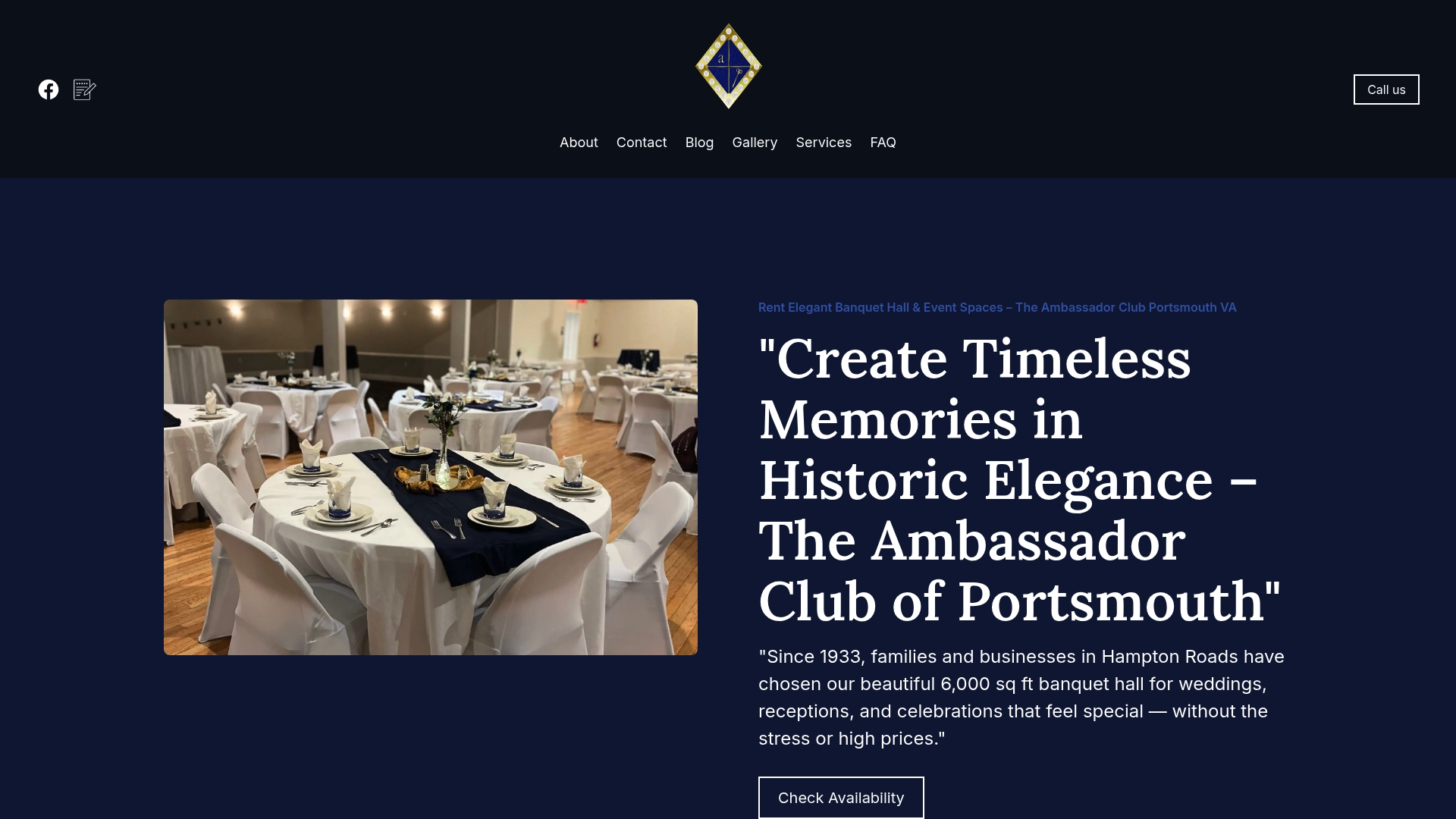
Couples booking an Elegant Wedding Reception get:
- Built-in AV and projection support for mic checks and slideshows.
- Run-sheet assistance so speaker order and timing are confirmed before the day.
- A 6,000 square foot hall with room for dancing right after the last toast.
- Flexible catering options that adjust service pacing to your schedule.
Check package details or schedule a site visit through the services page to see how the timing comes together in person.
FAQ
What is the correct order for speeches at a wedding?
The traditional order starts with the host or father of the bride, followed by other family members, then the best man and maid of honor, with the couple closing the block. This order can flex for both-parents toasts, same-sex couples, or weddings without a formal wedding party.
What is the 50/20/30 rule for weddings?
This isn't a recognized etiquette or planning standard, and no source in wedding planning guidance defines it as such. Couples are better served following the traditional speech order and timing guidance covered above.
How long do speeches usually take at a wedding?
Each speech typically runs 1 to 3 minutes, which keeps a toast block of several speakers under 15 to 20 minutes total. Grouping speeches between courses or around the 75% dinner mark, as The Knot recommends, keeps the pacing tight.
Who walks mom down the aisle?
This question concerns ceremony processional order, not speech timing, and isn't covered by the sources used for this guide. Couples should confirm processional details with their officiant or ceremony coordinator.