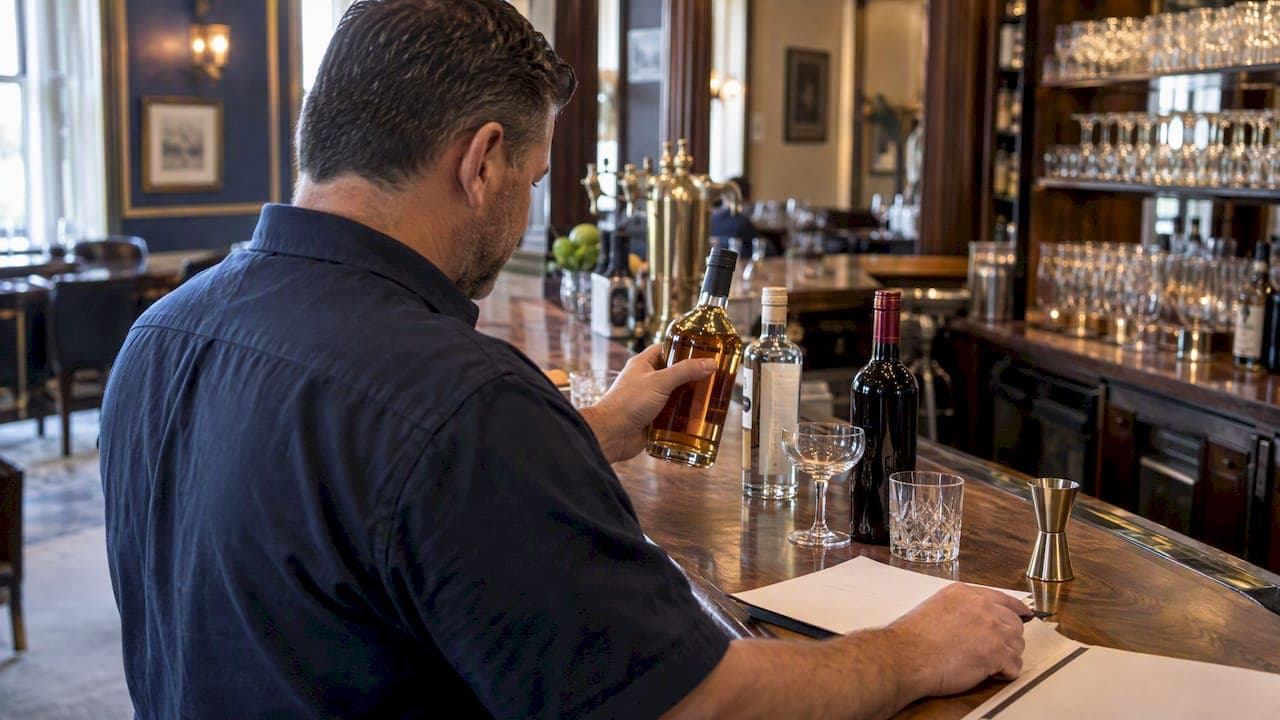
For most events and restaurant bars, plan a focused cocktail menu plus a small curated wine and beer list, with elevated nonalcoholic options. This balances guest choice, service speed, and profit. Narrower menus move lines faster and cut waste, while flights or rotating taps add variety without bloating your list. Pick the template that fits your event, then move to batching and stocking.
TL;DR:
- Prebatch cocktails built around spirits because their dilution stays predictable, but add carbonation and fresh citrus only during service to preserve freshness.
- Build recipes around shared spirits, liqueurs, mixers, and garnishes, then standardize glassware so bartenders can work quickly without relying on recipe cards.
- Price well pours and classics below signatures, charge flights by ounce rather than discounting them, and use whole dollar amounts consistently across the menu.
- List ingredients beside every drink for allergy decisions, mark nonalcoholic and low alcohol choices consistently, and place prices in the same position on each line.
- Estimate drink quantities from reception length and guest preferences, then set staffing by guest count, bar format, and drink complexity.
Table of Contents
- Recommended menu structure: sections and counts
- Control complexity: batching, shared ingredients, and backbar choices
- Pricing basics: quick math to protect margin without losing guests
- Signature cocktails and nonalcoholic options that lift the menu
- Menu wording and layout for faster choices and reliable execution
- Event quantities and staffing: rules of thumb and batching steps
- Trends and sourcing: what to add now
- Three quick menu templates to copy and adapt
- What running bars at live events taught me about menu length
- Let us help you plan and pour the bar for your event
- FAQ
- Sources
Recommended menu structure: sections and counts
A workable bar menu has sections that each do a specific job: signatures draw attention and set the tone, classics give cautious drinkers a safe choice, beer and cider cover casual sippers, wine serves the by-the-glass crowd, and nonalcoholic options keep everyone included.
For most events, aim for:
- A curated wine selection (a red, a white, a rosé or sparkling option can cover a range of preferences)
- A small selection of beers or ciders (for example, a light option and a hoppier or darker one)
- Signature cocktails plus classics, with the total tailored to the event
- Elevated nonalcoholic drinks, listed on the main menu rather than tucked at the bottom
These choices exist for a reason beyond tidiness. Research on menu-dependent food choices finds that narrower menus change ordering behavior and reduce waste, since guests choose faster and more confidently from a shorter list. Fewer options also means fewer bottles to stock, less spoilage, and a backbar your staff can actually memorize before doors open.
Control complexity: batching, shared ingredients, and backbar choices
The real cost of a bar menu is not just the ingredients. It is also the time each drink takes to build and the mistakes that can happen under pressure. Spirit-forward cocktails (Old Fashioneds, Manhattans, Negronis) batch well because dilution is predictable and they skip the shaker entirely. Citrus-forward drinks can be pre-batched minus the citrus, then finished to order to preserve freshness.
Plan your menu so a handful of base spirits, a small selection of liqueurs, and a short mixer list cover most of your drinks:
- Choose spirits that appear in multiple menu items
- Standardize garnishes instead of choosing a different garnish for every drink
- Limit glassware variety and build each station around a consistent workflow
Pro Tip: Pre-batch anything that does not include carbonation or fresh citrus ahead of the event, and store it in labeled containers at the bar station.
Our own dry bar setup advice for hall events echoes this: limiting the drink list is what actually keeps a line moving.
Pricing basics: quick math to protect margin without losing guests
Pricing does not need a spreadsheet, just consistent rules. A common approach is to price each drink against its pour cost, aiming for a target cost percentage, then round to a clean number so the menu reads consistently.
A few practical guardrails:
- Price well pours and classics lower and signature cocktails slightly higher, since the labor and ingredient story justify the gap
- Price flights per ounce, not as a flat discount, so guests sampling three pours pay roughly what one full pour would cost
- Keep decimal points off the menu (use $9, not $8.75) so prices scan quickly and consistently
Consistent formatting matters as much as the math. When every price ends in the same increment and sits in the same spot on the line, guests read the menu as fair rather than picking it apart. Our catering cost-saving checklist covers the same logic applied to a full event budget, not just the bar.
Signature cocktails and nonalcoholic options that lift the menu

A small selection of signature cocktails can give a menu personality without overwhelming it. Build them around ingredients already in your well, give each a short name tied to the event or venue, and keep the build simple enough for a second bartender to execute under pressure without a recipe card.
Nonalcoholic drinks deserve the same care:
- List elevated nonalcoholic options directly on the main menu, not in a footnote
- Use a simple icon or label so guests scanning quickly can spot them
- Offer a flight or tasting pour of wine or spirits instead of adding permanent menu lines, letting curious guests sample variety without expanding your stock list
A short tequila-forward signature, for example, pairs naturally with food courses when you borrow ideas from a tequila pairing playbook built around agave spirits.
Menu wording and layout for faster choices and reliable execution
Guests decide faster when the menu format repeats. Use one line per drink: name, a short flavor note, then the ingredients. The ingredient list is not optional. It is what lets a guest with an allergy or dietary preference make a quick, confident decision without flagging down staff.
- Group drinks by spirit or by style (bright and citrusy, bold and stirred) rather than alphabetically
- Mark nonalcoholic, low-ABV, and flight options with a consistent small icon
- Place prices in the same spot on every line, right-aligned or directly after the name, never buried in a paragraph
Skip narrative copy about a drink's origin story. One flavor-forward phrase does more work than three sentences of description, and it keeps the line moving.
Event quantities and staffing: rules of thumb and batching steps
Ordering and staffing both come down to a few reliable ratios, adjusted for event length and guest profile.
- Estimate drink quantities based on the reception length and guest profile, allowing for higher demand during a longer cocktail hour or when guests favor spirits.
- Set staffing according to guest count, bar type, and drink complexity.
- Pre-batch popular sellers ahead of the event so peak service does not depend on building drinks from scratch under pressure.
Pro Tip: Run your numbers through a beverage calculator before finalizing your order. Our own calculator can help with beverage quantities.
Pair this with a cocktail hour layout that spreads guests across multiple high-top stations so one bar station never bottlenecks the whole room.
Trends and sourcing: what to add now
A few trends are worth building into your menu without adding permanent complexity. Hyper-local beer and wine build guest trust and repeat bookings, a point the National Restaurant Association's beverage trend forecast highlights as a leading driver for 2025.
- Rotate one local tap or regional wine as a limited-time feature instead of a permanent line
- Add a wellness-oriented nonalcoholic option like cold brew, kombucha, or a functional beverage to meet demand across age groups
- Use a flight format to showcase local pours without substantially expanding your inventory
Three quick menu templates to copy and adapt
- Small bar template: a few signature cocktails, a small beer and wine selection, nonalcoholic drinks, and limited glassware
- Event signature bar template: signature cocktails (some pre-batched), classics, a curated beer and wine list, and nonalcoholic options
- Full restaurant bar template: sections organized by spirit or style, rotating local taps, a flight program, and a standalone nonalcoholic list
What running bars at live events taught me about menu length
I have watched a longer signature list bring a line to a crawl, and I have watched a shorter one clear the same crowd before the toast ended. In my experience, reducing the signature list and pre-batching a drink helped move guests through faster. The lesson holds everywhere: fewer decisions at the point of order beats a longer list every time.
— MARTIN
Let us help you plan and pour the bar for your event
Choosing the menu is half the work. The other half is the room it happens in, and our Standard Event Package includes a full commercial kitchen, flexible outside catering policies, and a spacious hall designed to handle a bar station without crowding your guest flow.
Whether you are planning Elegant Wedding Receptions, Corporate Event Space, or Birthday Party Venue hosting, our team can talk through your bar setup and catering or bartending considerations before you book. Reach out to check availability for your date.
FAQ
What is the 3:2:1 rule in bartending?
The 3:2:1 rule is a common ratio for balancing a drink: 3 parts base spirit, 2 parts sour (usually citrus), and 1 part sweet. Bartenders use it as a starting template for building sours and similar cocktails, then adjust to taste for specific recipes.
What are the 5 basic steps of menu planning?
Menu planning generally follows five steps: define your sections and counts, choose recipes that share ingredients, set consistent pricing, write clear descriptions with ingredients listed, and confirm quantities and staffing against expected guest counts. Working through these in order keeps the final list both appealing and operationally realistic.
How do I create a menu for a bar?
Design recipes around shared base spirits and mixers so the backbar stays manageable, and format descriptions consistently with ingredients listed for allergen clarity.
What are the 7 parts of a menu?
Definitions vary, but a common version for a bar or beverage menu includes signatures, classics, beer, wine, nonalcoholic drinks, flights or tastings, and pricing or specials. Not every bar needs all seven; smaller events often combine or drop sections to keep the list focused.