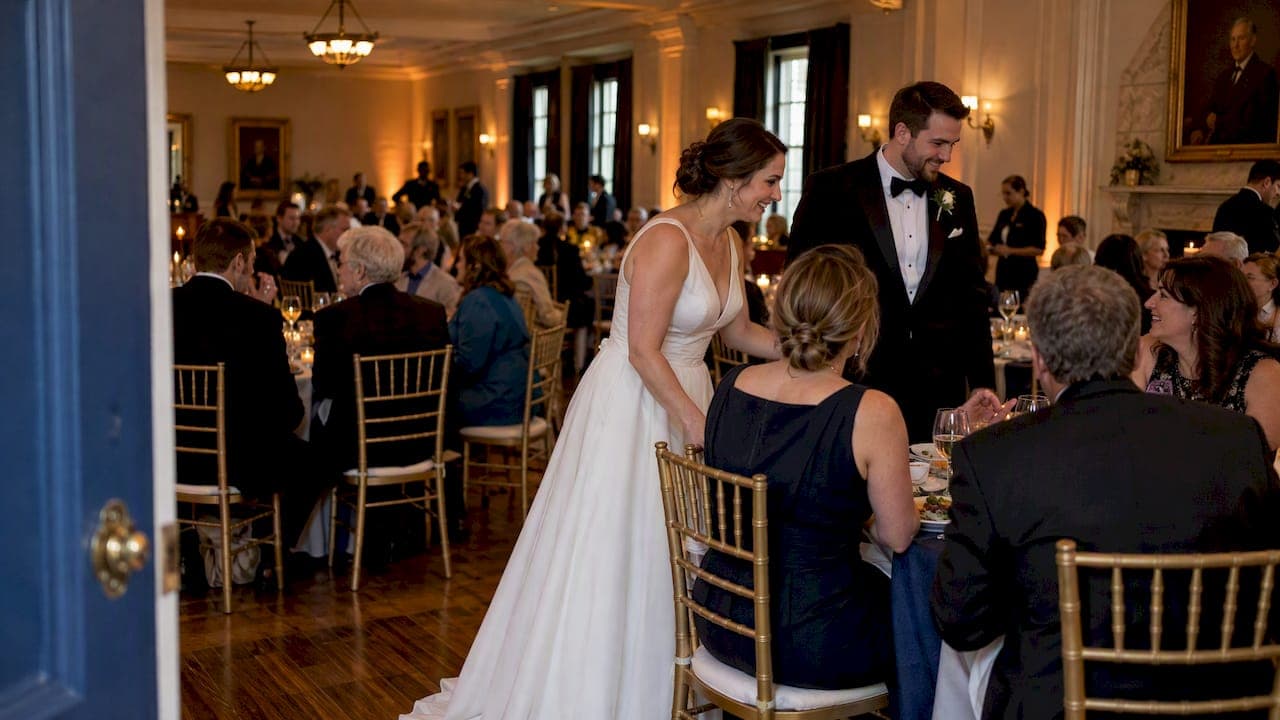
A great indoor winter wedding comes down to three things done well: layered warm lighting, a seasonal menu that keeps guests comfortable, and a guest flow that protects people from the cold. Get those right and everything else, from burgundy and gold decor to USDA-safe hot food stations, falls into place around that foundation, whether you host at a historic hall like the Ambassador Club or any other indoor venue.
TL;DR:
- Build three lighting layers for navigation, dining, and atmosphere; amber uplighting flatters skin, while green tones can look unflattering in person and photos.
- Keep buffet food at 140°F or warmer and cold dishes at 40°F or colder; discard perishable items left out beyond two hours.
- Assign staff to arrival and each transition, provide a covered route and coat check, and schedule outdoor portraits in one 20 to 30 minute block.
- Ask the venue how heating works across different areas and whether ventilation can prevent overheating without creating drafts near seated guests.
- Winter bookings often bring lower vendor prices and more date flexibility; ask whether off peak rates apply and whether included hours can shift toward setup or lighting.
Table of Contents
- 1. Choose a Theme That Suits an Indoor Winter Room
- 2. How Lighting and Texture Warm Up a Large Room
- 3. Menu and Drink Ideas That Feel Warm, Not Heavy
- 4. Attire and Comfort Ideas for Guests and the Wedding Party
- 5. Venue Logistics That Keep Guests From Waiting in the Cold
- 6. Winter Dates Can Save Money: Where to Spend the Difference
- 7. A Venue-Ready Checklist for Winter Weddings
- 8. Entertainment That Keeps Guests Engaged Indoors
- 9. Photography Tips for Winter Indoor Light
- 10. Winter Wedding Favors and Gifts Guests Will Actually Use
- 11. Winter Flowers and Plants for Indoor Arrangements
- 12. Keeping the Room Comfortable: Heating and Air
- Why Winter Weddings Feel More Intentional
- A Historic Hall Built for Cozy Winter Celebrations
- FAQ
- Sources
1. Choose a Theme That Suits an Indoor Winter Room
Winter gives you more design latitude than any other season because the room itself becomes your weather. Pick a direction early and build your vendor conversations around it instead of chasing a dozen Pinterest boards at once.
- Winter wonderland: white-on-white linens, crystal garlands, and mirrored glass votives create a bright, reflective look under warm pin-spotting. Starter list: faux fur table runners, glass bead strands, white orchid centerpieces.
- Moody jewel tones: deep emerald or sapphire linens against brass candlesticks and amber uplighting feel rich without going dark. Starter list: velvet table runners, brass taper holders, smoked glass votives.
- Cozy lodge: exposed wood, plaid throws, a working fireplace if your venue has one, and layered wool rugs turn a large hall into a ski-cabin feel. Starter list: plaid table runners, lantern centerpieces, faux fur throws for guest chairs.
- Vintage burgundy and gold: tall taper candles, textured damask linens, and antique brass accents suit a historic hall with existing architectural detail. Starter list: dripless taper candles, gold flatware, velvet ribbon for bouquets.
- Celestial and metallic: navy linens, scattered star accents, and pin-spot lighting on the ceiling create depth in a tall room. Starter list: copper or gold charger plates, star-shaped votive holders, metallic balloon or paper garlands.
- Minimalist snowy: matte white linens, bare branches in tall vases, and amber uplighting instead of cool white keep a pared-back look from feeling cold. Starter list: birch branches, matte ceramic vases, unscented ivory pillar candles.
Each theme reads differently depending on your venue's own bones. A historic hall with existing architectural character often needs less added decor than a blank modern ballroom, since moldings, wood floors, or original fixtures already do some of the work.
2. How Lighting and Texture Warm Up a Large Room
Lighting is the single biggest lever for making an indoor winter wedding feel intimate rather than cavernous. Planners recommend building light in three layers: a navigation layer that guides guests safely between areas, a dining layer that flatters faces at the table, and an ambient layer that creates cozy pockets around lounges and bars. Layered lighting combining overhead fixtures, candles, pin-spotting, and ambient sources keeps a large room from feeling visually flat, and lighting pros also point to circulation points like bars and photo booths as spots that need their own highlighting, not just the dining tables.
Color temperature matters as much as placement. Amber uplighting is widely considered the most flattering shade for skin tones and reads as romantic and formal, while green uplighting tends to look unflattering and is worth avoiding entirely.
Candles add warmth that LEDs alone can't fully replicate, but every venue has its own fire rules. Before you commit to open flame, confirm the policy; our candle policy checklist walks through common restrictions and flameless alternatives that still look convincing in photos.
Pro Tip: Layer rugs over hard flooring near lounge seating. It softens the acoustics of a large hall and makes a cocktail area feel like a separate, cozier room.
- Ask your venue about outlet locations before ordering draping or uplights that need power runs.
- Confirm whether open flame, battery candles, or both are allowed, and get it in writing.
- Combine at least two textures, like velvet and wood, or wool and brass, so the room doesn't read as flat or themed from a box.
3. Menu and Drink Ideas That Feel Warm, Not Heavy
A winter menu should build in temperature and texture rather than just pile on rich food. One practical formula: a warm savory welcome bite as guests arrive, a balanced main course, one fresh or bright element to cut the richness, and cozy late-night bites before the night winds down. Planners recommend pairing warm, spiced dishes with something fresh so the meal feels comforting without leaving guests sluggish on the dance floor.
Signature drinks set the tone fast. A spiced mulled wine or warm cider cocktail at the welcome table signals "winter" immediately, and pairing it with one chilled option, like a sparkling citrus cocktail, keeps the bar balanced for guests who want something lighter. For red wine service specifically, serving temperature actually changes how the wine tastes, so ask your caterer or bar service to hold reds slightly below room temperature rather than letting them sit near a heater. If mulled wine is on your list, a few warm-wine recipes built on red wine, citrus, and warm spices are easy for a caterer to batch for a crowd.
- Warm welcome bite: mini beef Wellington bites, butternut squash soup shooters, or baked brie with fig.
- Late-night station: grilled cheese bites, mini chicken and waffles, or a hot chocolate bar with toppings.
- Buffet mechanics include equipment to keep hot food warm and cold dishes properly chilled to maintain food safety.
Hot food should stay at 140°F or warmer and cold food at 40°F or colder, and perishable items shouldn't sit out more than two hours, per USDA guidance, a rule that matters just as much at a December buffet as a July picnic.
4. Attire and Comfort Ideas for Guests and the Wedding Party
Winter attire should look intentional, not like a cold-weather workaround. Long sleeves, velvet jackets, and structured wraps for the bridal party read as elegant rather than bundled, and guests appreciate a dress code note that mentions "formal with outerwear welcome" so no one shows up underdressed for the weather outside.
Guest comfort amenities make a bigger difference than most couples expect. A staffed coat check near the entrance, a small blanket station for anyone who gets chilly near doors, a hot drink station during cocktail hour, and a basket of hand warmers and lip balm at the welcome table are small touches editorial planners consistently recommend for winter events.
- Keep outdoor portrait time to a single 20 to 30 minute block with a warm break built in.
- Offer a quick skincare touch-up kit (lip balm, hand cream) near the restrooms for dry winter air.
- Stage hair and makeup touch-ups right before the ceremony, after any outdoor photos are done.
5. Venue Logistics That Keep Guests From Waiting in the Cold
The difference between a winter wedding that feels cozy and one that feels chaotic usually comes down to staging. Guest-first logistics like protected arrival routes, visible coat storage, and warm drinks on arrival are what make a reception feel intentional rather than just decorated.
- Mark a covered path from parking to the entrance with clear signage so no one wanders in the cold looking for the door.
- Staff the coat check with enough people to avoid a line, and use numbered tags so retrieval at the end of the night is fast.
- Assign an owner to each transition, arrival, cocktail hour, dinner, and dancing, so guests are never standing around wondering where to go next.
- Control drafts near entrances, place a temporary heater if your venue allows it, and confirm accessible routes work in winter coats and boots.
- Share ride-share pickup points and parking instructions in your invitation suite so guests aren't improvising in bad weather.
6. Winter Dates Can Save Money: Where to Spend the Difference
December, January, and February are often off-season for many wedding vendors, which can mean discounted pricing and more date flexibility than a Saturday in June.
Put those savings where guests actually feel them: better lighting design, a stronger heating plan, extra coat-check staffing, or paying a vendor for an extra hour of overtime to keep transitions smooth. When negotiating a winter date, ask vendors directly whether off-peak pricing applies and whether any included hours can shift toward setup or lighting instead of being wasted on an earlier end time.
7. A Venue-Ready Checklist for Winter Weddings
A venue with a full commercial kitchen simplifies winter menus considerably, since hot stations, soups, and late-night bites can be prepared and held on-site rather than trucked in and rewarmed. At a historic hall with a single large room, staging arrival, cocktail hour, and dinner in sequence within the same space cuts down on the outdoor walking guests would otherwise do between a ceremony tent and a separate reception building.
- Arrival plan: covered entry, signage, coat check staffed before the first guest arrives.
- Lighting cues: amber uplighting on, candles lit, pin-spots on the bar by cocktail hour.
- Warm-station timing: hot food out and holding at temperature before doors open to guests.
- Photographer schedule: portraits scheduled in one block, with a warm-up break built in.
8. Entertainment That Keeps Guests Engaged Indoors
Without an outdoor lawn game setup or a sunset backdrop, indoor winter weddings lean on entertainment that works within four walls. A cozy lounge area with low seating, a rug, and string lights gives guests a place to linger between dances, and it doubles as a spot for older guests or kids to rest without leaving the room.
Live music fits winter particularly well, since a string trio or acoustic set during cocktail hour adds warmth without competing with conversation the way a full band might. For the reception itself, a DJ or band depends on your room's acoustics, but a smaller indoor hall often benefits from a slightly lower volume setting than an outdoor tent would need.
Simple indoor games, cornhole alternatives sized for indoors, a card table, or a photo booth with winter-themed props, give guests something to do during lulls. If your venue has a large projection wall or built-in projector, a slideshow of engagement photos or a favorite movie scene playing quietly in a lounge corner adds a personal touch without extra equipment rental.

9. Photography Tips for Winter Indoor Light
Indoor winter photography has one persistent challenge: natural light fades early, often by 5:00 PM, so your photographer needs an artificial light plan, not just a backup. Confirm with your photographer whether they'll bring supplemental lighting for the reception, since amber uplighting that looks warm to the eye can sometimes shift color in photos if the camera isn't balanced for it.
Backdrops matter more indoors than outdoors, since there's no landscape to fall back on. A textured wall, a lit-up bar, a floral arch, or even a simple drape set up specifically for portraits gives your photographer a consistent spot to return to throughout the night.
Schedule any portraits that require a brief trip outside, a snowy entrance shot, for example, as a single short block rather than multiple trips, so hair, makeup, and comfort hold up. Keeping outdoor exposure to one planned window with a warm break on return protects both your look and your guests' patience.
10. Winter Wedding Favors and Gifts Guests Will Actually Use
Winter gives favor ideas a built-in theme that summer weddings have to work harder to earn. Small jars of local honey, mini bottles of hot sauce or maple syrup, or a packet of hot cocoa mix with a custom tag all read as seasonal without feeling gimmicky.
Practical favors tend to get used rather than left on the table. Mini hand warmers tied with a ribbon, a small candle in a seasonal scent, or a pair of inexpensive knit gloves double as both a gift and a comfort item if your venue's entrance is drafty.
For a more personal touch, a printed recipe card for a dish served at the reception, or a small bag of the same spice blend used in your signature cocktail, gives guests something to take home that connects directly to the night rather than a generic trinket.
11. Winter Flowers and Plants for Indoor Arrangements
Winter florals lean on texture and evergreen structure rather than the abundance of peak-season blooms. Amaryllis, anemones, ranunculus, and winter roses are all available in the colder months and hold up well in a heated indoor room.
Greenery does a lot of work in winter arrangements. Eucalyptus, cedar, and pine branches add volume and a seasonal scent to centerpieces, aisle decor, or a welcome table arrangement, and they pair naturally with candles or string lights for texture without needing a large flower budget.

For a modern, low-maintenance look, bare branches like birch or manzanita in tall vases create height and visual interest without the cost of dense floral centerpieces, and they fit the minimalist snowy and celestial themes particularly well.
12. Keeping the Room Comfortable: Heating and Air
A room full of guests, candles, and dancing generates more heat than you'd expect, even in winter, so climate comfort is a balancing act rather than a simple matter of cranking the heat. Ask your venue how its heating system handles a full room and whether it can be adjusted zone by zone, since a dance floor area often needs less heat than a seated dinner area near the windows.
Ventilation matters more than most couples consider, particularly with a large guest count in one enclosed hall. Confirm whether windows can crack for airflow without creating a draft near seating, and ask about any portable fans or supplemental ventilation the venue can bring in if the room runs warm later in the night.
If your venue allows temporary space heaters near entrances or outdoor-adjacent areas, use them sparingly and confirm placement with venue staff, since heaters near draping or florals raise fire-safety concerns that a venue's own policy should address directly.
Why Winter Weddings Feel More Intentional
Winter forces decisions that summer lets couples avoid: you can't rely on a pretty sunset or a garden backdrop to do the work for you, so every lighting and decor choice has to earn its place. That constraint tends to produce rooms that feel more considered, not less.
— MARTIN
A Historic Hall Built for Cozy Winter Celebrations
We've hosted events in our hall for many years, and winter bookings get the full run of what the space offers: a large room, a full commercial kitchen for hot-station menus, a dance floor, and flexible catering policies that let you bring in the caterer of your choice.

When you're touring any venue for a winter date, ask directly about coat flow, heating zones, candle policy, and what the backup plan looks like if weather affects arrival. Our wedding venue amenities overview walks through what to check before you book.
- Full commercial kitchen for hot soups, late-night bites, and buffet stations.
- One large hall for ceremony, cocktail hour, and dinner, cutting outdoor walking between spaces.
- Comprehensive packages covering setup, cleaning, and security so transitions run smoothly.
If a historic, affordable hall with room for up to 200 guests fits your winter date, explore our services or reach out through our main booking page to check availability.
FAQ
What are some creative ideas for a winter wedding?
Lean into textures and light rather than fighting the season: velvet linens, amber uplighting, a mulled wine welcome station, and a cozy lounge corner all read as intentionally winter rather than a workaround. Pairing a themed palette, like moody jewel tones or vintage burgundy and gold, with layered lighting tends to give the strongest, most photographed results.
What is the 50/20/30 rule for weddings?
This is a general budgeting guideline some planners use to split wedding spending across categories like venue and catering, attire, and everything else, though exact splits vary by source and by couple's priorities. There's no single official standard, so treat any version you see as a starting framework rather than a fixed rule.
What are the trendy winter wedding trends for 2026?
Cozy lounge seating, amber-toned lighting over cool white, and menus built around warm, spiced small bites with one fresh element alongside them are strong directions for winter receptions. Metallic and celestial accents, along with minimalist palettes using bare branches instead of dense florals, are also showing up frequently in current winter styling.
What are the do's and don'ts for a winter wedding?
Do prioritize layered lighting, a staffed coat check, and a tight photography schedule that limits outdoor exposure to one block. Don't skip a heating and ventilation conversation with your venue, and don't rely on green-toned uplighting, since amber reads as far more flattering in photos and in person.
Does booking a winter date actually save money?
Winter months are often considered off-season for many wedding vendors, which can bring discounted pricing and better date availability compared to peak spring and summer dates. Savings vary by vendor and market, so it's worth asking directly whether off-peak pricing applies to your date.
Sources
- USDA food-safety guidance (serve summer safe food safety tips)
- Everything you need to know about uplighting for your wedding
- Wedding lighting ideas: 15 ways to transform your reception