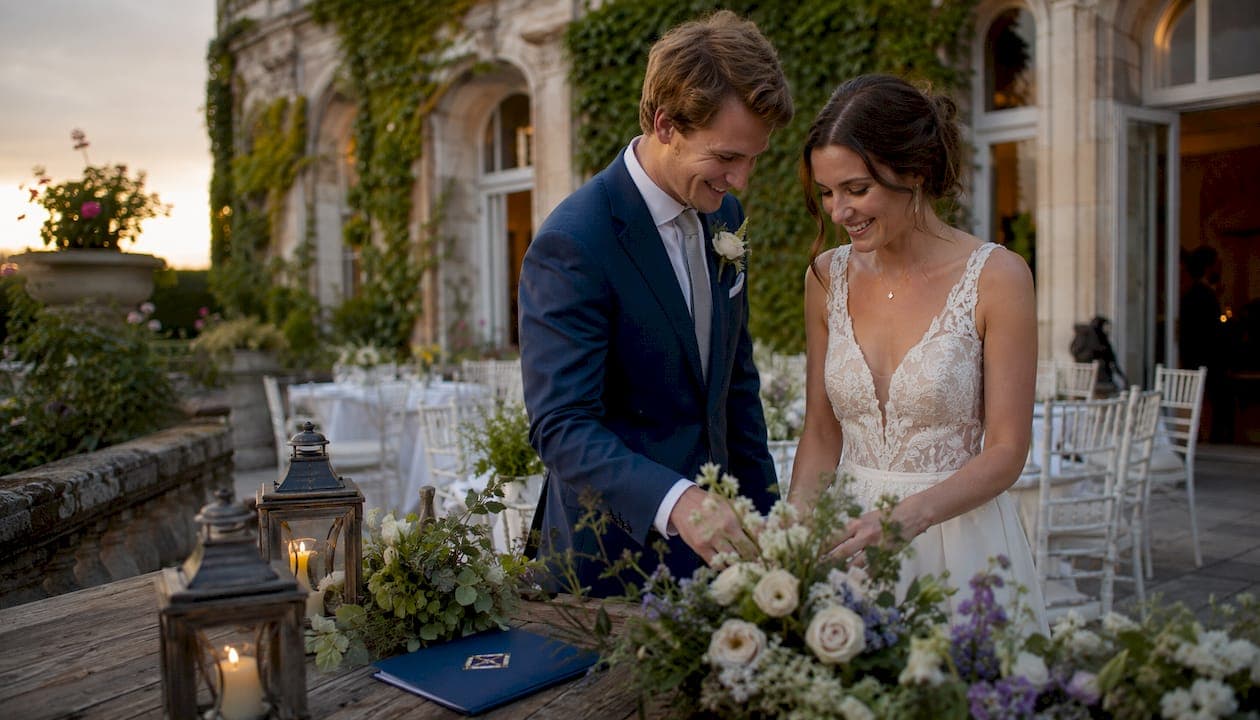
A historic wedding venue is defined as a property with documented architectural or cultural heritage that provides built-in character, atmosphere, and visual identity no modern build can replicate. Couples choosing these spaces gain more than a backdrop. They gain a story. Nearly 60% of engaged couples in 2026 prefer smaller, more intimate weddings, and historic venues rank as the top setting for that format. The historic wedding venue benefits go well beyond aesthetics. They include real cost savings, natural photo opportunities, and an atmosphere that makes guests feel something the moment they walk in.
1. What makes historic venues ideal for intimate weddings?
Historic venues are built to a human scale. Their rooms, corridors, and gardens were designed for gatherings, not for maximum throughput. That makes them a natural fit for weddings with 10–75 guests, where the goal is connection rather than spectacle.
The 60–70% capacity fill rule is the most important sizing principle for intimate weddings. A room that holds 150 people feels hollow with 40 guests. A room sized for 60 feels alive with the same crowd. Historic venues, especially those converted from mills, chapels, or civic halls, tend to offer multiple rooms at varied scales, which makes matching space to guest count far easier.
Intimate weddings also benefit from the warm, calm atmosphere that historic spaces naturally produce. Thick walls, original woodwork, and layered architectural detail slow people down. Guests linger. Conversations happen. The couple actually remembers the day.
- Historic rooms with original features create natural conversation zones
- Smaller footprints reduce the need for elaborate floral or lighting installations
- Multiple rooms in heritage properties allow ceremony and reception in one location
- Intimate scale means vendors spend less time on setup and more time on quality
Pro Tip: When touring a historic venue, bring your confirmed guest count and ask the coordinator to set the room at that number. Walk in cold and trust your gut reaction. If it feels right at 60–70% capacity, book it.
2. Built-in atmosphere that modern venues cannot manufacture
Historic venues possess a pre-existing identity that purpose-built event spaces simply cannot replicate. A ballroom built in 1910 carries the weight of that era in its crown molding, its floor, and its proportions. That identity functions as the first layer of décor before a single flower arrangement arrives.
Modern purpose-built venues are blank canvases. That sounds like an advantage, but it means every element of atmosphere must be purchased and installed. Draping, lighting rigs, floral walls, and furniture rentals add up fast. Historic venues start with the atmosphere already in place.
The timeless appeal of historic venues comes from craftsmanship, architecture, and authenticity rather than trends. A wedding photographed in a space with original plasterwork and aged hardwood floors will look as good in 30 years as it does today. The same cannot be said for a venue decorated around a trend that peaks and fades.
3. Architectural details as natural photo backdrops
Historic architecture produces photographs that stand apart. Arched doorways, exposed brick, original staircases, stained glass, and decorative ironwork give photographers something to work with that no rental prop can match.
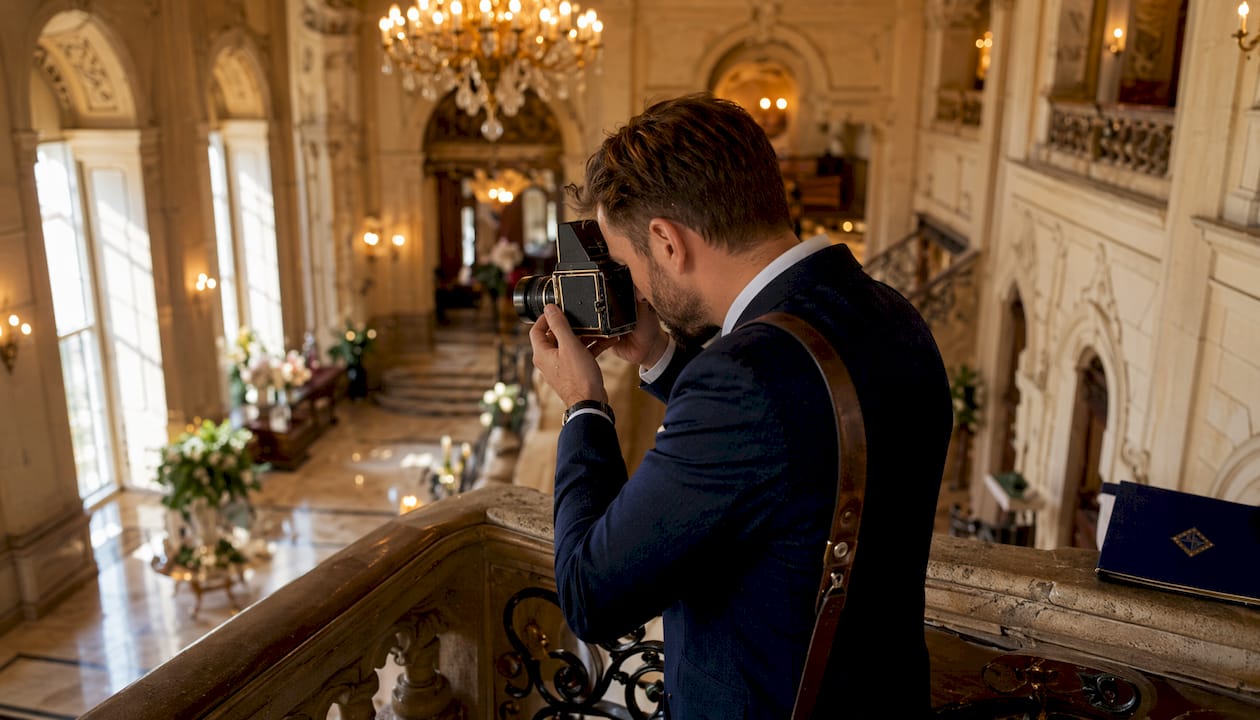
Unique historic architectural features serve as natural décor and photo backdrops, which directly reduces the budget couples spend on decorative rentals. A couple photographed on a century-old stone staircase needs no additional styling. The venue does the work.
Wedding photographers consistently produce their strongest portfolios at historic sites. The layered textures, natural light from original windows, and varied architectural angles give them more options per hour than a flat-walled modern room. That translates into a better final gallery for the couple.
4. Real cost savings through reduced décor spend
The financial case for historic venues is direct. Couples using historic venues save by needing less décor and can redirect that budget toward food quality, photography, or guest experience. A venue with original character requires fewer rentals, less floral volume, and no atmospheric lighting installations.
The savings compound at smaller guest counts. A micro-wedding with 30 guests at a historic venue might require only centerpieces and candles. The same wedding at a blank modern space might require full draping, uplighting, a floral arch, and furniture upgrades just to feel warm.
Budget reallocation is one of the most underrated vintage wedding venue advantages. When the venue itself creates atmosphere, every dollar saved on décor can go toward a better caterer, a longer photography session, or a live musician. Those are the elements guests remember and couples cherish.
5. A sense of place that deepens emotional connection
Historic venues rooted in their communities provide a sense of place that enhances emotional connection for guests and couples alike. A venue with a documented history gives the wedding a context that extends beyond the couple's own story. It connects the celebration to something larger.
This sense of place also benefits guests who travel for the wedding. A historic venue functions as a destination in itself. Guests arrive curious and leave with a memory of the space as much as the ceremony. That is a hospitality advantage no modern convention center can offer.
Local heritage properties carry an additional layer of meaning when the couple has ties to the area. Choosing a venue that has served the community for generations adds a personal and cultural dimension that guests notice and appreciate.
6. Flexibility in converted heritage venues
The most practical historic venues are not strictly protected landmarks. They are reimagined heritage sites that balance original character with modern amenities. Converted mills, barns, chapels, and civic halls now routinely offer climate control, commercial kitchens, accessible restrooms, and flexible floor plans.
This matters because the most common objection to historic venues is comfort. Guests worry about temperature, parking, and accessibility. A well-converted heritage venue resolves all three without sacrificing the character that makes the space worth choosing.
- Climate control systems installed without altering original architecture
- Commercial kitchens that support full catering programs rather than drop-off only
- Accessible entrances and restrooms meeting current ADA standards
- Flexible room configurations for ceremony, cocktail hour, and reception in one property
Pro Tip: Ask every historic venue you tour for their vendor list and catering policy. Venues with in-house or preferred caterers and a commercial kitchen give you far more control over food quality and cost than sites that require outside vendors with no kitchen access.
7. How to choose the right historic venue for your event
Matching the venue to your guest count is the first and most important decision. The 60–70% occupancy rule applies regardless of how beautiful the space is. A grand hall with 40 guests will feel empty no matter how good the flowers are. Use your confirmed guest count, not your invitation list, as the benchmark.
Logistics planning separates smooth historic venue weddings from stressful ones. Thoughtful planning around parking, noise rules, accessibility, and weather is what keeps the elegance intact on the day. Ask the venue coordinator about their contingency plan for outdoor elements and their noise curfew before you sign anything.
The venue's narrative is a planning asset. Use the building's history in your ceremony program, your signage, or your welcome speech. Guests who understand where they are become more invested in the space. That investment shows up in the energy of the room.
For a practical overview of how to evaluate your options, the venue selection guide from Ambassadorclubportsmouth covers the key questions to ask before committing to any space.
- Confirm the venue's maximum and recommended capacity separately
- Walk the guest flow from parking to ceremony to reception before booking
- Ask about noise ordinances, especially for evening events with live music
- Check whether the venue has a weather backup plan for outdoor elements
- Review what is included in the rental fee versus what requires an add-on
8. Authenticity as the defining trend in 2026 weddings
Modern couples embrace layered, storied authenticity combined with modern comforts in historic settings. This is not nostalgia. It is a deliberate rejection of the generic. Couples in 2026 want their wedding to feel like it could only have happened in that specific place, on that specific day.
Historic venues deliver that specificity by default. No two historic properties are identical. The combination of architecture, location, and history makes each one genuinely unique. That uniqueness is the foundation of a wedding that guests describe for years.
The advantages of historic venues align directly with what couples say they want most: a celebration that feels personal, warm, and worth the investment. Authenticity is not a decorating choice at a historic venue. It is built into the walls.
Key Takeaways
Historic venues deliver atmosphere, cost savings, and authentic character that purpose-built spaces require significant budget to approximate.
| Point | Details |
|---|---|
| Built-in atmosphere | Historic venues provide character from day one, reducing décor spend significantly. |
| 60–70% capacity rule | Match your confirmed guest count to venue size to create a lively, comfortable room. |
| Photo opportunities | Original architectural details produce stronger wedding photography than any rental prop. |
| Budget reallocation | Savings on décor at historic venues free up funds for food, photography, and experience. |
| Logistics planning | Confirm parking, noise rules, accessibility, and weather contingencies before signing. |
Why I think couples underestimate the financial case for historic venues
Most couples choose a historic venue because it looks beautiful in photos. That is a fine reason. But the financial argument is just as strong, and almost nobody leads with it.
When I walk couples through the math, the reaction is usually surprise. A venue with original plasterwork, hardwood floors, and period lighting fixtures eliminates entire line items from the décor budget. You are not paying for atmosphere. The building already paid for it, decades ago.
The mistake I see most often is couples booking a historic space that is too large for their guest count. They fall in love with a grand ballroom and then spend the next six months trying to fill it with furniture and floral arrangements to make it feel intimate. The 60–70% capacity rule exists precisely to prevent that. A smaller room in the same building would have cost less, felt warmer, and required half the décor.
My honest advice: visit the venue twice. The first time, go alone and pay attention to how the space makes you feel. The second time, bring your planner and your guest count, and think like a logistics manager. The best historic venues pass both tests without compromise.
— MARTIN
Ambassadorclubportsmouth: historic elegance in Portsmouth, VA
Ambassadorclubportsmouth has served the Hampton Roads community since 1933, and the Ambassador Club in Portsmouth, VA reflects that history in every detail of its 6,000 sq ft hall.
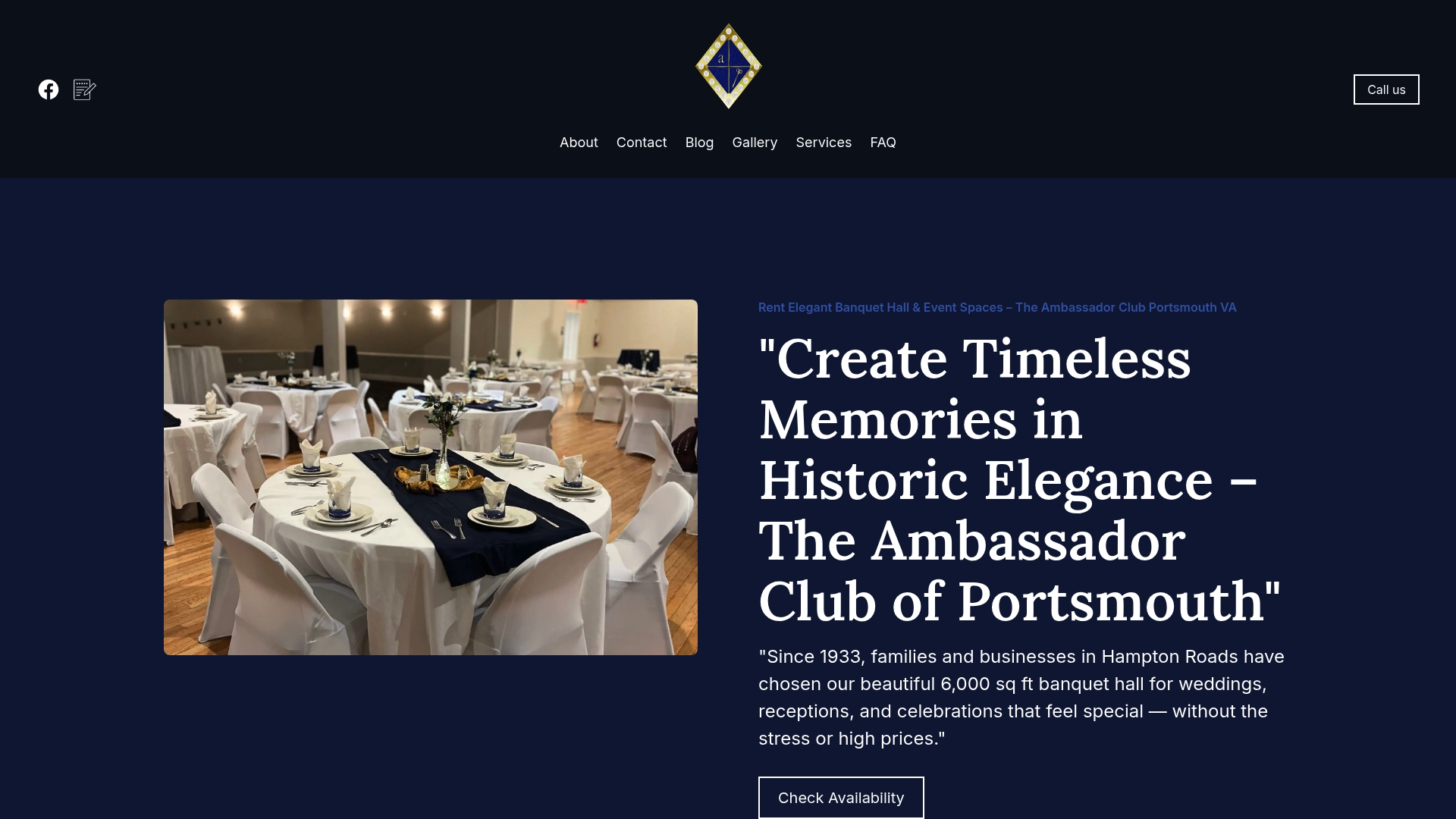
The venue accommodates up to 200 guests and includes a full commercial kitchen, flexible catering options, and comprehensive event packages at competitive rates. Couples get the character and warmth of a historic setting without the logistical gaps that plague strictly protected landmark sites. For couples and planners who want authentic ambiance, real flexibility, and a venue that has stood the test of time, explore available packages at Ambassadorclubportsmouth and check availability for your date.
FAQ
What is a historic wedding venue?
A historic wedding venue is a property with documented architectural or cultural heritage that provides built-in character and atmosphere. These spaces include converted mills, civic halls, chapels, and estate buildings that predate modern purpose-built event facilities.
What are the main historic wedding venue benefits?
The primary benefits are built-in atmosphere, reduced décor costs, stronger photo opportunities, and a sense of place that modern venues cannot replicate. Couples also gain budget flexibility by redirecting décor savings toward food and photography.
What is an intimate wedding venue, and how does it differ?
An intimate wedding venue is any space designed or well-suited for smaller guest counts, typically 10–75 people. Historic venues are especially effective for intimate weddings because their scale and character create warmth without requiring extensive decoration.
How do I apply the 60–70% capacity rule when choosing a venue?
Use your confirmed guest count, not your invitation list, and select a venue where that number fills 60–70% of the room's capacity. This prevents the sparse feeling that undermines the atmosphere of smaller celebrations in large historic halls.
Are historic venues practical for modern weddings?
Converted heritage venues offer climate control, commercial kitchens, and accessible facilities alongside original architectural character. The best historic venues are reimagined rather than strictly preserved, which means modern comfort and historic charm coexist without compromise.