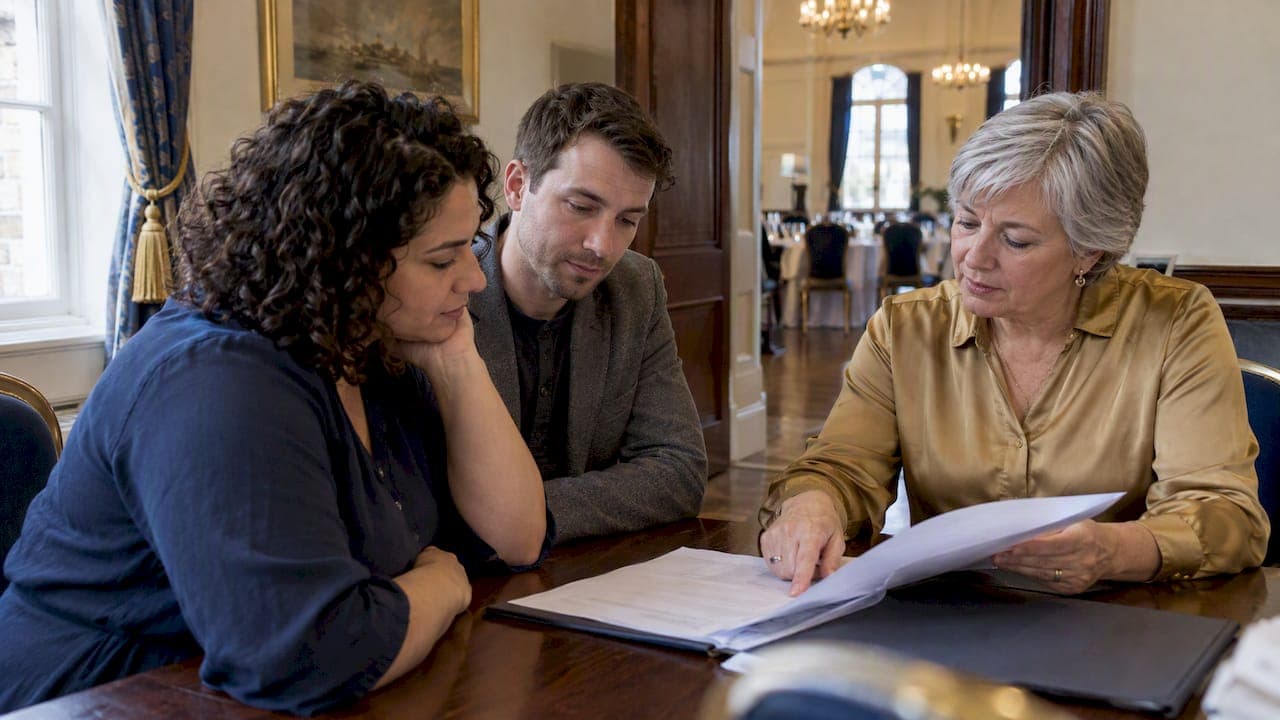
The venue that operates the premises is typically the party responsible for holding public-performance music licenses at a wedding, covering live bands, DJs, and recorded playback alike. The relevant organizations are ASCAP, BMI, and SESAC, and a catering or planning contract can shift who pays for that coverage, but it cannot erase the venue's legal exposure. If you're booking a wedding, insist on written proof of licensing before you sign anything.
TL;DR:
- ASCAP, BMI, and SESAC represent different, overlapping catalogs, so venues often need licenses from more than one organization to cover likely song requests.
- Recorded playback generally carries a modest flat fee, while live band coverage often costs more and may depend on usage, venue capacity, and event frequency.
- At signing, name the party responsible in the contract; then verify the license matches the venue, event date, music type, and covered organizations.
- If a DJ or band assumes coverage, request a signed statement for your event date; personal streaming subscriptions do not authorize public performance.
- Collect the license or signed vendor confirmation 60 to 30 days before the wedding, then keep a copy available on the event day.
Table of Contents
- Why Venues Usually Hold the Licenses
- What ASCAP, BMI, and SESAC Licenses Cover
- How to Verify Coverage: A Written Licensing Checklist
- What a Well-Documented Venue Package Looks Like
- What to Ask Your DJ or Band
- Timeline: When to Lock Down Licensing Proof
- Making Licensing a Checkbox, Not a Crisis
- Let Us Handle the Venue Side of Your Music Plans
- FAQ
- Sources
Why Venues Usually Hold the Licenses
Copyright law gives songwriters and publishers an exclusive right to authorize public performances of their work. Title 17 of the U.S. Copyright Act spells out that right, and it's the legal foundation for every performance license a venue buys. Performing-rights organizations, or PROs, exist to manage that permission on behalf of thousands of songwriters at once, so a single blanket license covers an enormous catalog instead of forcing a venue to clear each song individually.
SESAC's guidance on public-performance licensing makes a point that trips up a lot of first-time venue operators: a business cannot simply hand off its licensing responsibility to the musicians it hires. The venue is the one profiting from the event and controlling the space, so it's treated as the party using the music, even when a hired DJ presses play.
That standard applies broadly to:
- Live bands performing copyrighted songs during a reception
- DJs playing recorded tracks through a venue's sound system
- Background music piped through speakers during cocktail hour
- Television or streaming audio playing in a lounge area during the event
What ASCAP, BMI, and SESAC Licenses Cover
ASCAP, BMI, and SESAC each represent different, overlapping groups of songwriters and publishers, which is why a venue often needs coverage from more than one to be safe. No single PRO represents every song that might get requested at a reception, so holding licenses with multiple organizations is standard practice rather than overkill.
These organizations draw a line between recorded and live music licensing:
- Mechanical or recorded-music coverage typically applies to DJ sets, streamed playlists, and background audio
- Live-performance coverage applies when a band performs copyrighted songs in front of guests
- Fee structures differ by use case and PRO
Fee bases vary by license type. ASCAP's special-event license documentation outlines fees for mechanical music are typically a modest flat fee, alongside fees based on percentages or costs for live entertainment, while BMI's limited-use and event licensing describes similar special-event categories for situations where music isn't the main draw of the gathering. Exact rates shift based on venue capacity, frequency of events, and whether the music is live or recorded, so a venue's finance team typically budgets for a modest flat fee on recorded playback and a larger, usage-tied fee when a live band is part of the package.
How to Verify Coverage: A Written Licensing Checklist
Verbal assurances don't hold up if a dispute arises later. Before any music plays, request documentation that spells out exactly what's covered and who's covering it.
- Confirm the venue name and address match the license on file.
- Confirm the event date falls within the license's active period.
- Identify whether the license covers live performance, recorded playback, or both.
- Ask which PRO repertories (ASCAP, BMI, SESAC) the coverage includes.
- Note any vendor exceptions, meaning cases where the DJ or band carries its own license instead of the venue.
- Request a copy of the license or a signed statement confirming active coverage.
A simple contract clause can assign this responsibility in plain terms: state which party (venue or specific vendor) is securing the license, and require that party to furnish proof before the event date. Draft the exact legal wording with counsel rather than copying boilerplate.
Pro Tip: Request the written confirmation at contract signing, not the week of the wedding, so there's time to fix a gap if one turns up.
What a Well-Documented Venue Package Looks Like
Looking at how an established venue structures its package helps clarify what to expect from your own rental agreement. Our 6,000 square foot hall includes amenities that intersect directly with music and entertainment planning:
- A dance floor and dry bar area sized for up to 200 guests
- A large projection wall with a built-in projector for slideshows or presentations
- Setup accommodating DJ equipment, staging, and power access
- A full commercial kitchen that runs alongside entertainment areas without disrupting flow
Venues like ours typically spell out rental terms clearly, including which responsibilities fall on the renter versus the house. Couples comparing venues should look at the amenities list and booking guide for a fuller sense of what a rental agreement should address before signing.
What to Ask Your DJ or Band
If your contract assigns licensing responsibility to the entertainer rather than the venue, get specifics before the event.
- Ask whether they carry their own blanket license through ASCAP, BMI, or SESAC.
- Ask for a signed vendor statement confirming active coverage for your event date.
- Ask whether their liability insurance mentions licensing obligations, since insurance alone doesn't substitute for a performance license.
- Confirm that a personal Spotify or Apple Music subscription isn't being used as the music source, since consumer streaming accounts don't grant public-performance rights.
Timeline: When to Lock Down Licensing Proof
Licensing shouldn't be a last-minute scramble. Build it into the same timeline you use for catering counts and seating charts.
- At contract signing: Spell out in writing whether the venue or a specific vendor holds responsibility for licensing, and request an initial confirmation of coverage.
- 60 to 30 days out: Collect the actual written proof, whether that's a license copy or a signed vendor statement, and file it with the rest of your event paperwork.
- Day of the event: Keep a printed or digital copy of the confirmation on hand, along with a contact name for whoever can answer questions if a PRO or vendor issue comes up.
Treat this the same way you'd treat a liability insurance certificate. If your venue already walks you through event liability insurance steps, ask whether licensing confirmation is bundled into that same conversation.
Making Licensing a Checkbox, Not a Crisis

Most weddings go off without a single licensing hiccup, and that's because the venues running smoothly treat this as routine paperwork rather than an afterthought. A clear contract clause and a one-page confirmation checklist take minutes to execute at booking, long before anyone's worried about centerpieces or seating charts.
The couples and planners who run into trouble are usually the ones who never asked the question at all. Confirming coverage isn't about distrust. It's about making sure the people who wrote the songs playing at your reception get what the law says they're owed, while your event runs without a last-minute scramble.
— MARTIN
Let Us Handle the Venue Side of Your Music Plans
Booking a space that already accounts for AV setup and clear contract language takes one more variable off your plate. Our packages include a dance floor, dry bar, built-in projector, and a layout built to handle DJs or live bands without guesswork about power or staging.

- Ask us for a sample licensing-responsibility clause when you review your rental agreement.
- Walk through AV setup options, from sound access to our projection wall, before your date is confirmed.
- Review our service packages to see what's included for weddings, receptions, and related events.
Reach out through our main booking page to check availability and start the paperwork for your date.
FAQ
Who pays for music licensing at a wedding reception?
The venue operating the premises is typically responsible for holding public-performance licenses, though a contract can shift the cost to a vendor like a DJ or band. Either way, the party using the space should request written proof of active coverage before the event.
Do I need a license if my DJ only plays Spotify playlists?
Yes. A personal streaming subscription like Spotify is licensed for private, individual listening, not public performance at an event, so SESAC's guidance confirms that businesses using music this way still need proper authorization.
What's the difference between ASCAP, BMI, and SESAC?
ASCAP, BMI, and SESAC are separate performing-rights organizations that each represent different songwriters and publishers, and venues often hold coverage with more than one to cover a broad range of requested songs. Fee structures and special-event license terms differ slightly between them, as described in ASCAP's special-event license and BMI's limited-use licensing.
Are private weddings exempt from music licensing rules?
A private residence gathering with no paid admission and no commercial venue involved may fall outside typical licensing requirements, but a rented hall or commercial venue is generally treated as a business use. Because exemptions depend on specific facts, confirm your event's status with the venue or a licensing professional rather than assuming it qualifies.
What happens if a venue uses music without a license?
Unlicensed public performance of copyrighted music can expose a venue or vendor to legal claims under Title 17 of the Copyright Act, including statutory penalties. Beyond legal risk, a dispute discovered day-of can also disrupt the event itself, which is why written confirmation before the date matters.
Sources
- SESAC | Why you need a public performance license
- U.S. Copyright Office — Title 17, Chapter 1 (Subject matter and scope of copyright)
- ASCAP special-event license (excerpt)
- BMI — limited music use / event licensing