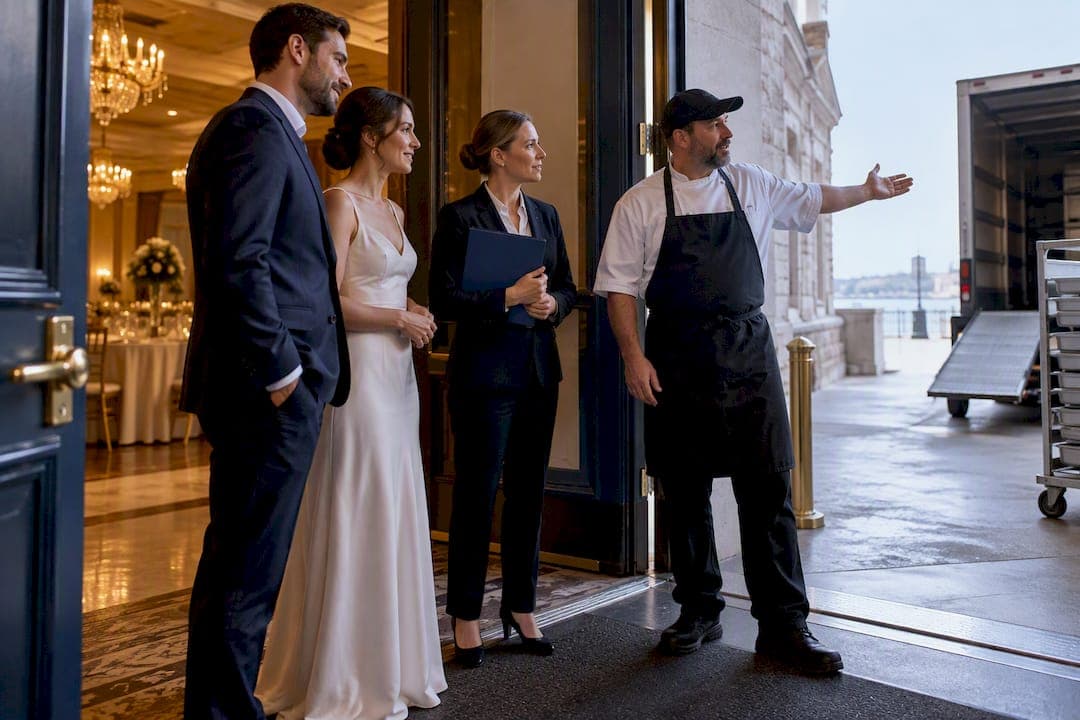
Yes, an open vendor policy generally lets you hire outside vendors instead of using a venue's in-house team. It also usually comes with strings attached: proof of insurance, possible facility or corkage fees, and clearer coordination duties that fall on you. The rest of this guide covers which vendors are affected, what paperwork to expect, and the checklist that keeps approvals from becoming a last-minute scramble.
TL;DR:
- The venue's open vendor policy allows outside vendors like caterers and florists but often involves additional paperwork, fees, and insurance requirements.
- Expect to submit liability insurance certificates, licensing, and possibly pay facility, corkage, or staffing fees, which can diminish cost savings.
- Coordination involves creating detailed plans such as load-in times, vendor run sheets, and scheduling walkthroughs, often within a 30-day approval window.
- Red flags include vague policy language, insurance or walkthrough restrictions, and hidden fees, which should be negotiated and documented before signing.
- A venue with a full commercial kitchen, experienced staff, and clear policies, such as Ambassador Club, simplifies vendor approval and reduces day-of coordination stress.
Table of Contents
- What Counts as an Open Vendor Policy?
- Which Vendors Does an Open Policy Actually Affect?
- Is an Open Vendor Policy Worth the Extra Coordination?
- What Paperwork Should You Expect Before the Big Day?
- How Do You Vet and Coordinate Vendors Once the Policy Is Open?
- What Red Flags Should Send You Running (and How Do You Negotiate)?
- How Ambassador Club Handles Open Vendor Requests
- Considering venues that allow outside vendors in Portsmouth?
- Sources
- FAQ
What Counts as an Open Vendor Policy?
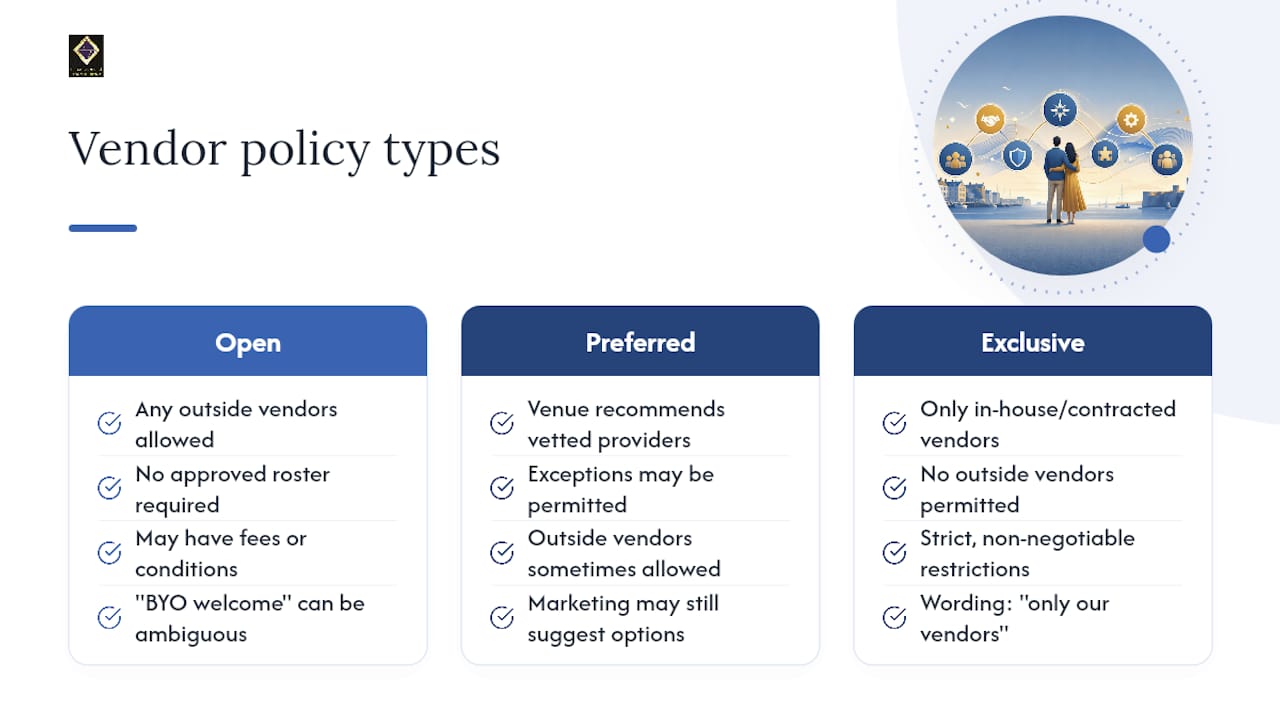
An open vendor policy means the venue lets you bring in your own caterer, florist, photographer, or other vendors without restricting you to an approved roster. That's different from a preferred vendor list, where the venue recommends a handful of vetted providers but may still allow exceptions, and different again from an exclusive policy, where only in-house or contracted vendors are permitted, period.
The wording on a venue's website often blurs these categories. "BYO welcome" sometimes means truly open, and sometimes means "outside caterers allowed, but a $500 facility fee applies and you must use our bar staff." A venue that allows outside catering gives couples real freedom over menu and cost, but only if that freedom isn't quietly walled off by fine print. Read the actual contract clause, not just the marketing page, before assuming a policy means what it sounds like.
Which Vendors Does an Open Policy Actually Affect?
Caterers get the most attention because food safety and liquor liability create the biggest exposure for a venue. But an open policy touches nearly every vendor category on your list:
- Caterers: subject to health department rules, kitchen access limits, and sometimes a required walkthrough before approval.
- Bar service: liquor liability is the venue's biggest legal risk, so expect the strictest scrutiny here regardless of how open the policy is elsewhere.
- Florists and rental companies: mostly regulated around delivery windows, loading dock access, and how much time they need for setup and teardown.
- Photographers and DJs: usually the least restricted, though noise ordinances and equipment power needs can still trigger venue rules.
A venue with a full commercial kitchen and an established run sheet typically places fewer restrictions on outside caterers because staff can supervise food safety and staging without guesswork. Facilities lacking that infrastructure tend to compensate with tighter paperwork requirements instead.
Is an Open Vendor Policy Worth the Extra Coordination?
The honest answer depends on how much planning bandwidth you have and how strongly you care about a specific caterer, florist, or DJ. Here's the trade-off broken down:
- Customization wins big. You can hire a caterer who specializes in your family's cuisine, a florist who matches your exact vision, or a band instead of a generic DJ package. That flexibility is the entire point of choosing an open policy over an all-inclusive venue.
- Savings are real but not guaranteed. Couples often cut costs by choosing an independent caterer and a consumption-based bar instead of a marked-up in-house package, but facility fees and staffing charges can eat into those savings fast.
- Coordination burden lands on you. Someone has to chase insurance certificates, confirm load-in times, and make sure five separate vendors show up on schedule. That someone is usually the couple or a hired planner.
- Vendor quality varies more. An in-house team has already been vetted by the venue. An outside vendor you found through a friend's cousin has not, so vetting becomes your job.
Pick an all-inclusive or preferred-list venue if you'd rather trade choice for simplicity. Pick an open policy if a specific vendor relationship matters more to you than a turnkey process.
— MARTIN
What Paperwork Should You Expect Before the Big Day?
Every vendor you bring in will likely need to clear the same basic gate: a Certificate of Insurance, usually with liability coverage in the $1 million range, submitted to the venue ahead of the event. Bartenders and caterers serving alcohol may also need to show valid licensing depending on your state's requirements, so confirm this early rather than the week of the wedding.
Fees are where "open" policies get complicated. Expect some combination of:
- A facility fee for using the space without in-house catering.
- A corkage fee if you're bringing your own alcohol.
- Cleanup or staffing charges layered on top of the base rental.
Some venues advertise BYO flexibility while still attaching facility or corkage fees that erase most of the savings, so ask for every charge in writing before you sign anything. Approval windows commonly run around 30 days before the event, which is when COIs, vendor walkthroughs, and health department paperwork for food service all need to be finalized.
Pro Tip: Build your own approval tracker with three columns: vendor name, document required, and due date. It takes ten minutes to set up and saves you from discovering a missing COI the week of your wedding.
How Do You Vet and Coordinate Vendors Once the Policy Is Open?
Getting approval is step one. Making sure everyone shows up on time and does their job without stepping on each other is step two, and it's the part couples underestimate most.
- Book the venue and get the written policy. Ask for the vendor policy in writing, not verbally, before you sign your contract.
- Select vendors and confirm venue compatibility. Ask each candidate if they've worked your venue before; experience there means fewer surprises.
- Submit COIs and licensing early. Give yourself buffer room ahead of the 30-day deadline in case a vendor's insurance provider is slow.
- Build a shared run sheet. List arrival times, load-in windows, and staging areas for every vendor so nobody double-books the loading dock.
- Schedule a walkthrough. Many venues require an off-list caterer to complete a site tour and sign catering guidelines before final approval.
- Designate one point of contact. Whether it's you, your planner, or a day-of coordinator, one person should field every vendor question on the actual day.
| Step | Who owns it | Typical deadline |
|---|---|---|
| Get written vendor policy | Couple | Before signing venue contract |
| Submit COIs | Vendors, tracked by couple | 30 days before event |
| Site walkthrough | Caterer + venue staff | 2 to 4 weeks before event |
| Final run sheet distributed | Couple or planner | 1 week before event |
Ask the venue about kitchen access hours, load-in windows, and whether staff support is included. Ask each vendor about their experience at your specific venue, their staffing plan, and who handles cleanup. A published venue run sheet reduces day-of friction and is a good sign the venue has done this before.
What Red Flags Should Send You Running (and How Do You Negotiate)?
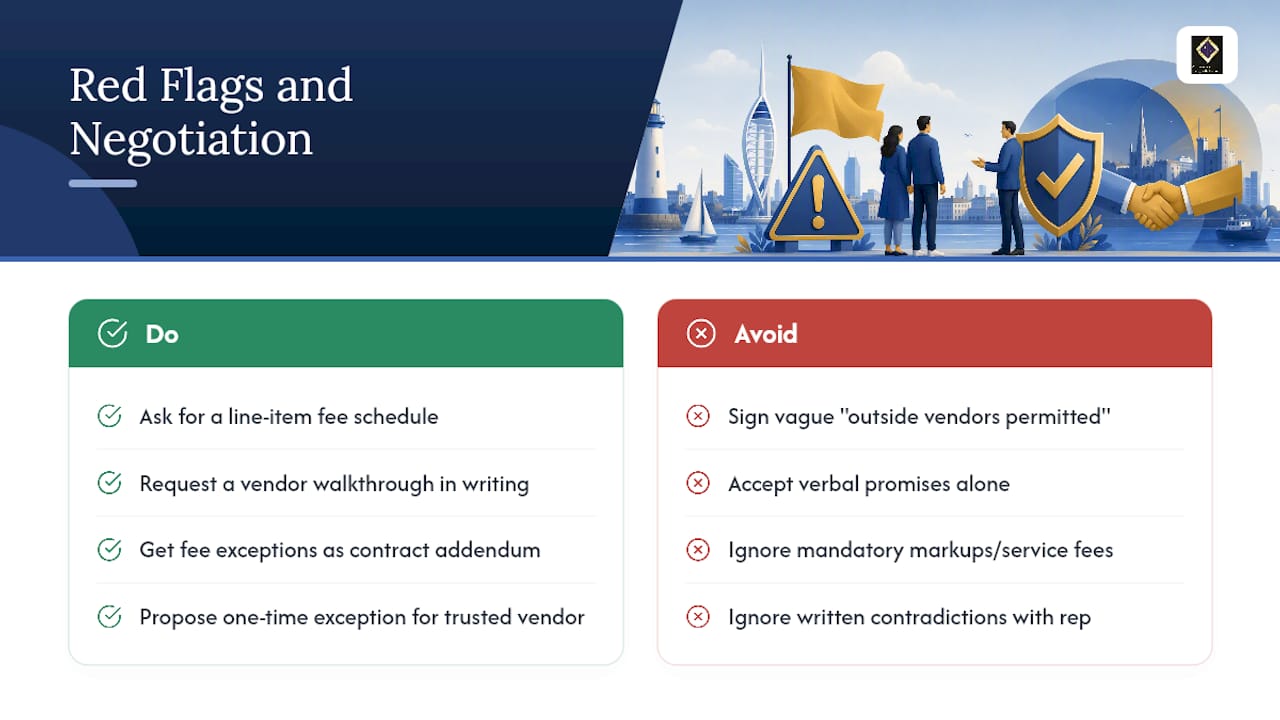
Vague policy language is the biggest warning sign. If a venue's answer to "can we bring our own caterer" changes depending on who you ask, or the contract says "outside vendors permitted" without listing fees, walk in expecting hidden costs later. Other red flags include refusal to allow a vendor walkthrough, mandatory markups disguised as "service fees," and answers in writing that contradict what the sales rep told you on the tour.
Negotiate by asking for a line-itemized fee schedule before signing anything. If the venue only works with a preferred list, propose a one-time exception for a single vendor you already trust, in writing. If they doesn't budge, your fallback is either finding a venue that explicitly lists itself as BYOF, since specialized directories exist specifically to surface venues mainstream platforms bury, or accepting a preferred list with one negotiated off-list allowance.
Pro Tip: Get every fee exception in writing and attached to your contract as an addendum, not just an email confirmation. Verbal promises don't survive staff turnover.
How Ambassador Club Handles Open Vendor Requests
Since 1933, Ambassador Club has hosted weddings and receptions in Portsmouth, VA, and outside vendors have been part of that history for most of it. The venue's full commercial kitchen means caterers get real working space instead of a folding table in a hallway, which cuts down on the friction that usually drives strict food-service rules elsewhere.
Approvals typically move on a straightforward timeline: COI submission, a walkthrough if needed, and a run sheet built alongside venue staff who already know the space's loading access and kitchen layout. Setup, cleanup, and security support are built into event packages, so the coordination load on couples stays lighter than at venues without that infrastructure. It's a pattern proven venue-host guidance emphasizes, that buildings that supervise their kitchen well tend to be more flexible everywhere else.
Considering venues that allow outside vendors in Portsmouth?
If you've read this far, you already know that vendor freedom is only as good as the venue backing it up with a real kitchen, clear paperwork, and staff who've done this before. Ambassador Club solves the coordination headache most open-policy venues create: a full commercial kitchen, flexible catering options, and comprehensive packages covering setup, cleaning, and security, all at rates that keep the savings from vanishing into fees.

The venue supports local scholarships and charity programs, so your reception can contribute to the community. Explore Elegant Wedding Receptions and the full commercial kitchen setup, then request a site tour to see the space and talk through your vendor list in person. Details on the Standard Event Package and fee structure are available on the venue's main page, and specific charges like the security deposit are listed on the FAQ page. Book your tour date now to lock in your preferred weekend before it's gone.
Sources
Couples touring venues should bring printed questions, not just a mental checklist. A short list of what to ask about kitchen access, insurance minimums, and fee schedules travels well and keeps venue conversations consistent from one tour to the next.
For deeper reading before your next tour, see how food shapes the guest experience at a hospitality level, and review what separates a true BYOF venue from one that only advertises flexibility. Both are worth a quick read before you sign anything.
FAQ
What Is the 50/20/30 Rule for Weddings?
It's a rough guideline, not a fixed formula, and couples with an open vendor policy often shift more toward catering since they're sourcing it independently.
What Are the Red Flags to Look for in Wedding Catering?
Watch for vague answers about kitchen access, refusal to allow a site walkthrough before your event, and unclear insurance requirements. A caterer who can't confirm they've handled a venue of similar size, or who hesitates on providing a Certificate of Insurance, is a sign to keep looking.
Who Pays for the Open Bar at a Wedding?
Traditionally, the couple or hosting family covers bar costs, though many now opt for a consumption-based bar to control spending instead of a flat open-bar fee. Choosing your own bar vendor under an open policy can lower costs compared to in-house bar packages, but check for corkage or bartender staffing fees first.
What Are the Two Types of Vendors?
Wedding vendors generally split into venue-approved (in-house or preferred list) and outside vendors brought in independently under an open or BYO policy. The distinction matters because in-house vendors are already vetted by the venue, while outside vendors require you to handle insurance, licensing, and scheduling yourself.
Does Ambassador Club Allow Outside Caterers?
Ambassador Club supports flexible catering through its full commercial kitchen, giving couples room to bring in outside caterers rather than being locked into a single in-house provider. Specific package details and fees are listed on the services page.