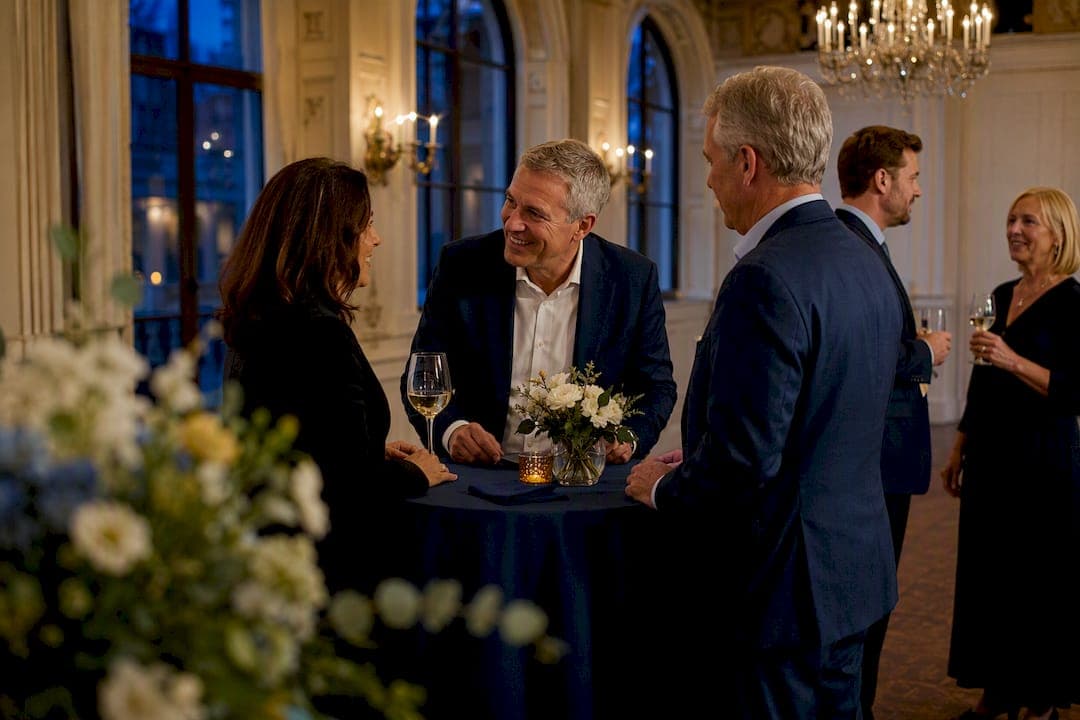
An intimate curated tasting for a small group of top clients or a short, value-packed workshop delivers the fastest return for most small businesses, since both build referrals without draining your calendar. A hosted reception works better when you want to celebrate a milestone with a wider circle. Pick your audience first, then lock a tentative date so the planning clock actually starts.
TL;DR:
- Intimate tastings or workshops for small groups generate deeper engagement and are cost-effective in building client loyalty.
- Larger events should include a clear objective, deliberate guest list, and a memorable anchor moment to ensure meaningful interactions.
- Venue choice significantly impacts costs and logistics, with recommendations to prioritize accessible, well-equipped spaces that match the event format.
- Measuring success relies on relationship signals like follow-up meetings and referrals, not just attendance numbers, and tracking these improves future events.
- Recurring celebrations foster long-term advocacy, while one-off strategic events are suitable for major business changes, with tailored formats for industry-specific goals.
Table of Contents
- Why client appreciation events matter for your business
- Best practices and a planning checklist for small teams
- Event ideas by guest size, budget, and goal
- Budget, venue selection, and logistics that actually drive cost
- Measuring success without chasing vanity metrics
- How a real venue supports these ideas in practice
- Personalizing the experience for different client segments
- Designing moments that resonate across different clients
- Legal and compliance basics for hosting client events
- Using client feedback to improve the next event
- Choosing between recurring traditions and one-off strategic events
- Booking a venue that makes the planning easier
- Sources
- FAQ
Why client appreciation events matter for your business
Client appreciation events work because they trade a transaction for a shared experience, and people remember experiences longer than emails or gift baskets. When a client feels genuinely recognized rather than marketed to, reciprocity tends to follow: a referral, a warmer renewal conversation, or simply a longer relationship. That dynamic is why professional service firms keep investing in events even when digital outreach is cheaper.
The smarter way to think about these events is as strategic tools rather than one-size-fits-all parties. Industry practice groups client events into three categories: transition events that mark a change (a new advisor relationship or a service upgrade), reframing events that shift how a client sees your business, and celebration events that mark a milestone or say thank you, each suited to a distinct business purpose and audience size. Choosing the wrong category for your goal is the most common planning mistake.
Events also double as measurable marketing touchpoints when you treat them that way from the start.
- A celebration event tends to reward loyalty and reinforce an existing relationship.
- A reframing event helps a client see new value in a service they already use.
- A transition event smooths a change, like onboarding after a merger or a new account manager.
- Each format can be tied to a concrete next step, such as a meeting booked or a renewal signed.
Best practices and a planning checklist for small teams
You do not need an event planner to run a client appreciation event that lands well. You need a clear objective, a realistic guest list, and one moment that gives every attendee a reason to remember the day.
- Define the objective first. Decide whether this is a celebration, a reframing event, or a transition event, since that choice shapes the guest list and the format.
- Curate the guest list deliberately. Invite the clients whose relationship you most want to deepen, and resist the urge to invite everyone just to be fair.
- Set a realistic budget and one anchor moment. A short 3 to 4 minute presentation, tasting, or demo gives guests a single shareable takeaway and keeps costs contained.
- Build the invitation and RSVP timeline. Send invitations 3 to 4 weeks out, follow up with one reminder at the two-week mark, and segment invitations by client tier so top clients get a more personal touch.
- Handle logistics early. Confirm accessibility, staffing, AV needs, and basic liability coverage with your venue before you finalize the date.
- Plan your follow-up before the event starts. Decide what signals count as success, such as a meeting request or a referral, and assign someone to track them.
Segmenting invitations and personalizing the anchor moment matters more than the size of the event: a well-run gathering of ten people can outperform a generic party of fifty. Automating the RSVP and reminder messages through a CRM or dedicated events tool frees your staff to focus on the highest-value activity at any event, which is simply talking to guests.
Pro Tip: Assign one team member to own follow-up before the event, not after, so no warm conversation goes cold in the following week.
Event ideas by guest size, budget, and goal
The right idea depends less on creativity and more on matching format to audience size and goal. Here is a practical shortlist organized by scale.
Intimate gatherings (6 to 12 guests) work best when the goal is deepening a handful of high-value relationships.
- A private tasting with a chef or sommelier suits clients who appreciate a curated, personal touch and costs relatively little per head when built around a set menu.
- A chef demonstration gives guests an interactive anchor moment and works well in a venue with a full kitchen on-site.
- A hands-on craft workshop (cooking, mixology, or a similar skill) creates a shared accomplishment guests talk about afterward.
An intimate guest size in this range tends to produce the engagement depth that leads to referrals and follow-on meetings, since every guest gets real face time with your team.
Small group events (12 to 50 guests) suit businesses ready to celebrate with a wider circle while keeping the room personal.
- A hosted reception with passed appetizers and a short welcome speech works for anniversaries, milestone celebrations, or year-end thank-yous.
- A panel discussion followed by networking positions your firm as a connector, not just a vendor, and gives clients a reason to bring a guest.
- A pop-up experience, like a seasonal tasting bar or a themed lounge, adds novelty without the overhead of a full event production.
Staffing for this range usually means one host per 15 to 20 guests plus catering staff, and a hall with a flexible layout matters more here than at either extreme.
Medium to large events (50 to 200 guests) fit businesses celebrating broadly or building community visibility.
- An outdoor picnic works well for family-friendly client bases and scales easily with simple stations instead of a plated meal.
- A private screening or small concert gives a large group a shared experience without requiring much guest interaction from your staff.
- A charity partner event, where proceeds or attention support a local cause, doubles as goodwill marketing and a celebration.
At this scale, throughput matters: plan for buffet or station-style service, confirm parking capacity, and build in extra time for check-in.
Virtual and hybrid formats solve the geography problem for firms with dispersed clients.
- An expert fireside chat, streamed live with a Q&A segment, works as a reframing event when you want clients to see a service differently.
- Curated tasting kits mailed in advance of a virtual gathering recreate some of the sensory experience of an in-person event.
Industry-specific variants are worth naming directly. Financial advisors often run reframing or transition events timed around a market shift or a new planning conversation, since advisory-industry guidance recommends keeping these events small and experiential for top-tier clients rather than broad and generic. Real estate professionals tend to favor family-friendly picnics or seasonal open houses that welcome past clients and their referrals in one relaxed setting.
Practical idea lists across the industry consistently favor a similar mix. Common formats include tastings, outdoor picnics, movie nights, educational panels, wellness sessions, and charity partnerships, which tells you these formats work across industries, not just for one type of business.
Budget, venue selection, and logistics that actually drive cost
Once you pick a format, the venue you choose will shape most of your remaining decisions. Look for a space with enough capacity for your guest count plus 10 to 15% buffer, a kitchen or flexible catering policy, working AV, adequate parking, and an atmosphere that matches your event's tone. A historic banquet hall is often a practical solution here, since it usually combines a large flexible room with an on-site kitchen at a lower per-hour cost than a hotel ballroom.
Cost drivers worth planning around, expressed as ranges rather than fixed numbers, include:
- Catering, typically priced per head and varying widely based on menu style and service type (plated versus buffet).
- Venue rental, which depends on hall size, day of week, and included amenities like tables, chairs, and a dance floor.
- Security and cleaning, often billed as flat or hourly add-ons rather than folded into the rental rate.
- AV equipment, which can be a nonissue if the venue has a built-in projector and sound system.
Negotiating plated versus buffet service on an off-peak day can meaningfully lower your per-head catering cost when the venue has its own kitchen.
Build your timeline backward from the event date: confirm the venue and catering 6 to 8 weeks out, finalize the guest list and invitations 4 weeks out, send a reminder at 2 weeks, and reconcile the final invoice within a week after the event. Keep a short vendor checklist handy: caterer, AV technician, and parking or security staff, each confirmed in writing before the week of the event.

Measuring success without chasing vanity metrics
The real measure of a client appreciation event is relationship signals, not headcount. Watch for who stayed late after the formal program ended, who asked for a follow-up conversation, and which clients booked a meeting in the weeks after.
- Send a short post-event survey within 48 hours to capture immediate impressions while they are fresh.
- Track meetings booked within 30 days of the event as a simple quantitative signal.
- Count referrals generated in the following quarter and note which event they trace back to.
Tying each event to one measurable next step, like a survey completion, a meeting request, or a referral ask, makes it possible to see what actually worked rather than guessing at year-end. A personalized thank-you sent within 48 hours keeps the relationship warm, and a segmented follow-up outreach 2 to 4 weeks later gives you a natural reason to reconnect before the goodwill fades.
How a real venue supports these ideas in practice
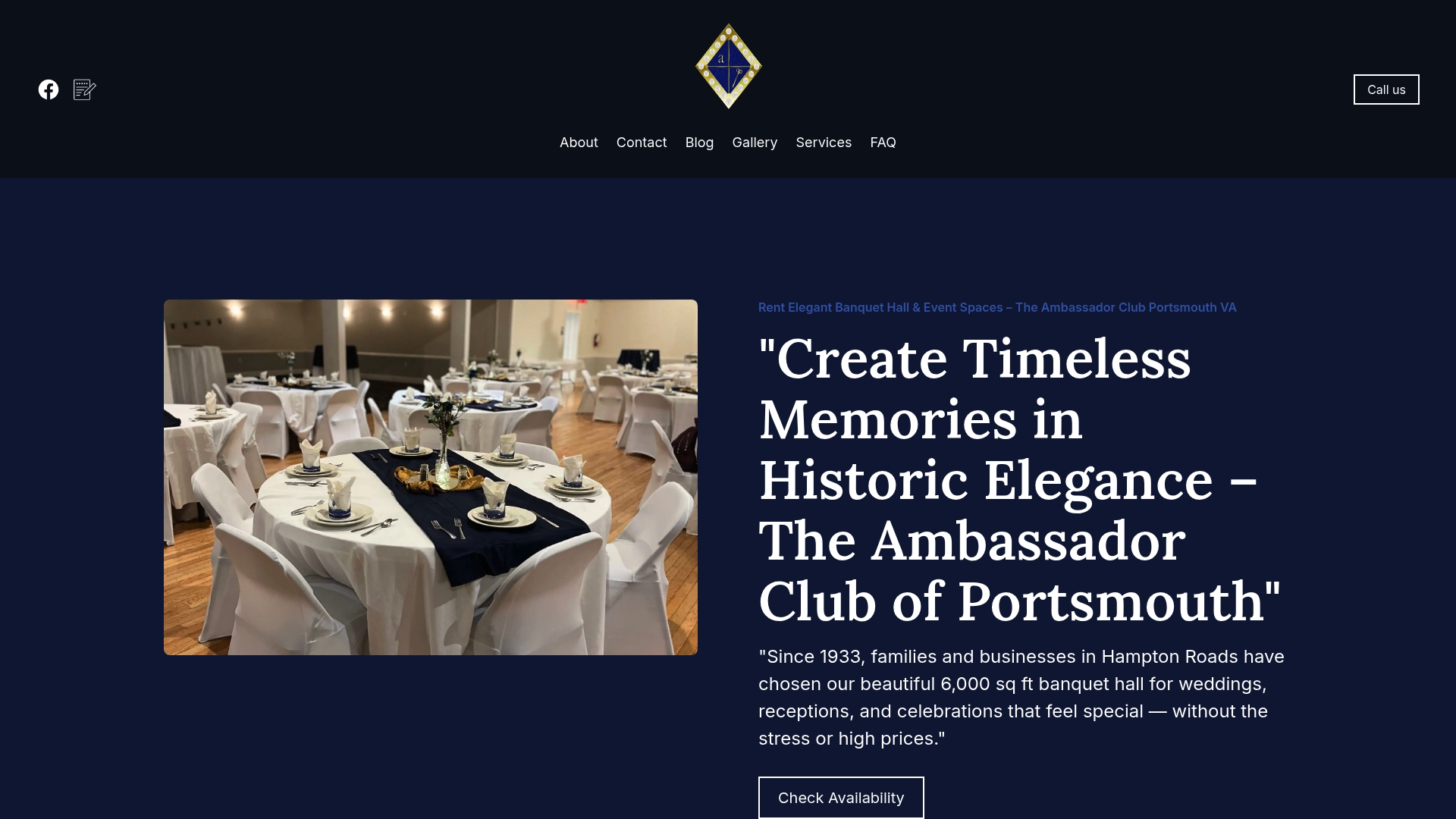
The Ambassador Club in Portsmouth, Virginia, has hosted events since 1933 in a 6,000 square foot hall, and its features map directly onto the ideas above. An intimate tasting or chef demonstration works well with the venue's full commercial kitchen, which supports both self-catering and outside caterers. A corporate reception or an anniversary-style celebration benefits from the hall's dance floor, dry bar, and built-in projector for a welcome video or a short anchor presentation. The venue's history and elegant interior also do quiet work, since attendees tend to associate a well-maintained historic space with the credibility of the business hosting them there.
A room with real character does half the work of making guests feel like the event matters.
— MARTIN
Personalizing the experience for different client segments
A generic reception feels the same to every guest, which is exactly the problem personalization solves. Segment your client list by relationship depth, industry, or how long they have worked with you, and adjust the invitation, the anchor moment, and even the seating to match. A long-standing client might appreciate a personal note referencing a shared project milestone, while a newer client might respond better to an introduction to a peer in the room.

Small, specific gestures tend to land harder than broad entertainment: a favorite drink remembered from a past meeting, a seat next to someone they would genuinely want to meet, or a handwritten card instead of a printed one. None of this requires a large budget, only attention paid before the guest list is finalized. If your client base spans multiple industries or company sizes, consider running two smaller, tailored events instead of one large gathering that tries to please everyone at once, since a room full of strangers rarely produces the warm conversations you are hosting the event to create.
Designing moments that resonate across different clients
Client bases are rarely uniform, and a format that delights one segment can fall flat with another. A hands-on workshop might thrill a group of entrepreneurial clients while feeling like homework to a group of retirees who would rather sit through a relaxed reception. Ask what your specific clients value: some want to learn something, some want to be entertained, and some simply want to feel remembered.
The anchor moment is where this matters most. A single 3 to 4 minute value presentation or exclusive demo, tailored to what that particular room cares about, gives every guest one specific thing to talk about afterward. Consider dietary needs, mobility, and cultural preferences when planning food and activities, since overlooking any of them turns a thoughtful event into an uncomfortable one for the clients you most wanted to impress.
Legal and compliance basics for hosting client events
Hosting clients on someone else's property or your own carries a handful of practical obligations worth confirming before you book. Ask any venue about liability insurance and whether you need to add an event-specific policy, since this varies by location and by the type of event. If alcohol is served, confirm who holds the liquor license and what identification checks are required, since serving requirements differ by state and by venue policy.
Basic accessibility compliance matters too: confirm the venue has accessible entrances, restrooms, and seating for guests who need them. If you plan to photograph or record the event for marketing, have a simple consent process for attendees rather than assuming permission. None of this is legal advice specific to your situation, so when a question touches licensing, insurance, or accessibility law, confirm the answer with the venue directly or with a professional who knows your local requirements.
Using client feedback to improve the next event
The easiest way to make your second event better than your first is to actually ask attendees what they thought. A short survey sent within 48 hours, covering the venue, the format, and the anchor moment, gives you specific feedback while the event is still fresh in guests' minds. Look for patterns rather than individual complaints: if several guests mention the room felt cramped or the program ran long, that is worth fixing before the next invitation goes out.
Feedback does not need to be formal. A quick conversation during the event, noting who lingered and what they talked about, often tells you as much as a survey. Keep a simple record after each event of what worked, what guests mentioned unprompted, and what you would change, so your planning improves with every event rather than starting from scratch each time.
Choosing between recurring traditions and one-off strategic events
Recurring celebration events build community and give clients a predictable reason to advocate for you year after year, which is why an annual client appreciation reception tends to outperform a one-time splash. A one-off transition or reframing event earns its place when something specific has changed, such as a merger, a new service line, or a shift in how you want clients to see your business, and does not need to repeat annually. For top-tier clients, one to two well-run celebration events per year, paired with occasional strategic one-offs when the timing calls for it, tends to build the strongest long-term advocacy.
Booking a venue that makes the planning easier
Once you know which format fits your goals, the venue decision is what turns an idea into a real date on the calendar. A venue often offers a Standard Event Package along with more specific options like Corporate Event Space and Anniversary Celebrations, each suited to a different version of the ideas covered above.
- A Standard Event Package covers the hall rental, tables, chairs, and dance floor for most client appreciation formats.
- Corporate Event Space fits a hosted reception, a panel event, or a larger celebration for up to 200 guests.
- Anniversary Celebrations and Charity Event Hosting suit milestone or cause-linked events that call for a more formal setting.
A venue with a full commercial kitchen can support both self-catering and outside caterers, which keeps your food budget flexible instead of locked to one vendor. What it does not do is plan the event for you: you still choose the format, the guest list, and the anchor moment. If any of the ideas above fit your next client event, request a package overview or check the full list of services to see which package matches your guest count and format.
Sources
- Ideal client events in action: transition, reframing, celebration
- Events | Clientbook
- 10 client appreciation event ideas customers love
- Top ideas for client events and how to make them great
FAQ
What are some fun ideas for client events?
Fun, low-friction options include a private tasting, a hands-on cooking or craft workshop, an outdoor picnic, or a hosted reception, each suited to a different guest count and budget. The best choice depends on whether your goal is a small, personal gathering or a broader celebration for a larger client base.
What are some ideas for customer appreciation events?
Common formats include tastings, panel discussions with networking, wellness sessions, private screenings, and charity partner events, which work across most industries. Pairing the format to your guest count and goal matters more than picking the trendiest idea.
What are some fun appreciation activities?
Interactive activities like a chef demonstration, a mixology or craft workshop, or a themed pop-up experience tend to create the shared moment guests remember and mention afterward. Keeping the activity to one clear anchor moment, rather than several competing activities, usually produces a better result.
What are some creative client appreciation events for financial advisors?
Advisors often run smaller, more exclusive events, like a reframing event tied to a market shift or a transition event around a new planning relationship, since industry guidance favors experiential, intimate formats for top-tier clients. A private tasting or an educational fireside chat can work well for this audience when kept small.
How do I know if my client appreciation event actually worked?
Look for relationship signals rather than headcount: who stayed late, who asked for a follow-up meeting, and how many referrals or renewals followed in the next month. A short post-event survey and a tracked follow-up cadence make these signals easier to capture consistently.