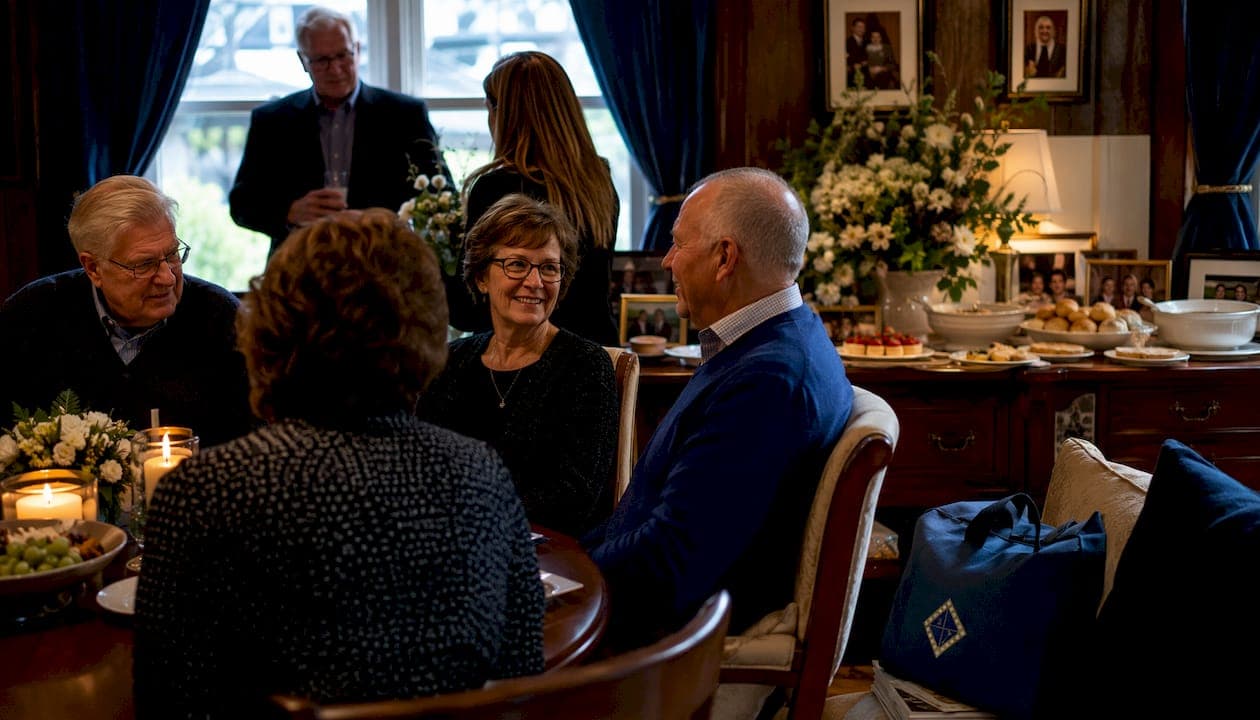
What is a repast venue, and why does it matter?
A repast venue is any physical location chosen to host a gathering of family and friends immediately after a funeral, burial, or memorial service. Think of it as the place where the formal mourning gives way to something quieter and more human: shared food, remembered stories, and the kind of comfort that only comes from being in the same room together.
The word "repast" literally means a meal, rooted in Latin and Old French. In American funeral traditions, it carries extra weight. Black funeral traditions in the U.S. have long used the term specifically, though today it's used interchangeably with "funeral reception" or "funeral luncheon" across many cultures and faith communities.
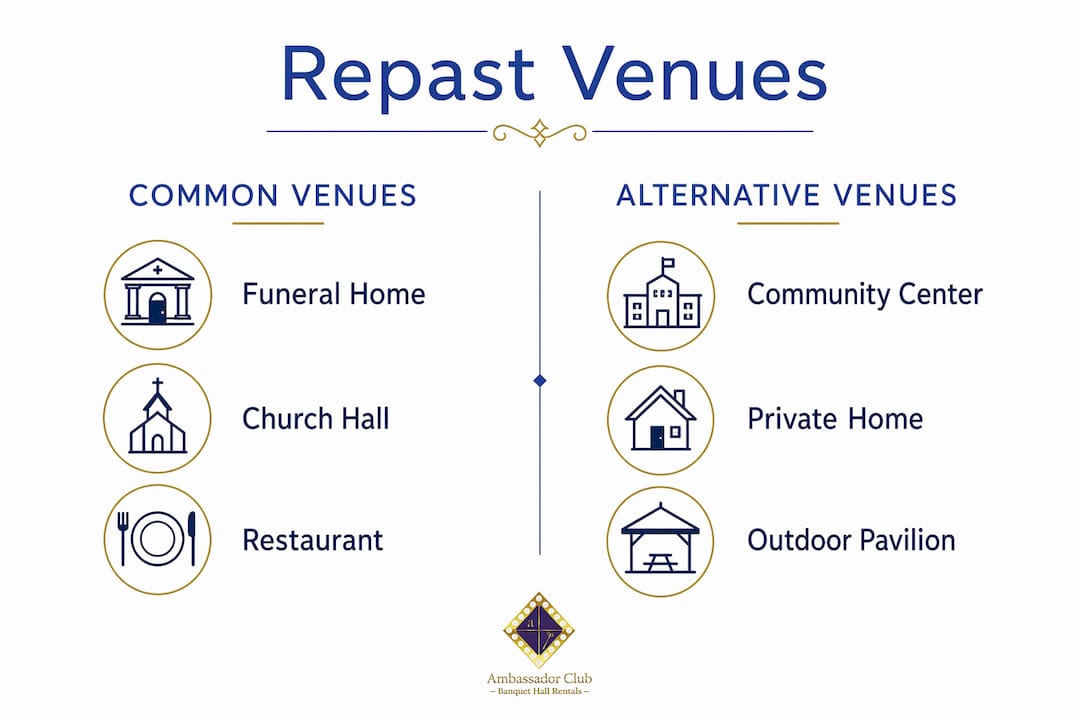
Common repast locations include:
- Funeral home reception rooms — on-site, staffed, and convenient
- Church or fellowship halls — often low-cost or donation-based, familiar to the congregation
- Restaurants — minimal cleanup, but typically involve spending minimums and time limits
- Community centers — neutral, spacious, and accessible for larger groups
- Private homes — intimate and personal, though labor-intensive for the host family
What sets a repast venue apart from a standard event space is its purpose. It exists to ease the transition from grief to healing, not to impress.
What types of repast venues are available to you?
Every venue type comes with its own tradeoffs, and the right choice depends on your family's size, budget, and emotional bandwidth.
Funeral home reception rooms are the most convenient option. The family stays in one location, staff handle setup and breakdown, and there's no commute between the service and the gathering. The tradeoff is atmosphere: some families find the setting too clinical for a relaxed meal.
Church halls and fellowship rooms work well when the congregation is already involved in the bereavement. Many churches offer these spaces as part of their ministry, sometimes at no charge. The familiarity of the space can itself be comforting.
Restaurants take food prep entirely off the family's plate, and a private dining room creates a contained, manageable environment. The catch: restaurants often impose minimum spending requirements and time restrictions that can pressure a grieving family into watching the clock.
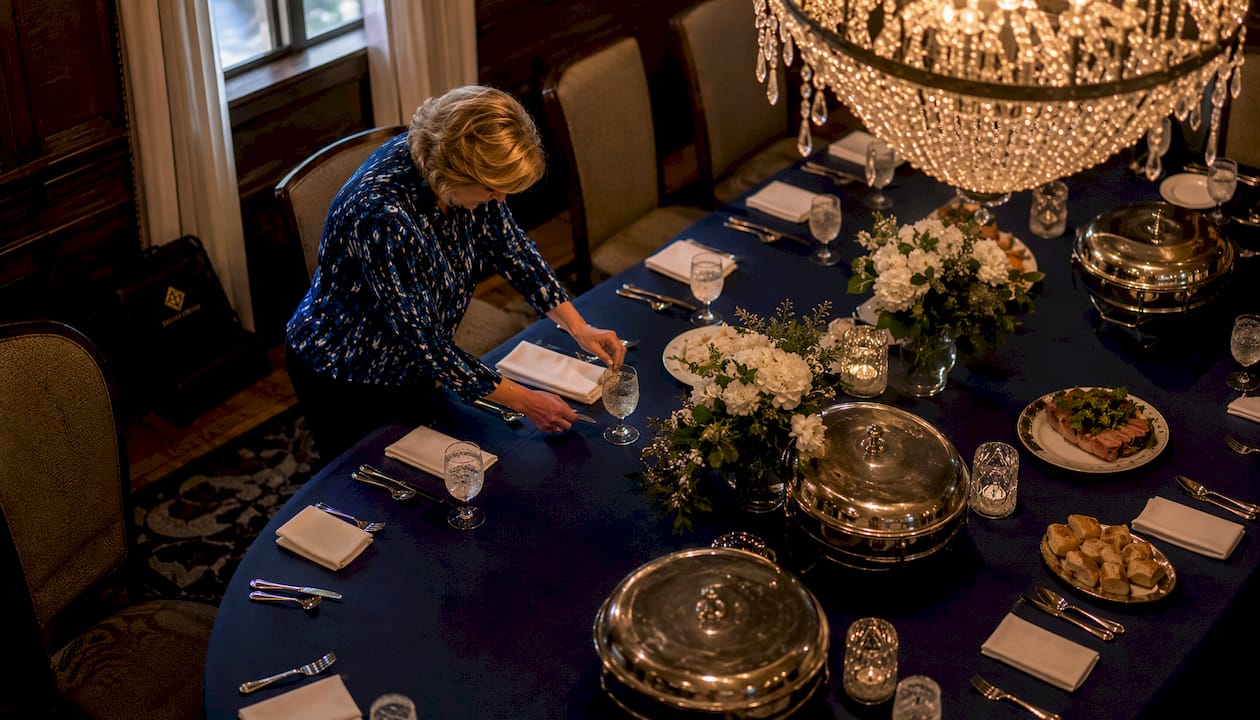
Community centers and banquet halls offer the most flexibility. Larger guest lists fit comfortably, catering options are open, and the neutral setting suits families from any background. For a deeper look at how these spaces compare, the banquet hall vs event venue breakdown covers the key differences worth knowing before you book.
Private homes are the most personal choice and work beautifully for small, close-knit gatherings. They demand the most from the host family, though: cooking, cleaning, parking, and managing foot traffic through a personal space during an already exhausting time.
Outdoor venues like park pavilions offer a peaceful, open-air setting. Weather dependence is the obvious risk, and accessibility for elderly guests requires careful planning.
What should you expect at a repast event?
The atmosphere at a repast is deliberately informal. After the structure and solemnity of a funeral service, the gathering shifts toward something more like a family dinner than a ceremony.
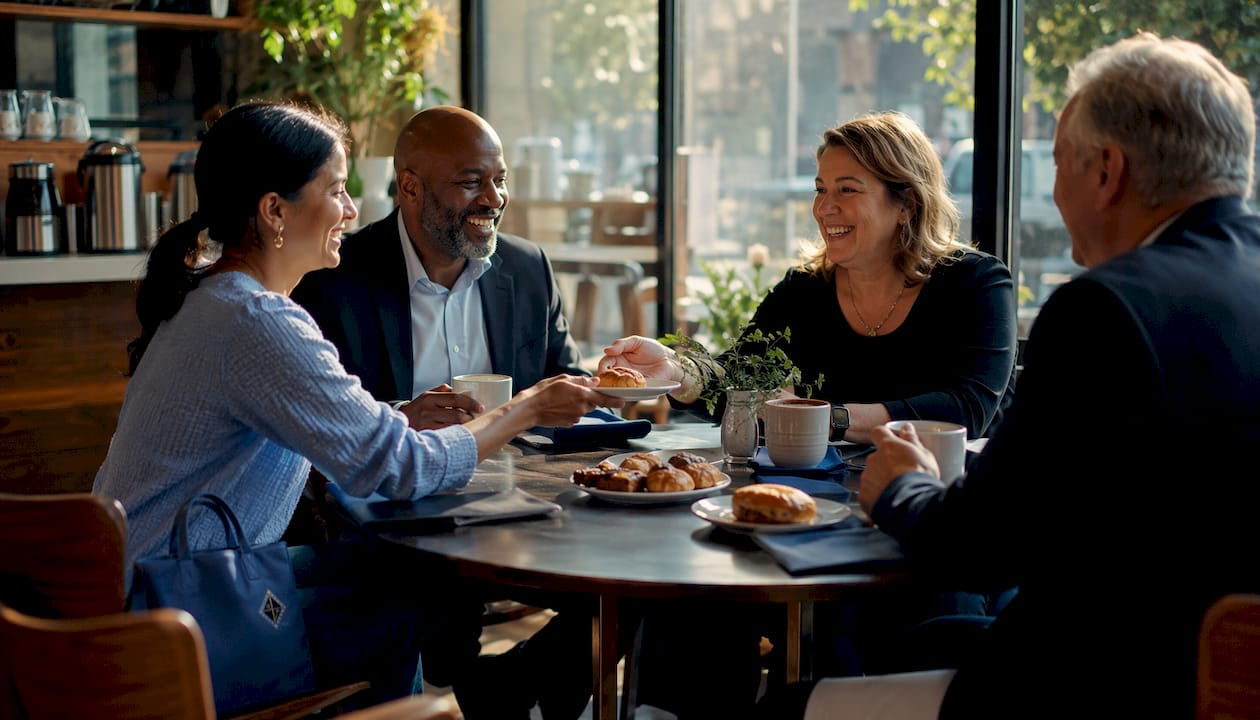
Food is central. Offerings range from light refreshments like coffee and cookies to full buffet-style meals featuring the deceased's favorite dishes or family comfort foods. Potluck-style repasts are common, especially in faith communities where members contribute dishes as an act of care.
Conversation tends to drift toward storytelling. People share memories, laugh at old anecdotes, and offer condolences in the unhurried way the funeral service rarely allows. Children often run around. Older relatives sit together. The mood is bittersweet rather than somber.
A few customs worth knowing:
- Dress code usually mirrors the funeral: dark or subdued clothing is the norm, though some families explicitly invite guests to dress more casually or in the deceased's favorite color.
- Prayers or blessings before the meal are common in religious families and can be arranged with a clergy member in advance.
- Timing varies. Some repasts begin immediately after the burial; others are scheduled hours later, especially when travel is involved. If there's a gap, communicate it clearly so guests know whether to expect a full meal or light refreshments.
- Invitations are typically open to all funeral attendees, though some families keep the repast smaller and by invitation only.
How do you host or plan a repast gathering?
Start with the guest count and work backward. A gathering of 20 people fits comfortably in a private home or restaurant private room. Eighty guests need a community center, banquet hall, or church fellowship room. Matching the venue to the actual headcount prevents both overcrowding and the hollow feeling of a half-empty room.
Delegate early and specifically. Standard practice among families is to assign concrete tasks to extended family, close friends, or community members rather than leaving one person to manage everything. Assign someone to coordinate food, another to handle setup, and a third to greet guests at the door. Grief is exhausting; spreading the load is not a sign of weakness.
For food, you have four realistic options: potluck contributions from guests, full catering through a vendor, a restaurant's private dining service, or a venue that includes catering in its package. Catering packages bundled with the venue rental tend to reduce the number of vendors you're coordinating during an already stressful week. Cultural catering considerations matter too. For families navigating specific religious or cultural food requirements, resources like funeral catering options offer useful frameworks even when the cultural context differs.
Logistics often get overlooked until the day of the event. Confirm parking availability, check that the entrance and restrooms are accessible for elderly or mobility-impaired guests, and ask the venue about their layout for guest flow. Accessibility is frequently underestimated but has a direct effect on how comfortable guests feel throughout the gathering.
Pro Tip: Look for venues that include event management services covering setup and breakdown. Many professional repast venues now offer these packages, which means the family arrives to a ready room and leaves without touching a folding chair.
What funeral specialists say about choosing a repast venue
Funeral professionals consistently point to one concept when advising families on venue selection: friction reduction. The ideal repast venue minimizes every logistical obstacle so mourners can focus on each other rather than on parking, directions, or seating confusion. A venue that requires guests to circle the block for parking or navigate stairs without a ramp adds stress to an already difficult day.
The repast functions as a structured grieving ritual, not just a meal. Funeral specialists describe it as the transition point where mourners move from the formality of the service toward communal healing. That transition works best when the environment feels comfortable and unhurried, which is why venues with time restrictions or rigid catering minimums often underserve grieving families.
A common misconception is that the immediate family must manage the repast themselves. Funeral directors and bereavement counselors routinely advise against this. Delegating to friends, faith community members, or venue staff is not just acceptable; it's the norm. Professional event management at repast venues has grown in availability, with packages that handle everything from table arrangement to post-event cleanup.
Venue choice also shapes the emotional tone. A church hall carries the weight of shared faith. A family home signals intimacy. A banquet hall offers neutrality and space. None of these is inherently better; the right fit depends on what the family and the deceased's memory call for. For families weighing venue size considerations, matching capacity to the actual guest list is one of the most practical decisions you can make early in the planning process.
When you're ready to find a space that handles the logistics so your family can focus on what matters, Ambassadorclubportsmouth offers a 6,000 sq ft hall accommodating up to 200 guests, a full commercial kitchen, and flexible catering options in Portsmouth, VA. The club has served Hampton Roads families since 1933.

Key Takeaways
A repast venue is a designated gathering space where family and friends share food, memories, and support after a funeral, and choosing the right one reduces stress for everyone present.
| Point | Details |
|---|---|
| Repast venue defined | Any location chosen to host a post-funeral gathering centered on shared food and mutual support. |
| Common venue types | Funeral home rooms, church halls, restaurants, community centers, and private homes each offer different tradeoffs. |
| Friction reduction matters | Parking, accessibility, and layout directly affect how comfortable guests feel throughout the event. |
| Delegate hosting tasks | Assigning specific roles to family, friends, or venue staff is standard practice, not an exception. |
| Venue shapes tone | Church halls carry faith community warmth; banquet halls offer neutral space; homes signal intimacy. |
FAQ
Who pays for the repast after a funeral?
The immediate family typically covers repast costs, though faith communities, extended relatives, and friends often contribute food, funds, or labor. Costs vary widely depending on venue type and whether catering is involved.
Why do Black families often use the term "repast"?
The term is historically rooted in Black American funeral traditions, where the post-funeral meal has long been a central communal ritual. Today the word is used across many cultures, but its strongest cultural association remains with Black funeral customs in the U.S.
Who usually attends a repast?
Anyone invited to the funeral is generally welcome at the repast, though some families keep it smaller and by invitation only, particularly when the gathering is held at a private home.
What should you expect at a repast?
Expect an informal gathering with shared food, storytelling, and condolences offered in a relaxed setting. The mood is bittersweet rather than ceremonial, and the food ranges from light refreshments to a full buffet depending on family preference and venue.