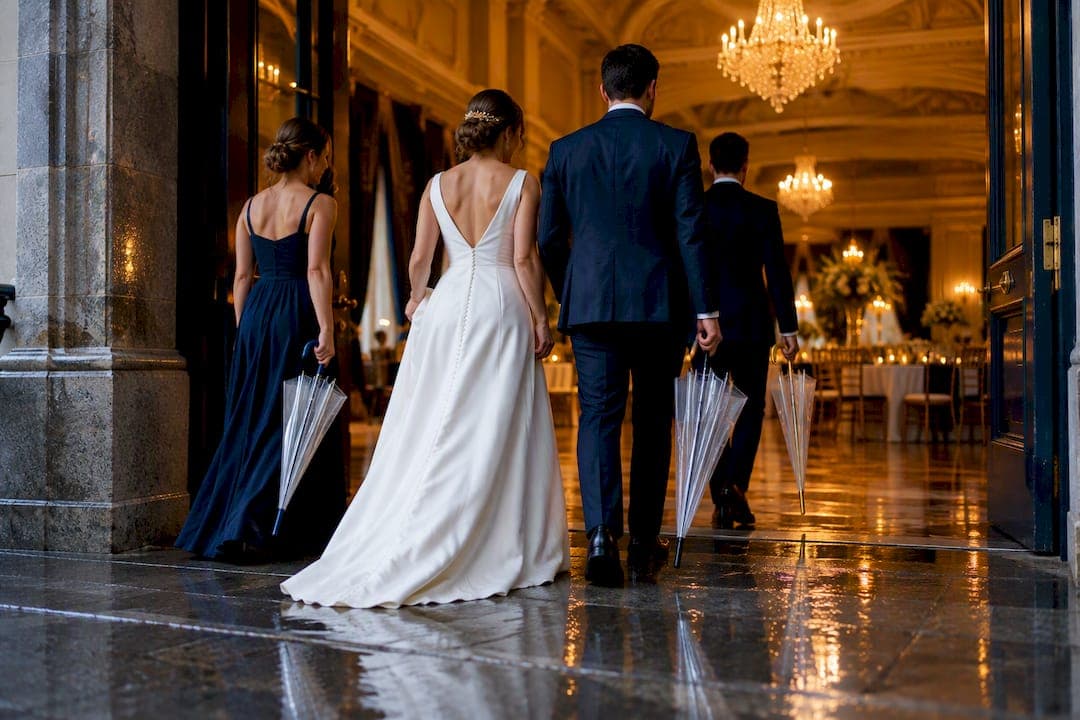
Reserve a real backup now, whether that means confirming your venue's indoor space or putting a tent on standby, and set a firm go/no-go deadline 24 to 48 hours before your wedding. Do that this week. Everything else, from umbrella stations to vendor phone trees, only works if that one decision is already locked in. The rest of this guide covers the affordable, practical moves that make the actual pivot painless, plus exactly when vendors need to hear from you.
TL;DR:
- Reserving a backup location, like a tent or indoor venue, should happen 48 to 72 hours before the wedding, as rental companies need this time to schedule setup.
- A standard outdoor tent for 100 guests requires roughly 1,500 square feet and costs between $3,000 and $6,750, depending on options like flooring or clear tops.
- Confirm a definitive rain decision with a designated person by 48 hours out and communicate it immediately to all vendors using a prewritten message.
- For a venue with a true indoor capacity, avoid last-minute rentals by ensuring the location already fits your guest list and has necessary facilities included.
- Building flexibility into the schedule, such as moving ceremonies earlier or shortening outdoor activities, helps avoid last-minute chaos during rain events.
Table of Contents
- Quick Rain-Day Checklist: What To Buy, Borrow, Or Reserve Now
- Backup Options Explained: Tents, Indoor Moves, And Hybrid Plans
- Decision Timeline: How To Call It Without Chaos
- Guest Comfort And Site Logistics In Wet Weather
- Photos, Dress Protection, And Styling Tips For Rain
- Day-Of Roles: Who Makes The Final Call
- Venue-Side Checklist: What To Confirm Before You Book
- Adjusting Your Wedding Schedule When Rain Hits
- Insurance Options For Weather-Related Disruptions
- Rain-Ready Attire For The Wedding Party
- Getting Guests There Safely In Heavy Rain
- Turning Rain Into Part Of The Story
- A Planner's Take On Staying Calm When It Rains
- Why A Venue With Real Indoor Backup Beats A Last-Minute Tent
- Where To Check Forecasts And Rental Costs
- Sources
- FAQ
Quick Rain-Day Checklist: What To Buy, Borrow, Or Reserve Now
A rain plan wedding falls apart at the last minute because couples wait to shop until the forecast turns ugly, when rental inventory is already gone and every drugstore in town is picked over. Handle these now, while you still have options.
For portraits and guest comfort:
- Clear umbrellas for the couple and wedding party (they photograph far better than black ones)
- A stash of disposable umbrellas or a small umbrella station near the entrance
- Absorbent bath towels and a stack of hand towels for wiping down chairs, shoes, and instrument cases
For attire emergencies:
- Clear shoe protectors or a backup pair of flats for the bride
- Lint rollers, a mini sewing kit, and a portable steamer or compact hair dryer for last-second touch-ups
- A hair and makeup touch-up kit staged near the getting-ready area
For the venue itself, tent companies typically want 48 to 72 hours to schedule setup, so this is where "now" really means now:
- Put a frame tent with sidewalls and flooring on standby with a rental company
- Confirm lighting, heaters or fans, and staffing for a same-day setup
- Map covered drop-off points, directional signage, and a bin or coat-check spot for wet umbrellas and jackets
Backup Options Explained: Tents, Indoor Moves, And Hybrid Plans
Not every backup plan is the same size, price, or level of hassle, and picking the wrong one is how couples end up paying rush fees for equipment they didn't actually need.
A frame tent with sidewalls and flooring is the standard outdoor rescue. It gives you walls against wind-driven rain, a dry floor instead of mud, and enough structure to hang lighting. The tradeoff is cost and setup time. A clear-top tent keeps the open-air feel and lets in daylight, which photographers love, but it does less to block wind and usually costs more per square foot. A permanent indoor backup, meaning your venue's own hall or ballroom, eliminates almost all of this. No rental delivery, no flooring installation, no weather risk to the structure itself. It only works if the room actually fits your guest list and has the kitchen or catering access your caterer needs.
For sizing, the standard rule of thumb is about 15 sq ft per seated guest, so a 100-guest seated reception needs roughly 1,500 sq ft of covered space. Cocktail-style or ceremony-only setups can run smaller since guests aren't all seated at once.
| Setup | Typical size (100 guests) | Estimated cost |
|---|---|---|
| Basic frame tent (no flooring) | ~1,500 sq ft | $2 to $4.50 per sq ft/day, roughly $3,000 to $6,750 |
| Tent + flooring add-on | ~1,500 sq ft | Add $1 to $3 per sq ft for subflooring |
| Clear-top tent | ~1,500 sq ft | Typically priced above basic frame tents |
| Indoor venue backup | Fits existing hall capacity | Covered by your venue rental, no rush rental fees |
Many wedding planning tools recommend budgeting an extra 10 to 15% of your total event cost purely for weather contingency, which covers tent standby fees, flooring, and last-minute labor.
Pro Tip: Ask your tent company in writing whether "standby" holds carry a fee if you cancel. Some companies bill a partial reservation cost even if you never use the tent, and that number should factor into your contingency budget.
Decision Timeline: How To Call It Without Chaos
Every rain plan wedding needs a clock attached to it, or you'll end up making the call at 2 a.m. while half your vendors are asleep.
- 2 to 4 weeks out: Put a tent on standby with a rental company. Peak season inventory disappears fast, and reserving early avoids paying premium last-minute rates.
- 72 hours out: Start checking the NWS Probabilistic Precipitation Portal, which shows expected rainfall alongside low-end and high-end percentile scenarios. Treat the high end as your planning number if the stakes of getting caught outdoors are high.
- 48 hours out: This is your hard deadline. Tent companies need roughly 48 to 72 hours to schedule installation, so waiting past this point limits your options.
- 24 hours out: Confirm the final call with your venue coordinator and lock the layout.
Your vendor notification list should include the venue coordinator, caterer, florist, photographer, officiant, rental company, and band or DJ, in that order, since layout and power needs cascade from the venue outward. A short template works fine: "Weather update: we are moving to [tent/indoor plan] for [date]. Setup begins at [time]. Please confirm you've received this and note any changes needed on your end." Send it once, to everyone, at the same time.
Guest Comfort And Site Logistics In Wet Weather
Guests forgive a schedule change. They remember soggy shoes and getting lost looking for the entrance. Handle site logistics with the same care you give the ceremony itself.
- Set up a covered drop-off zone right at the entrance, with a clear path under cover to the ceremony or reception space
- Stage bins or a simple coat-check table for wet umbrellas and jackets so they don't end up under chairs
- Choose flooring or turf protection over bare grass. Nothing ruins a reception faster than heels sinking into mud
- Add temporary ramps wherever there's a step-up into a tent or building, since rain makes any incline slicker
- Bring in heaters or fans depending on the season, since tented spaces run colder or stuffier than an open lawn
- Add extra lighting for overcast afternoons. Natural light disappears fast under cloud cover, and photos and safety both suffer
- Post clear signage for restrooms, since routing changes when guests move under a tent instead of walking the open grounds
Photos, Dress Protection, And Styling Tips For Rain
Schedule portraits before the ceremony whenever your timeline allows. It gives you a dry window and takes the pressure off chasing light later. Ask your photographer to scout a covered location, a porch, a breezeway, or a tent structure, as a rain-day backup for formal shots.
Clear umbrellas do double duty here: they protect the dress and tux while staying invisible in photos compared to solid ones. Your photographer should already carry professional rain covers for camera gear, but it doesn't hurt to ask ahead of time. Pack microfiber towels and a garment bag in the bridal suite for quick dabs and dress changes.
Brief the bridal party on holding trains off wet ground, and keep a pair of backup flats on hand for the walk between locations. A five-minute hair and makeup touch-up slot before the reception saves photos from humidity frizz.
Day-Of Roles: Who Makes The Final Call
Confusion on the day itself almost always traces back to one missing thing: nobody was actually in charge of the decision. Fix that in advance.
- Name one decision-maker, usually the wedding planner or a designated family member, plus a backup in case that person is unreachable
- Set the exact criteria that trigger the move indoors: thunder or lightning in the forecast, a precipitation chance above 70%, or sustained winds exceeding the safe threshold for an anchored tent
- Have a prewritten message ready to send to every vendor the moment the call is made, so nobody is drafting text under pressure
- Confirm logistics immediately after the call: power needs, layout changes, and who's responsible for moving equipment
- Loop guests in briefly through the wedding website or a simple sign at the entrance so nobody arrives confused about where to go
Lightning and sustained high winds aren't a judgment call. A tent without properly anchored sidewalls isn't safe in high wind, and that's a move-indoors decision, not a maybe.
Venue-Side Checklist: What To Confirm Before You Book
A venue with a real indoor backup that already fits your guest count saves you both time and money compared to a last-minute tent that needs flooring, lighting, and heat all rented separately.
Before you sign anything, confirm the venue's true seated indoor capacity in writing, not just the number in their marketing materials. Ask about kitchen access for your caterer, load-in access for rentals and florals, and whether venue staff handle setup and teardown or whether that falls on you. Find out what's already included, tables, chairs, built-in AV, a staging area, since renting those separately for a tent adds up fast.

When a wedding pivots indoors at a venue like the Ambassador Club, the checklist covers layout adjustments for the new footprint, catering routing through the kitchen, covered parking and drop-off, and a clear cleanup plan. Our practical guide to booking an event hall walks through exactly what to ask before you sign.
Adjusting Your Wedding Schedule When Rain Hits
Sometimes the fix isn't a tent or a room change. It's the schedule itself. Shifting your ceremony start time by even 30 minutes can dodge a rain band that radar shows moving through. Talk to your officiant and photographer ahead of time about whether a short delay is workable without cascading into cocktail hour.
Cutting outdoor cocktail hour short and moving it indoors early is often smoother than trying to force guests to mingle under a half-covered tent. If your first look and portraits were planned outside, moving them earlier in the day, ahead of any forecast rain window, protects the shot list without scrambling later.
Consider trimming or combining events that don't need to happen outdoors at all. A ceremony under a tent with the reception immediately following in the same space, rather than a full venue changeover, cuts down on the number of times guests have to move through weather. Build a rain contingency directly into your printed timeline as a footnote, so your day-of coordinator and vendors already know the fallback sequence instead of improvising it live.
Insurance Options For Weather-Related Disruptions
Wedding insurance sounds like the obvious safety net, but most policies don't pay out for ordinary rain. Coverage typically requires something more severe: a named storm, an official government advisory, or travel restrictions that make the venue physically inaccessible. A drizzly afternoon usually doesn't qualify.
That doesn't make the policies useless. They're built for the scenario where a hurricane forces a venue closure or a blizzard strands half your guest list, not for a rain plan wedding where you're simply moving under a tent. If you want coverage, buy it 14 to 30 days before the wedding, since most insurers won't sell a policy once a named storm is already forecast.
Given those limits, your real financial cushion is the contingency budget mentioned earlier, that extra 10 to 15% set aside for tent rentals, flooring, and last-minute labor. Insurance covers catastrophe. Your contingency budget covers weather.
Rain-Ready Attire For The Wedding Party
Rain changes what "appropriate" attire means for everyone standing outside, not just the bride. Groomsmen in leather-soled shoes will slide on wet grass or tent flooring, so a rubber-soled dress shoe or a treated leather sole is worth the swap. Bridesmaids should have a low block heel or wedge as a backup option since stilettos sink straight into soft ground.

For the bride, a detachable train or a bustle that goes up early keeps fabric off wet flooring during the reception. A short cape or wrap for outdoor portraits doubles as rain protection and a styling moment. Groomsmen and the groom benefit from a lightweight, packable rain jacket kept nearby, not worn during photos, but ready the second the ceremony wraps.
Pack a few oversized golf umbrellas in the wedding colors for the full bridal party walk, since a solo umbrella per person creates a cluttered, awkward photo. Bring a change of socks and shoes for anyone standing outside for photos, since wet feet are miserable for the rest of the night even after the rain stops.
Getting Guests There Safely In Heavy Rain
Heavy rain turns a normal parking situation into a logistics problem, especially at venues without covered garages. If your venue offers transportation services, coordinate a shuttle loop between the parking area and the entrance so guests aren't sprinting through a downpour in dress shoes.
For guests with mobility limitations, arrange a closer drop-off zone specifically for them, separate from general shuttle service, so they're not waiting in a line outside. If you're using valet, brief the valet team on a covered handoff point rather than an open curb.
Send a short text or email update the morning of the wedding with parking instructions, shuttle timing, and a reminder to bring an umbrella. Guests who know what to expect show up prepared instead of standing in the rain trying to figure out where to go.
Turning Rain Into Part Of The Story
Rain doesn't have to be something you're managing around. Some of the most striking wedding photos come from leaning into it rather than fighting it. A shared umbrella shot on a quiet street, reflections in puddles under string lights, or a couple dancing under a clear tent roof with rain visible overhead can look more romantic than a flawless sunny backdrop.
If your theme has any moody, vintage, or European elements, rain actually reinforces it. Soft, diffused light from cloud cover is genuinely flattering for portraits, often more forgiving than harsh midday sun. Ask your photographer ahead of time if they're comfortable shooting in rain and whether they have ideas for using it creatively, since some photographers specialize in exactly this look and will already have a shot list ready.
Small touches help too: rain boots waiting by the door for the wedding party, a "sunshine on our wedding day" sign flipped to a rain-themed version, or a specialty cocktail named after the weather. It reframes the day from something going wrong to something that happened once, on purpose, in a way no sunny wedding photo album looks like.
A Planner's Take On Staying Calm When It Rains
Preparation is what turns rain from a crisis into a footnote. Couples who lock in a backup and a deadline weeks ahead spend their wedding day enjoying it instead of checking radar apps. Some of the loveliest wedding photos happen in light rain, soft light, genuine laughter, nobody posing.
One reminder: don't wait for a perfect forecast to make your call, and don't let one nervous relative talk you into flipping the decision after vendors are already moving. Trust the deadline you set.
— MARTIN
Why A Venue With Real Indoor Backup Beats A Last-Minute Tent
A tent rental solves your rain problem for one day. A venue with genuine indoor capacity solves it permanently, without flooring rentals, heater deliveries, or a 48-hour scramble booking equipment nobody wants to think about during engagement season. A venue like Ambassador Club Portsmouth offers a large indoor hall with a commercial kitchen already built in, eliminating the need for separate catering tents, rented generators, or last-minute calls to rental companies.

Couples booking through the Standard Event Package get flexible catering options and a space that holds up to 200 guests rain or shine, which means your rain plan wedding is really just "the wedding," with no separate contingency budget needed for tenting. Browse the full lineup of wedding and event services, including transportation options for guests dealing with heavy rain, and check availability for your date directly with the venue team.
Where To Check Forecasts And Rental Costs
Bookmark the NWS Probabilistic Precipitation Portal for real 72-hour rainfall ranges, not just a single percentage chance. For tent sizing and lead times, American Tent's logistics page breaks down standby reservations. Review Allstate's wedding insurance FAQ before assuming a policy covers ordinary rain. If your reception is moving indoors, this list of festive catering ideas helps you adjust the menu for a new kitchen setup.
Sources
- Wedding Notepad — Rainy day wedding backup plan
- NWS Probabilistic Precipitation Portal
- American Tent — lead-times and logistics
- Allstate — wedding insurance FAQs
FAQ
What Is The 50/20/30 Rule For Weddings?
Exact splits vary widely by region and guest count, so treat it as a starting ratio, not a fixed rule.
What Is The Groom's Mom Responsible For?
Traditionally, the groom's mother helps plan the rehearsal dinner and coordinates with the bride's family on logistics, though modern weddings split these roles however works for the couple. On a rain plan wedding specifically, she often helps relay day-of decisions to extended family and out-of-town guests once the final weather call is made.
What Is The Rarest Month To Get Married?
January and February see the fewest weddings in most parts of the country, largely due to cold weather and holiday scheduling conflicts. Couples marrying in these off-peak months often find it easier to book venues and vendors on shorter notice, which can also mean more flexibility with tent or backup equipment reservations.
What Is The 30-5 Minute Rule For Weddings?
This is a day-of etiquette guideline suggesting the wedding party and family should arrive 30 minutes before their required time, while vendors and setup crews aim to be ready 5 minutes ahead of every scheduled transition. Applied to a rain plan, it means your tent or indoor setup crew should be fully finished 5 minutes before guest arrival, not still adjusting lighting as cars pull up.
How Much Does It Cost To Rent A Wedding Venue With Indoor Backup?
Pricing depends on guest count, package, and date, and Ambassador Club Portsmouth's current package pricing is available directly through the venue's website. Additional fees, including a $250 security deposit, $350 cleaning fee, and $65 per hour for security, are listed on the venue's FAQ page.