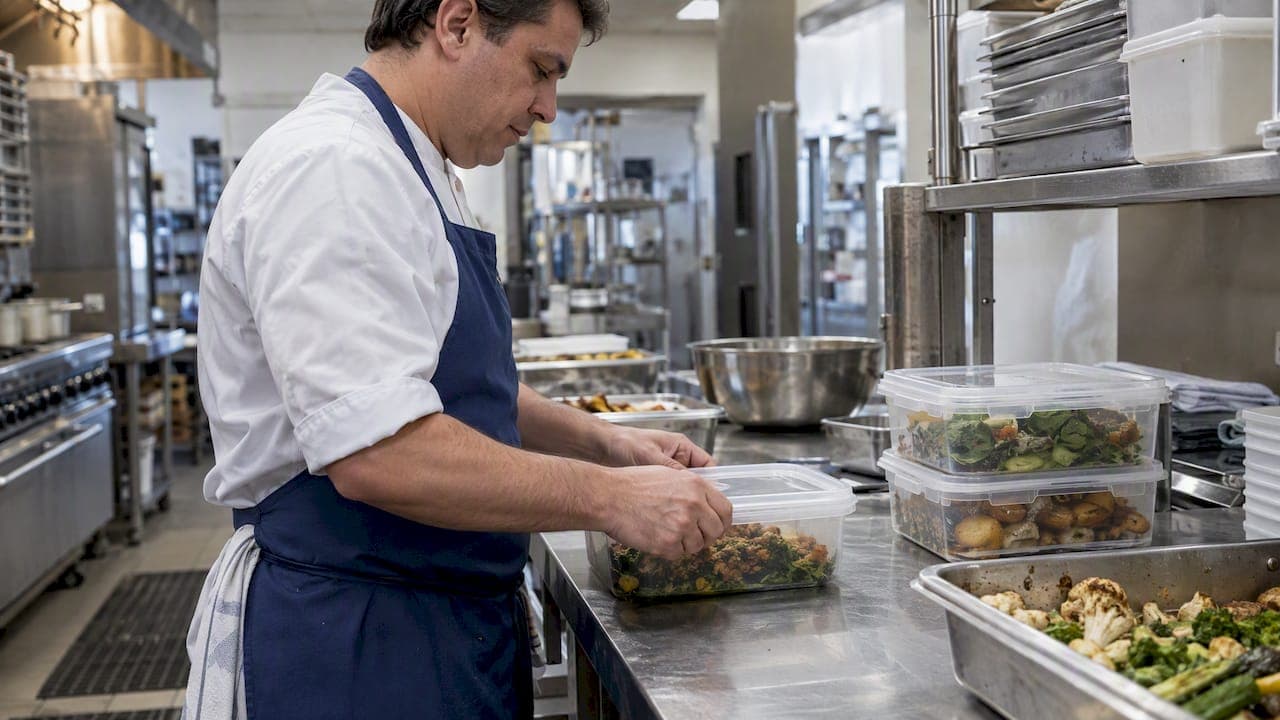
Pick an eco-capable venue, serve plant-forward food and donate leftovers, write sustainability clauses and a waste-diversion plan into every vendor contract, and cut attendee travel with transit access or a virtual option. The EPA's special event guidance and GHG Protocol-style accounting back these moves. The steps below are ready to use.
TL;DR:
- Choose compostable serviceware only if the local hauler accepts it; otherwise, reusable plates create less waste than disposable alternatives at the event.
- Caterers should base portion counts on confirmed RSVPs; plated meals offer tighter control, while buffets produce less waste when staff refill smaller pans.
- Hybrid events cut more travel emissions when guests live far away, but streaming adds little when most attendees drive short distances.
- Track pounds recycled and composted, pounds of food donated, and attendee travel miles, then compare results with goals after the event.
Table of Contents
- 1. Fourteen green event ideas you can start using this week
- 2. How to pick a venue with sustainability in mind
- 3. Sustainable catering and food strategies
- 4. Waste diversion on event day: bins, signage, volunteers and vendors
- 5. Low-carbon transport and attendee travel strategies
- 6. Eco-tech and virtual or hybrid options that reduce paper and carbon
- 7. Measuring impact and trust signals
- 8. A venue operator's view: small changes beat big promises
- 9. How we support greener events at The Ambassador Club
- FAQ
- Sources
1. Fourteen green event ideas you can start using this week
Each idea below gives you the action first, then a quick way to put it in motion. Start with the foundational ideas, because they shape everything that follows.
- Choose an eco-capable venue. Look for transit access, an on-site kitchen and a clear waste system. Ask for these details before you tour.
- Write sustainability clauses into vendor contracts. Require reusable serviceware, composting participation and a waste plan. Attach the clause to the quote, not the final invoice.
- Go paperless. Send digital invites and put schedules and maps in an event app. Print a handful of signs, not a stack of programs.
- Serve plant-forward menus with portion control. Make vegetable mains the default and meat the add-on. Ask your caterer for realistic counts instead of padding.
- Donate surplus food. Line up a food rescue partner before the event. Pack and label leftovers during breakdown, not afterward.
- Use reusable or compostable serviceware. Choose compostable only when a composting hauler will take it. Otherwise, reusable plates beat both.
- Pair every trash can with recycling and compost bins. A lone bin becomes a catch-all, so place them as a trio.
- Recruit volunteers or stewards. One trained person at each bin station keeps contamination low.
- Rent reusable décor and signage. Choose dated-free signs that can serve the next event too.
- Source locally. Local florals, linens and food cut transport and often cost less.
- Share transit info and shuttles. Put routes and parking guidance on the invitation.
- Offer virtual attendance. Stream the keynote or ceremony for guests who would otherwise fly in.
- Use smart lighting and efficient equipment. Program lighting scenes so nothing runs at full power all night.
- Give practical, reusable favors. Skip trinkets nobody keeps. The EPA's green meetings guidance recommends minimizing giveaways.
Pro Tip: Require vendors to flatten and pre-sort cardboard offsite. It frees staging space and speeds up hauler pickup.
Treat the list as a menu. A few well-executed ideas beat a long list of half-finished ones, and the 4Rs (Refuse, Reduce, Reuse, Recycle) from Colorado State's event guide give you a simple order of priority: refuse what you do not need first, then work down the list.
2. How to pick a venue with sustainability in mind
The venue sets a ceiling on how green your event can get. A hall with a working kitchen, reachable by bus, and willing to coordinate haulers does half the work for you. The European Commission's checklist also lists green venue choice as an early step.
Ask these questions when you book:
- How does the venue buy energy, and can it share anything about its lighting and equipment?
- Does it have an on-site kitchen that allows food prep, composting and less transported food?
- Which recycling and composting haulers serve the building, and when do they pick up?
- Is it reachable by public transit, walking or biking?
- Can you bring in local vendors, and is there room to stage and sort waste?
- Can you store and reuse décor between events?
Sample contract language to request: "No polystyrene foam products on site." "Each vendor submits a waste plan before the event." "Vendors participate in the venue's composting and recycling program." Confirm hauler timing in writing so full bins do not sit overnight.
3. Sustainable catering and food strategies
Food is where you can keep the guest experience high while trimming carbon and waste. Plant-forward menus do not have to feel like a compromise. Grilled cauliflower steak with chimichurri, a composed vegetable main with seasonal sides, or a hearty grain bowl with roasted roots all read as upscale on a plate.
- Plan portions early. Ask your caterer to size counts to confirmed RSVPs rather than a worst-case headcount.
- Weigh plated against buffet. Plated service gives tighter control; buffets need smaller pans refilled more often.
- Set donation and composting logistics in advance. Settle containers, labels and pickup before event day.
- Name serviceware in the contract. Colorado State's guide notes that vendor contracts can mandate plant-based options, reusable serving ware and composting participation.
- Buy local and seasonal. ICLEI's guidelines recommend local seasonal food as part of early planning.
For menu budgeting, our catering cost-saving checklist shows how right-sized orders protect both the budget and the planet.
4. Waste diversion on event day: bins, signage, volunteers and vendors
A good plan fails if guests cannot tell which bin is which. Yale's guidance is blunt: pair recycling and compost bins beside every trash container, because an unattended single bin becomes a mixed-waste catch-all.
- Use clear, color-coded signs placed high so guests see them over a crowd.
- Set up a staging area out of sight where staff consolidate and re-sort what guests miss.
- Train stewards to stand by bins during the busiest windows, such as right after dinner service.
- Brief vendors in writing: flatten cardboard, separate food-prep waste, and bring only approved serviceware.
- Lock in hauler pickup times so nothing overflows before cleanup. See our post-event cleaning checklist for a breakdown workflow.
Pro Tip: Start sorting behind the scenes, in the vendor areas, before opening public stations. Vendors learn the system while the stakes are low.
The EPA's recycling tips for events also stress preventing waste at the source, starting small and asking local recycling coordinators about loaned containers or signage.

5. Low-carbon transport and attendee travel strategies
For many events, getting people there is the biggest slice of the footprint, so make the low-carbon option the easy one.
- Promote transit, walking and biking. Put route maps and stop names on the invitation, not buried on a website.
- Offer ride-share pooling info or a simple carpool sign-up.
- Use electric or low-emission shuttles for short local transfers between hotels and the venue.
- Design parking to discourage solo driving, such as reserving the closest spaces for carpools.
- Survey attendees at registration to learn how far and how they travel. EPA's greenhouse gas guidance for events suggests surveys plus activity data and emission factors to estimate travel emissions.
Treat offsets as a last step for emissions you could not avoid, never a replacement for reducing travel. Report what you reduced first and what you offset second.
6. Eco-tech and virtual or hybrid options that reduce paper and carbon
Technology removes paper and, at times, whole trips. Digital invitations, ticketless registration and an event app with maps and schedules replace nearly every printed handout.
- Digital invites and online RSVPs cut mail and printing.
- An event app carries schedules, floor plans and transit directions.
- Hybrid or virtual attendance keeps distant guests involved without a flight. MIT's guidance notes online formats work best with shorter sessions and reliable videoconferencing.
- Smart lighting and efficient AV avoid running everything at full power. Mobile solar can work for temporary outdoor power where practical.
- Event analytics show which sessions drew remote viewers, so you can refine next time.
Hybrid is the strongest carbon-saver when many guests would travel long distances. For a local celebration where most people arrive by short drive, a stream may add little. Match the format to where your guests live.
7. Measuring impact and trust signals
You cannot improve what you do not count. Begin with a few metrics that any planner can track:
- Pounds recycled and composted, weighed by your hauler or at the staging area.
- Pounds of food donated, recorded on the rescue partner's receipt.
- Attendee travel miles, gathered through a short registration survey.
The EPA's best practices guide includes sample vendor contract language that enforces recycling and composting participation, so your measurement starts with enforceable requirements.
The EPA's special-event waste guidance and its greenhouse gas guidance for events give you credible frameworks to cite, including attendee travel, hotel stays and venue energy use as sources to count. After the event, run a quick audit: review hauler weights, compare against your goals and note what to change. Share the results with guests and vendors. Visible reporting builds trust and makes the next event easier to sell.
8. A venue operator's view: small changes beat big promises
In my view, the greenest events are rarely the ones with the grandest pledge. They are the ones where a planner and venue team agreed early, ran one small pilot and kept what worked. A commercial kitchen and flexible catering rules remove the friction that usually kills good intentions. Many of these moves also save money: fewer printed pieces, less disposable ware and tighter food orders all trim the bill.
— MARTIN
9. How we support greener events at The Ambassador Club
Our historic Portsmouth hall comes with a full commercial kitchen and flexible catering options. That can make plant-forward menus, food donation plans and vendor coordination simpler to run. Our team will talk through your waste plan and serviceware choices.

Ask about sustainability-friendly options on our services page, and tell us what you want to try. If you are ready to check a date, request a package through our booking page.
FAQ
What are the easiest green event ideas to start with?
Start with paperless invitations, paired recycling and compost bins, and a plant-forward menu. These need little budget and no special equipment. The EPA's green meetings page lists electronic materials and online registration among its first attributes to consider.
How do I make an eco-friendly wedding reception?
Pick a venue with a kitchen, serve seasonal plant-forward dishes, and rent décor instead of buying it. Offer reusable favors and share transit details. For more ideas, see these three high-impact eco-friendly wedding ideas.
What should a sustainable vendor contract include?
Include reusable or compostable serviceware, composting participation, plant-based menu options and a waste plan. Colorado State's guide shows contract language like this can be written directly into agreements. Add a requirement to flatten cardboard.
How do I measure the impact of a green event?
Track pounds recycled and composted, pounds donated, and attendee travel miles. Collect travel data with a registration survey. Review the numbers in a short post-event audit and share them with your guests.