
A corporate event venue is defined as a dedicated space designed to support specific business objectives, from board-level strategy sessions to company-wide product launches. The right venue type shapes attendee experience, reinforces brand credibility, and directly affects event outcomes. Planners who understand the full range of corporate event space options make faster decisions and negotiate better terms. Planners now answer 75% of venue questions digitally before making direct contact. That shift means your shortlist starts long before you speak to a sales manager.
1. types of corporate event venues and their key features
Corporate event venues fall into distinct categories, each with specific strengths tied to event format, size, and brand goals. Knowing which category fits your event is the fastest way to narrow a shortlist.

Hotels and conference centers
Hotels are the most common choice for corporate events because they bundle sleeping rooms, meeting space, catering, and AV into one contract. Full-service properties like Marriott, Hilton, and Hyatt offer modular ballrooms and dedicated event coordinators. The trade-off is cost. Hotel F&B minimums and mandatory service charges can push budgets higher than expected.
Convention centers
Convention centers are purpose-built for large-scale events, trade shows, and multi-track conferences. Venues like the Walter E. Washington Convention Center or the Virginia Beach Convention Center offer hundreds of thousands of square feet of flexible floor space. They work well for exhibitions and expos but often struggle with smaller group meetings. Large convention venues frequently mismanage small group meetings, so planners should seek dedicated, right-sized rooms with clear pricing.
Unique venues: museums, art galleries, and historic mansions
Unique venues deliver brand impact that a standard hotel ballroom cannot replicate. A product launch inside a natural history museum or a leadership summit in a historic mansion creates a memorable frame for the content. These spaces require more planning around logistics, catering, and AV because infrastructure is rarely built in. The payoff is an event attendees actually remember.
Outdoor and rooftop spaces
Outdoor venues and rooftop terraces work well for summer receptions, team celebrations, and brand activations. They offer visual appeal and a relaxed atmosphere. Weather dependency and noise restrictions are real operational risks. Always confirm a contingency plan before signing a contract for an outdoor space.
Restaurants and private dining rooms
Private dining rooms inside restaurants are a strong choice for client dinners, small board meetings, and executive lunches with groups of 10–40 people. The food and service are already the venue's core product. Pricing is usually tied to a food and beverage minimum rather than a room hire fee, which simplifies the corporate event vendor management workflow.
Coworking spaces and loft venues
Coworking venues and loft spaces have become a practical option for hybrid corporate event formats. They offer flexible layouts, built-in Wi-Fi, and a modern aesthetic that suits tech companies and creative agencies. Hybrid event capabilities and sustainability are now baseline expectations rather than premium features. Coworking venues often meet both requirements at a lower price point than hotels.
Pro Tip: When evaluating coworking or loft venues for hybrid events, ask specifically about upload and download bandwidth speeds, not just general "high-speed Wi-Fi." Streaming live video to remote attendees requires dedicated bandwidth that shared office networks rarely guarantee.
Country clubs and ballrooms
Country clubs and ballrooms are the standard choice for formal corporate galas, annual dinners, and award ceremonies. They offer upscale settings, full catering services, and experienced event staff. What is a corporate retreat venue in this category? Think resort-style properties with golf courses, spa facilities, and breakout spaces that support multi-day leadership retreats. These venues command premium pricing but deliver a polished, all-inclusive experience.
Day-hire meeting rooms
Day-hire meeting rooms often include bundled AV and clearer pricing, making them the most practical option for groups of 10–30 people. Providers like WeWork, Regus, and independent meeting centers offer hourly and full-day rates with no hidden minimums. For planners running frequent internal meetings, day-hire rooms reduce cost and administrative overhead significantly.
2. how to compare corporate event venue types effectively
Comparing event venue types for businesses requires a structured framework. The following criteria apply across every venue category.
| Criteria | What to Evaluate |
|---|---|
| Capacity and Layout | Can the space flex between theater, classroom, and reception setups? |
| AV and Tech Infrastructure | Is AV included, or is it a third-party add-on with separate costs? |
| Hybrid Readiness | Does the venue support live streaming, video conferencing, and remote attendee integration? |
| Location and Accessibility | Is the venue near transit, hotels, and parking for out-of-town attendees? |
| Pricing Transparency | Are catering, AV, staffing, and overtime fees listed clearly upfront? |
| Service Level | Does the venue assign a dedicated event manager, or does support come from a shared team? |
Transparent pricing and clear inclusions for AV, staffing, and amenities have become mandatory for venue credibility in 2026. A venue that hides surcharges in the fine print will cost you time and budget during execution.
Digital presence matters too. Venue websites with short-form video showing real events in the space give planners a faster, more accurate read on fit. A venue with no photos of actual corporate events set up in the room is a red flag.
Pro Tip: When requesting a quote, ask the venue to itemize every line item separately, including AV rental, staffing, security, and cleaning fees. Bundled packages look cheaper upfront but often include services you do not need.
3. booking process and timelines for corporate event venues
The corporate event venue booking process is the sequence of steps from initial inquiry to signed contract and confirmed date. Understanding what a venue booking process means in practice helps planners avoid the delays that cost them their preferred date.
- Set your brief. Define event type, expected attendance, date range, and budget before contacting any venue. Venues respond faster and more accurately when the inquiry is specific.
- Research and shortlist. Use venue directories, social media, and AI tools to build a list of 3–5 candidates. Most of your qualification happens here before any direct contact.
- Send targeted inquiries. Contact each venue with a clear brief. Calling a named sales manager directly shortens response times and aids courtesy hold negotiation far more than submitting a generic online form.
- Expect a response within 24–48 hours. Venue inquiries responded to within 24–48 hours increase planner engagement. Delays beyond 72 hours signal a venue that may struggle with event-day responsiveness.
- Schedule a site visit. The typical venue sales cycle moves from inquiry to site visit in 3–7 days. Use the visit to test AV, walk the layout, and meet the event manager.
- Request a courtesy hold. Courtesy holds of 24–72 hours are standard practice to reserve your date while you finalize internal approvals.
- Negotiate and sign. The full process from first contact to signed contract should conclude within three weeks for most corporate events.
On lead times: booking 12–18 months in advance is ideal for peak corporate events, while 6–12 months works for standard meetings. Waiting until 90 days out for a high-demand venue almost always means settling for your second choice.
4. matching venue type to your corporate event format
The best venue for your event depends on what the event needs to accomplish. Here is a direct match between event format and venue category:
- Small meetings and workshops (10–30 people): Day-hire meeting rooms or coworking spaces with dedicated AV and clear hourly pricing.
- Large conferences and multi-track events (200+ people): Convention centers or large hotel ballrooms with modular breakout rooms and on-site catering.
- Corporate retreat venues: Resort properties, country clubs, or rural estate venues with outdoor activities, lodging, and multi-day programming.
- Product launches and brand activations: Museums, art galleries, historic mansions, or rooftop venues that create a distinctive visual backdrop.
- Hybrid corporate events: Coworking spaces, modern hotel conference centers, or purpose-built hybrid studios with broadcast-grade AV and dedicated bandwidth.
- Client dinners and executive meetings: Private dining rooms in upscale restaurants, or club-level spaces in hotels with personalized service.
- Annual galas and award ceremonies: Ballrooms, country clubs, or historic event halls with full catering, staging, and lighting infrastructure.
One overlooked option for mid-size corporate events is the historic social club or private membership venue. These spaces offer ballroom-scale capacity, full commercial kitchens, and a formal aesthetic at rates well below comparable hotel properties. For Hampton Roads planners, Ambassadorclubportsmouth is exactly this type of venue: a 6,000 sq ft hall with elegant corporate event spaces that accommodate up to 200 guests at competitive rates.
Key takeaways
The most effective approach to choosing a corporate event venue is matching the venue category to your event's size, format, and business objective before evaluating any individual property.
| Point | Details |
|---|---|
| Match venue to event format | Hotels suit conferences; unique venues drive brand impact; day-hire rooms fit small meetings. |
| Prioritize hybrid readiness | AV infrastructure and dedicated bandwidth are baseline requirements, not premium add-ons. |
| Book early for peak dates | Reserve 12–18 months out for high-demand periods; 6–12 months for standard events. |
| Call the sales manager directly | Bypassing online forms speeds up response times and improves courtesy hold negotiation. |
| Demand transparent pricing | Itemized quotes prevent budget overruns caused by hidden AV, staffing, and catering fees. |
What 15 years of venue selection actually taught me
The conventional wisdom says to start with capacity and location. That is not wrong, but it misses the real decision driver: how the venue makes attendees feel the moment they walk in. I have watched technically perfect venues kill event energy because the room felt cold or the layout forced people into rows instead of conversations.
The shift I have seen accelerate in the past three years is planners treating hybrid capability as a non-negotiable filter, not a nice-to-have. Events that cannot serve remote attendees at broadcast quality are losing credibility with leadership teams. Venues that still treat AV as a third-party add-on are falling off shortlists faster than they realize.
The other thing most articles skip: the relationship with the venue's sales manager is worth more than any line item in the contract. Planners who call directly, ask smart questions, and follow up with clear communication consistently get better terms, faster holds, and more flexibility on event day. The high-cadence follow-up sequence after a quote is not just a sales tactic. It is how you signal that you are a serious, organized client worth prioritizing.
My honest advice: visit the venue on a day when another event is running. Watch how the staff handles pressure. That tells you more than any site visit on a quiet Tuesday afternoon.
— MARTIN
Why Ambassadorclubportsmouth belongs on your corporate venue shortlist
Corporate event planners in the Hampton Roads area consistently face the same problem: finding a venue with the right combination of capacity, atmosphere, and transparent pricing. Ambassadorclubportsmouth solves all three.
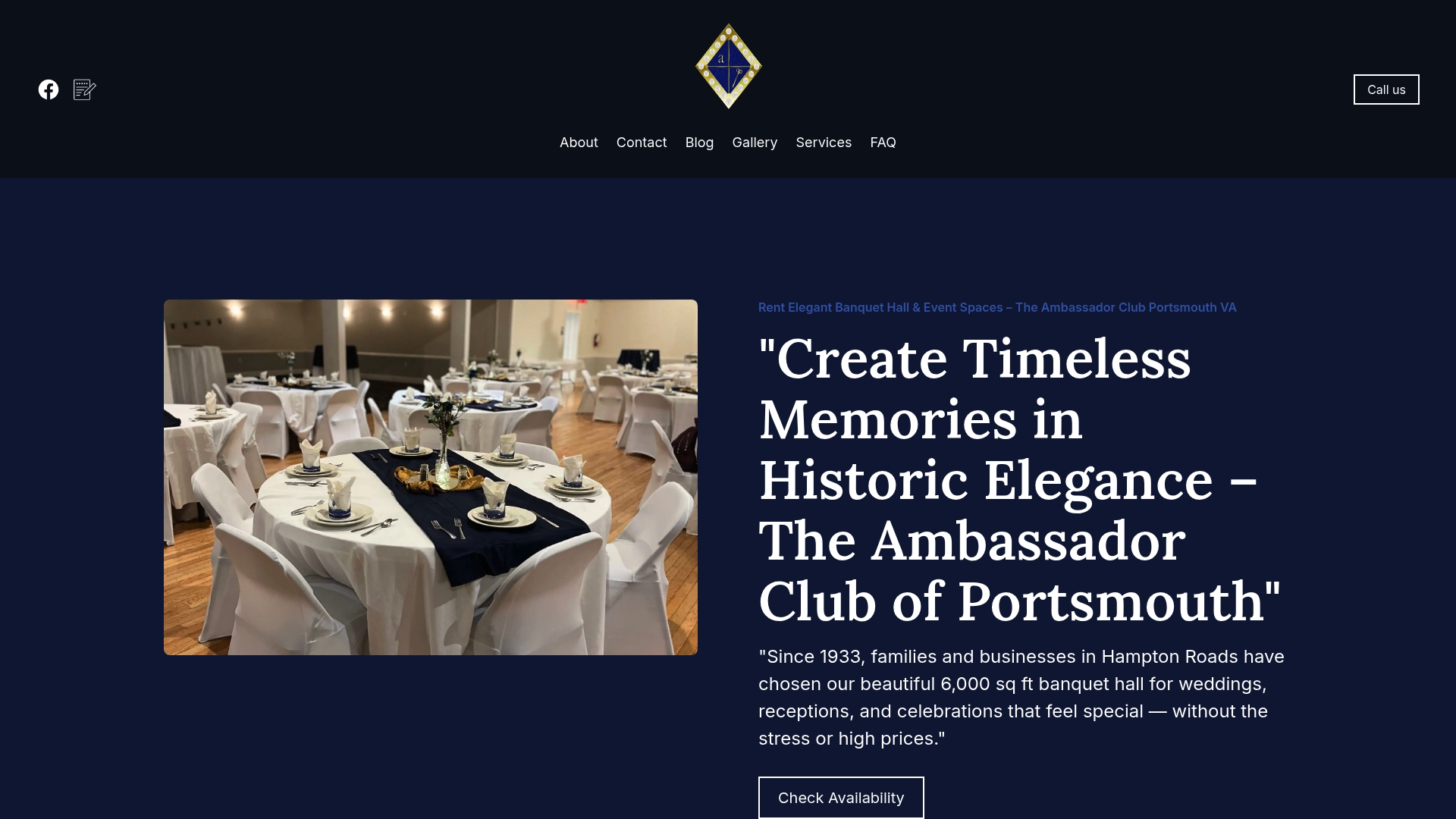
The Ambassador Club in Portsmouth, VA has served businesses and families since 1933. Its 6,000 sq ft hall accommodates up to 200 guests and includes a full commercial kitchen, flexible catering options, and comprehensive event packages. The space is AV-ready and adaptable for conferences, annual dinners, product launches, and corporate retreats. Pricing is competitive with none of the hidden fees that inflate hotel contracts. Book your corporate event at Ambassadorclubportsmouth and get the historic elegance and professional service your event deserves.
FAQ
What is a corporate event venue?
A corporate event venue is a dedicated space designed to host business-related gatherings, including conferences, meetings, product launches, and team retreats. The right venue type depends on event size, format, and business objectives.
What does the venue booking process mean for corporate planners?
The corporate event venue booking process covers the full sequence from initial inquiry and site visit through courtesy hold, quote negotiation, and contract signing. The full cycle should conclude within three weeks for most events.
How far in advance should you book a corporate event venue?
Book 12–18 months ahead for peak-season corporate events and 6–12 months out for standard meetings. Waiting less than 90 days for high-demand venues typically limits your options significantly.
What makes a venue suitable for hybrid corporate events?
A hybrid-ready venue provides broadcast-grade AV, dedicated high-speed internet bandwidth, and flexible room layouts that serve both in-person and remote attendees simultaneously. Hybrid capabilities are now a baseline expectation, not a premium feature.
What is a corporate retreat venue?
A corporate retreat venue is a resort, country club, or estate property that supports multi-day programs combining business sessions, team-building activities, lodging, and dining in a single location.