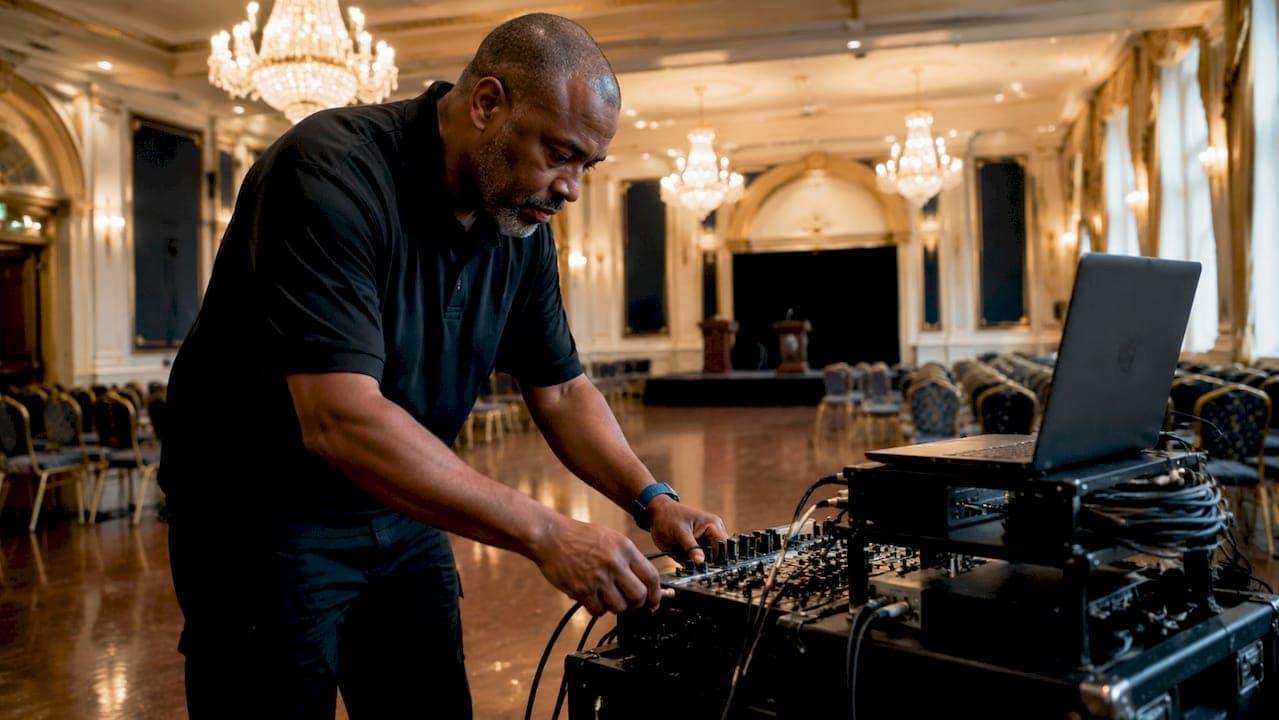
Professional event space features are the physical, technical, and logistical characteristics that determine whether an event succeeds or fails. The right venue delivers high-speed private internet, integrated audiovisual systems, flexible room layouts, and guest comfort amenities that together support every event type, from corporate meetings to weddings. Venues like the Executive Conference Center by Sainc and spaces such as Union Square Loft in New York City show that modern professional venues now accommodate 10 to over 2,000 guests with features including private guest offices, mother's rooms, and push-pin collaboration walls. Choosing the wrong venue costs you more than money. It costs you the event itself.
1. What integrated technology features make an event space truly professional?
Technology is the backbone of any professional event space setup. Without it, even a beautiful room becomes a liability the moment a presenter cannot connect a laptop or a remote attendee drops off the call.
High-speed private internet is non-negotiable. Shared public Wi-Fi fails under load, especially when multiple presenters stream video simultaneously. A professional venue provides a dedicated private connection with guaranteed bandwidth, not a shared building network.
Integrated audiovisual systems separate professional venues from generic rental halls. The standard package at a true professional venue includes:
- 4K displays or laser projectors with clear sight lines from every seat
- Distributed sound systems that eliminate dead zones and feedback
- Wireless microphones compatible with both handheld and lapel formats
- HDMI, USB-C, and wireless screen-sharing inputs at the presenter position
- Adjustable stage and house lighting with preset scene controls
Onsite AV specialists are a top differentiator in event quality. They reduce planner stress because problems get solved in minutes, not hours. Venues that charge bundled AV pricing rather than per-piece equipment fees also remove a major source of budget surprises.
Pro Tip: Ask every venue for a written equipment list and a line-item AV rate sheet before signing. If they cannot produce one, the pricing will be unpredictable.
Transparent, all-inclusive AV pricing simplifies corporate event logistics far more than any single piece of equipment. A venue that bundles its technology into one clear fee signals that it operates at a professional level.
2. How flexible room configurations and layouts optimize event success
Room flexibility is what separates a venue that works for one event type from one that works for all of them. Well-designed floor plans improve traffic flow, attendee interaction, and overall event quality in ways that fixed-layout rooms simply cannot match.

Operable walls and divisible spaces let a single venue serve a 30-person board meeting in the morning and a 200-person reception in the evening. That adaptability matters for organizations that host multiple event formats throughout the year.
| Layout Type | Ideal Use Case |
|---|---|
| Theater style | Keynotes, presentations, ceremonies |
| Classroom style | Training sessions, workshops |
| Banquet rounds | Weddings, galas, seated dinners |
| Boardroom | Executive meetings, panels |
| Cocktail/reception | Networking events, receptions |
| Hollow square | Collaborative discussions, town halls |
ADA compliance is a baseline requirement, not an optional upgrade. Ramps, accessible restrooms, and wide aisle spacing protect both guests and event organizers from liability. Natural lighting through windows or skylights reduces fatigue during long sessions and improves the overall atmosphere for photographed events like weddings.
Pro Tip: Request a scaled floor plan from the venue before your site visit. Sketch your layout on paper first, then verify it against actual room dimensions during the walkthrough.
Pre-event consultation with a venue coordinator who develops a custom floor plan for your specific guest count and program is a sign of a genuinely professional operation. That service prevents the most common setup errors before they happen.
3. What guest comfort and operational amenities are essential?
Guest comfort determines how attendees remember an event. A room that is too hot, too loud, or too cramped leaves a lasting negative impression regardless of the program quality.
Climate control with zone-by-zone temperature management is a feature most planners overlook until it fails. Large halls with poor HVAC create uneven temperatures that distract guests and shorten attention spans. Professional venues maintain consistent comfort across the entire space.
Operational amenities that define a professional venue include:
- Commercial kitchen or prep kitchen for full catering flexibility
- Dedicated parking with capacity matched to the guest count
- Clean, well-maintained restrooms with capacity for peak usage periods
- Freight elevator or loading dock access for equipment and vendor deliveries
- Luggage storage and coat check for multi-day conferences or formal events
- Private green room or staging area for speakers and performers
Setup and teardown time allocations in rental agreements directly affect your logistics. Professional venues typically include 1–1.5 hours of setup time and a minimum 60–90 minute teardown window. Venues that do not specify these windows in writing create risk for overtime penalties.
Seating quality matters more than most planners budget for. Padded chairs with back support keep guests comfortable through multi-hour programs. Folding metal chairs work for short events but fail for weddings or all-day conferences.
4. How pricing models and rental terms impact your event space choice
Event space rental means paying for the right to occupy and use a venue for a defined period, under specific terms that govern setup, use, and departure. Understanding the pricing model before you sign protects your budget.
Event space pricing follows four primary structures:
| Pricing Model | Typical Range | Best For |
|---|---|---|
| Hourly | $100–$500+ per hour | Short meetings, pop-up events |
| Half-day flat rate | $800–$3,500 | Workshops, half-day conferences |
| Full-day flat rate | $1,500–$10,000+ | Conferences, weddings, galas |
| F&B minimum | $2,000–$20,000 | Catered receptions, corporate dinners |
Hidden fees erode budgets faster than the base rental rate. Common additions include cleaning fees, service charges, overtime penalties, and separate charges for tables, linens, and AV equipment.
Dry hire venues cost less upfront, and they often multiply total costs when you manage AV, catering, and staffing vendors separately. Full-service packages preferred by experienced planners deliver transparency and efficiency that dry hire rarely matches.
Pro Tip: Negotiate a single all-inclusive contract that itemizes every fee. Ask specifically about overtime rates for late teardown, and get the answer in writing before you sign.
Load-in and load-out time windows must appear in the contract. Venues that charge by the hour for access before and after the event can turn a reasonable base rate into an expensive surprise.
5. What are the key steps in a professional event space set up and dismantling workflow?
A structured setup workflow prevents the delays and errors that derail events. Event production experts recommend sequencing setup logically: staging and rigging first, AV systems second, and finishing touches last. Reversing that order forces teams to work around each other, and it creates damage risk for finished elements.
The core steps in a professional event space setup workflow are:
- Site visit and constraint verification. Measure power outlet locations, ceiling height, and freight elevator capacity before finalizing any production plan.
- Labor forecasting. Calculate crew size based on actual load-in time, not estimated time. Under-staffing the setup crew is the most common cause of delays.
- Staging and rigging. Install structural elements, pipe and drape, and any elevated platforms before any other work begins.
- AV integration. Run cable, mount displays, test sound systems, and confirm all inputs work with presenter devices.
- Furniture and décor placement. Set tables, chairs, and decorative elements after AV is confirmed and working.
- Final walk-through. Walk the room from a guest's perspective, checking sight lines, temperature, lighting levels, and signage placement.
- Teardown sequencing. Reverse the setup order. Remove décor first, then furniture, then AV, then structural elements.
Physical venue constraints affect production cost more than advertised capacity. A venue with low ceilings cannot accommodate certain lighting rigs. A building without a freight elevator adds hours of manual carry time to every load-in. Verify these details before signing, not after.
Teardown almost always takes longer than scheduled, particularly with custom décor or signage. Budget a minimum of 60–90 minutes and confirm venue departure policies in writing to avoid penalties.
Key takeaways
The most effective professional event space combines integrated AV technology, flexible layouts, and transparent pricing to support every event type without costly surprises.
| Point | Details |
|---|---|
| Integrated AV is non-negotiable | Onsite AV specialists and bundled pricing reduce stress and prevent technical failures. |
| Flexible layouts serve more event types | Operable walls and scalable seating let one venue handle meetings, weddings, and conferences. |
| Operational amenities protect logistics | Commercial kitchens, loading dock access, and clear teardown windows prevent day-of problems. |
| Pricing model determines true cost | Full-service packages deliver better value than dry hire when all vendor costs are counted. |
| Setup workflow prevents costly delays | Sequencing staging, AV, and décor in the correct order protects both timeline and budget. |
What I have learned planning events across different venue types
Martin's take on what actually separates good venues from great ones
Most planners focus on aesthetics first and logistics second. That order is backwards. I have watched beautiful venues fail because the freight elevator was too small for the production, and I have seen modest rooms deliver outstanding events because the AV worked perfectly and the coordinator knew the space cold.
The feature that consistently separates a good venue from a great one is the presence of an onsite specialist who knows the building's quirks. Every venue has them: the circuit breaker that trips under heavy load, the corner where sound dies, the door that sticks during teardown. A knowledgeable onsite contact solves those problems before guests notice them.
Transparent pricing is the second differentiator I trust most. Venues that cannot give you a clear all-in number during the first conversation will surprise you with fees on the invoice. That pattern is consistent enough to treat as a rule.
Finally, never skip the site visit. Floor plans lie. Ceiling heights look different on paper than in person, and power outlet placement determines your entire production layout. Walk the room with your vendor team before you commit.
— MARTIN
Why Ambassadorclubportsmouth delivers on every essential feature
Ambassadorclubportsmouth has served the Hampton Roads area since 1933, and its 6,000 sq ft hall in Portsmouth, VA, reflects what a professional event space should deliver: flexible capacity for up to 200 guests, a full commercial kitchen, and comprehensive event packages that keep pricing transparent from the first conversation.
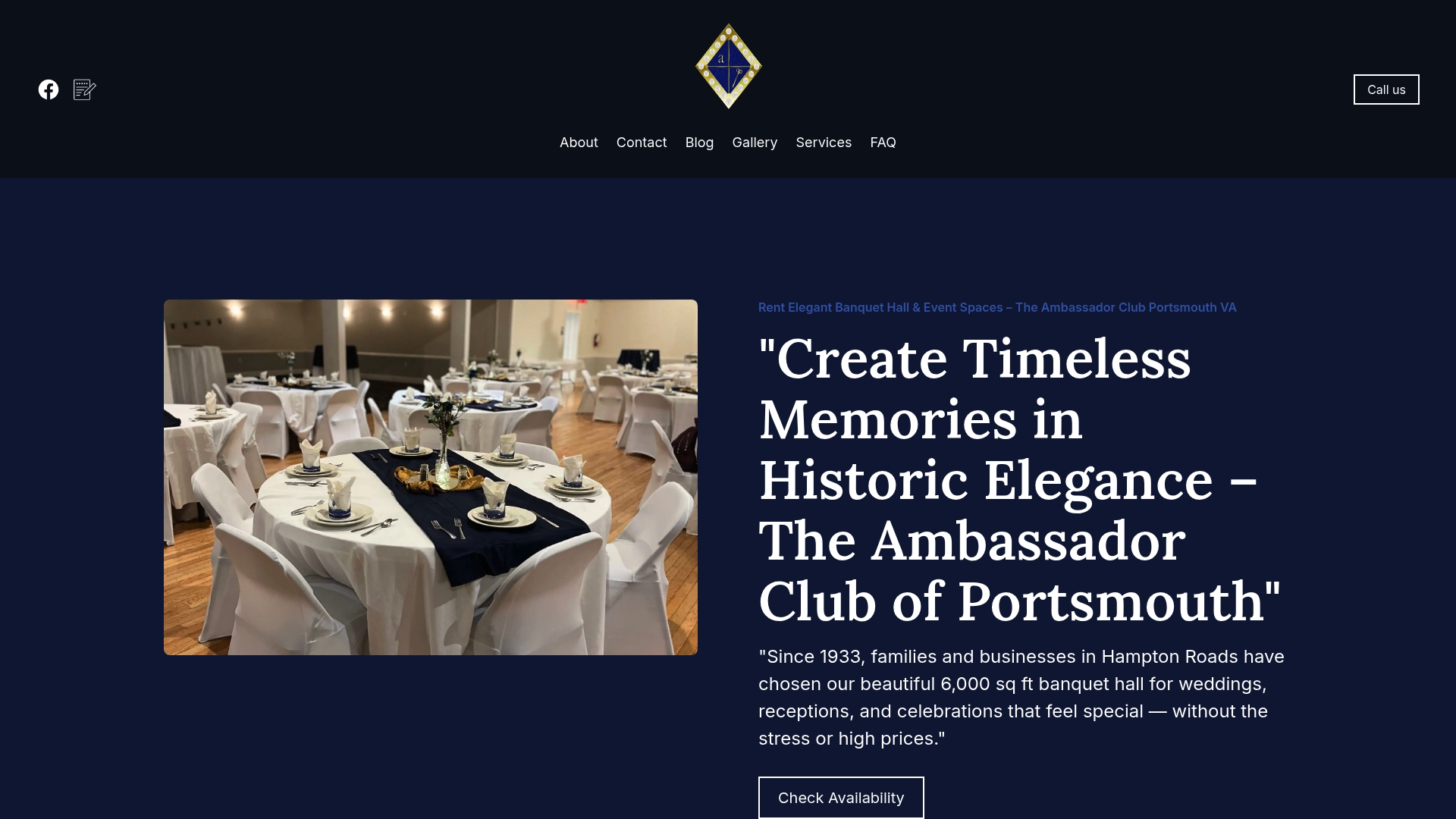
The venue accommodates weddings, corporate meetings, receptions, and family celebrations with the same attention to logistics that experienced planners demand. Flexible catering options, competitive rental rates, and an aesthetically refined space remove the planning stress that generic rental halls create. Book your event at Ambassadorclubportsmouth and experience a venue where every feature is built around your event's success.
FAQ
What are the most important professional event space features?
The most critical features are integrated AV systems, high-speed private internet, flexible room configurations, and clear pricing that includes setup and teardown time. Onsite technical support and ADA accessibility are equally important for professional events.
What does event space rental mean in terms of what is included?
Event space rental means paying for the right to occupy a venue for a set period under defined terms. Inclusions vary widely: full-service venues bundle AV, staffing, and catering, while dry hire spaces provide only the room.
How much does a professional event space typically cost?
Hourly rates range from $100 to $500+, with half-day flat rates running $800–$3,500 and full-day rates reaching $1,500–$10,000 or more depending on location, size, and included amenities.
How long does event setup and teardown take at a professional venue?
Professional venues typically allow 1–1.5 hours for setup and a minimum of 60–90 minutes for teardown. Custom décor and large AV productions regularly require more time than that.
What is the difference between dry hire and full-service event spaces?
Dry hire provides the room only, requiring you to source and coordinate all vendors separately. Full-service venues include AV, catering, and staffing in one package, which experienced planners favor for cost predictability and efficiency.
Recommended
- Rent Elegant Spaces at The Ambassador Club, Portsmouth.
- The Ambassador Club of Portsmouth | The Ambassador Club of Portsmouth is a historic, community-focused civic and social organization proudly serving Portsmouth, Virginia, for over 70 years. Located at 364 Peninsula Avenue, the club is dedicated to strengthening the local community through meaningful public service, charitable contributions, and neighborly support—whether through donations, volunteer efforts, or direct aid to families, children, parents, and seniors in need. As a cornerstone of Portsmouth's social fabric, the Ambassador Club operates as a welcoming, member-driven group that fosters networking, fellowship, and positive impact. It also serves as a premier event venue, offering a beautifully renovated, spacious banquet hall of approximately 4,000 square feet (including over 3,000 square feet of dance floor), a full kitchen, stylish dry bar, large projection wall, and flexible meeting areas. The venue comfortably accommodates up to 200 guests seated or standing, making it an ideal, affordable, and elegant choice for: Weddings and receptions Holiday parties and family reunions Community dances and social gatherings Corporate trainings, meetings, and professional functions Banquets and other special celebrations With ample free parking and a reputation for exceptional value, the Ambassador Club combines timeless charm with modern amenities to create unforgettable experiences while continuing its legacy of giving back to the Portsmouth community.
- The Ambassador Club of Portsmouth | The Ambassador Club of Portsmouth is a historic, community-focused civic and social organization proudly serving Portsmouth, Virginia, for over 70 years. Located at 364 Peninsula Avenue, the club is dedicated to strengthening the local community through meaningful public service, charitable contributions, and neighborly support—whether through donations, volunteer efforts, or direct aid to families, children, parents, and seniors in need. As a cornerstone of Portsmouth's social fabric, the Ambassador Club operates as a welcoming, member-driven group that fosters networking, fellowship, and positive impact. It also serves as a premier event venue, offering a beautifully renovated, spacious banquet hall of approximately 4,000 square feet (including over 3,000 square feet of dance floor), a full kitchen, stylish dry bar, large projection wall, and flexible meeting areas. The venue comfortably accommodates up to 200 guests seated or standing, making it an ideal, affordable, and elegant choice for: Weddings and receptions Holiday parties and family reunions Community dances and social gatherings Corporate trainings, meetings, and professional functions Banquets and other special celebrations With ample free parking and a reputation for exceptional value, the Ambassador Club combines timeless charm with modern amenities to create unforgettable experiences while continuing its legacy of giving back to the Portsmouth community.
- The Ambassador Club of Portsmouth | The Ambassador Club of Portsmouth is a historic, community-focused civic and social organization proudly serving Portsmouth, Virginia, for over 70 years. Located at 364 Peninsula Avenue, the club is dedicated to strengthening the local community through meaningful public service, charitable contributions, and neighborly support—whether through donations, volunteer efforts, or direct aid to families, children, parents, and seniors in need. As a cornerstone of Portsmouth's social fabric, the Ambassador Club operates as a welcoming, member-driven group that fosters networking, fellowship, and positive impact. It also serves as a premier event venue, offering a beautifully renovated, spacious banquet hall of approximately 4,000 square feet (including over 3,000 square feet of dance floor), a full kitchen, stylish dry bar, large projection wall, and flexible meeting areas. The venue comfortably accommodates up to 200 guests seated or standing, making it an ideal, affordable, and elegant choice for: Weddings and receptions Holiday parties and family reunions Community dances and social gatherings Corporate trainings, meetings, and professional functions Banquets and other special celebrations With ample free parking and a reputation for exceptional value, the Ambassador Club combines timeless charm with modern amenities to create unforgettable experiences while continuing its legacy of giving back to the Portsmouth community.