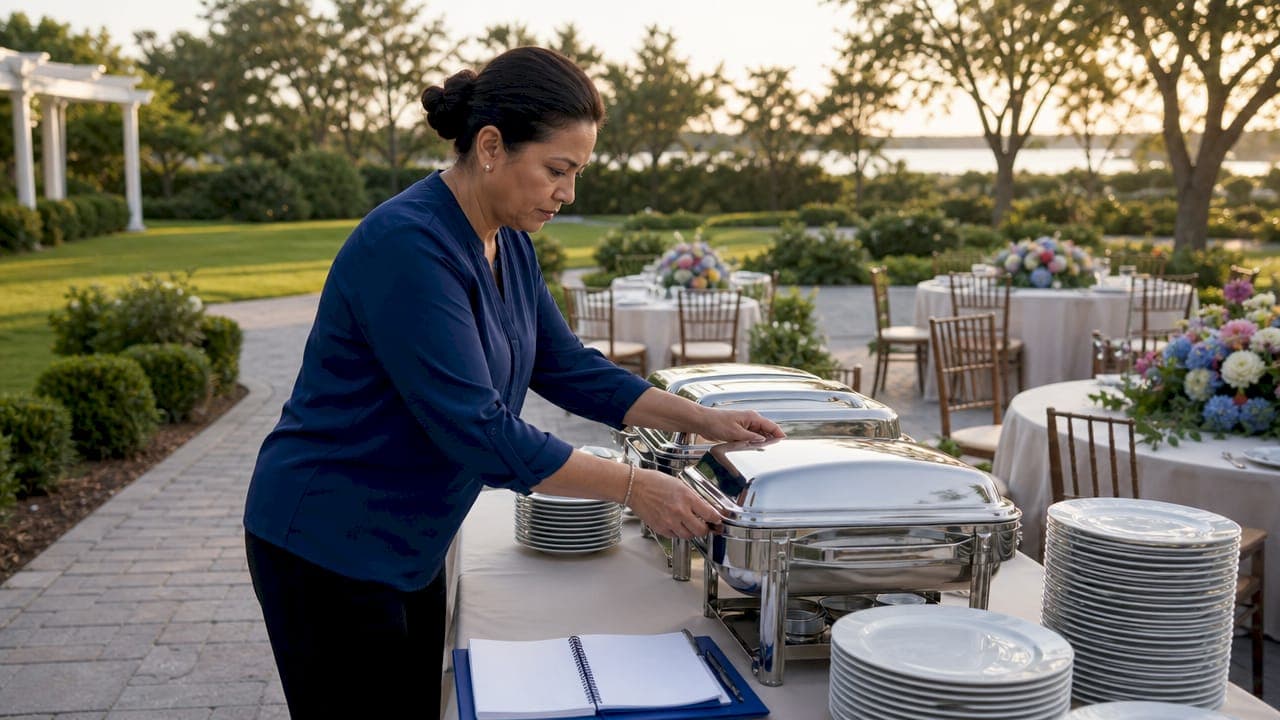
A buffet service event hall setup is the deliberate arrangement of food stations, equipment, and guest pathways to deliver efficient dining at scale. Done right, it reduces wait times, protects food safety, and creates a presentation guests remember. Done wrong, it produces bottlenecks, cold food, and frustrated crowds. The difference comes down to layout, timing, equipment selection, and staff coordination. This guide covers every stage, from the first table placement to managing the line mid-service.
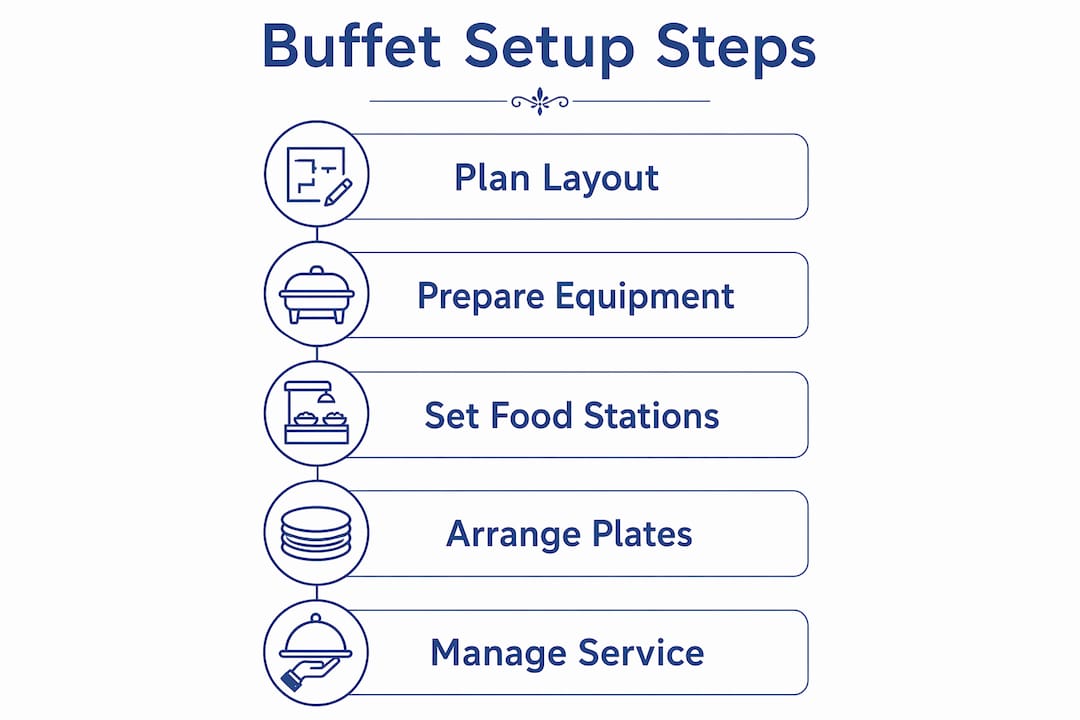
How to set up buffet service in an event hall
The foundation of any successful buffet service setup is preparation that happens well before guests arrive. Setup should be completed 30–60 minutes before service begins. That window gives staff time to troubleshoot equipment failures, adjust table positions, and confirm food temperatures before the first guest approaches the line.
Equipment you need before you start
Every buffet station requires a core set of equipment. Missing one item mid-service creates delays that ripple through the entire event.
- Chafing dishes with water pans and Sterno fuel to hold hot food above 140°F
- Risers and risers platforms to create height variation across the table
- Sneeze guards to protect exposed food from contamination
- Serving utensils (tongs, spoons, ladles) with one dedicated tool per dish
- Label cards identifying each dish, including allergen information
- Linen and skirting to cover table legs and create a clean visual base
- Plate stacks, napkins, and cutlery positioned at the start of the line
Pro Tip: Bring 20% more Sterno canisters and serving utensils than you think you need. Running out of either mid-service forces improvisation that slows everything down.
Food safety rules for buffet catering
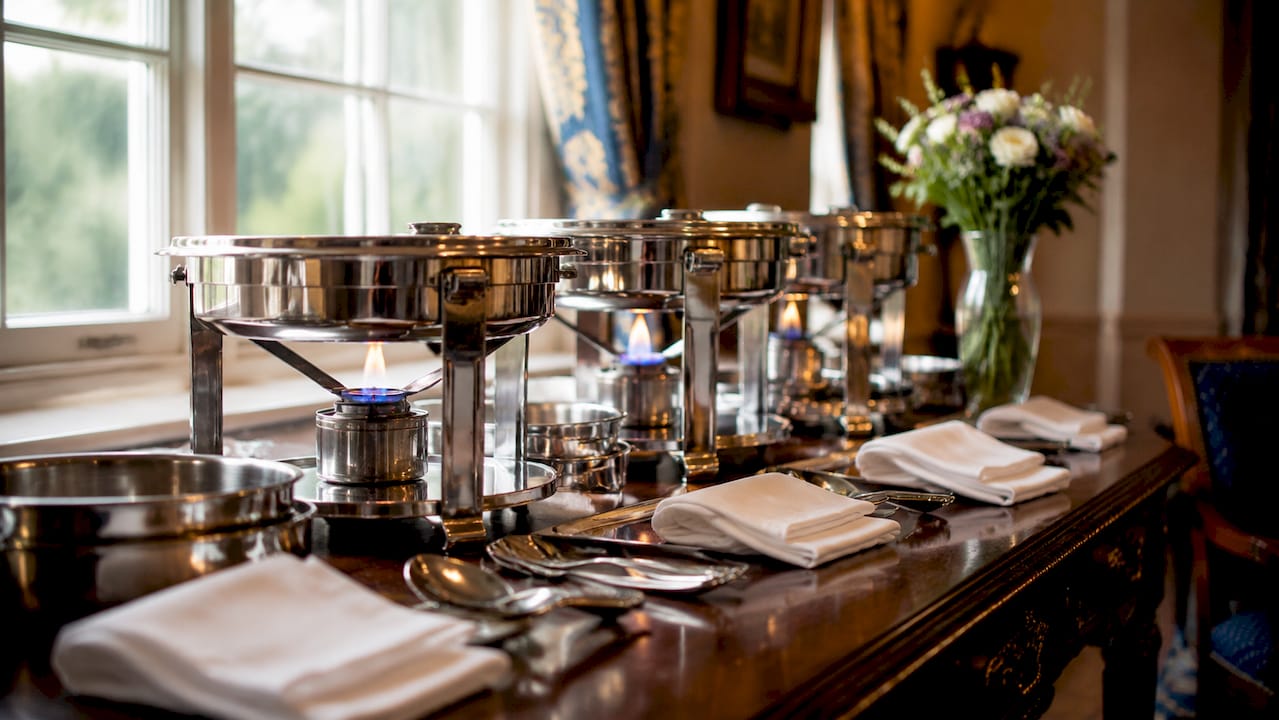
Food safety is non-negotiable in event hall catering. Hot foods must stay above 140°F and cold foods below 40°F throughout service. Check temperatures every 2 hours and replace food pans entirely rather than topping them off. Topping off mixes fresh food with food that has been sitting at serving temperature, which creates a safety risk and degrades quality. Label every dish clearly, and assign at least one staff member specifically to food safety monitoring.
| Equipment Item | Purpose | Minimum Quantity |
|---|---|---|
| Chafing dishes | Hold hot food at safe temperature | 1 per hot dish |
| Sneeze guards | Prevent contamination | 1 per table section |
| Serving utensils | Portion control and hygiene | 1 per dish |
| Risers | Height variation and display | 3–5 per table |
| Label cards | Allergen and dish identification | 1 per dish |
How do you design an efficient buffet layout for events?
Buffet layout design is the single biggest factor in guest flow. A poor layout creates a line that stalls, doubles back, or blocks seating areas. The three most common configurations are the single line, the double-sided island, and the two-station split.
The double-sided island layout is the strongest choice for events with 100 or more guests. It allows guests to serve themselves from both sides of the same table simultaneously, cutting wait times roughly in half. For smaller events under 60 guests, a single-line setup against a wall works fine. For very large events above 150 guests, two entirely separate stations in different areas of the hall prevent any single point of congestion.
Placement and distance from seating
Physical placement within the hall matters as much as the table configuration itself. Position the buffet approximately 20 feet from the seating area and from the kitchen prep zone. That distance keeps buffet noise and foot traffic from disturbing seated guests while keeping the walk short enough to feel convenient. Avoid placing the buffet near doorways, speaker systems, or high-traffic corridors.
| Layout Type | Best For | Key Advantage |
|---|---|---|
| Single line | Under 60 guests | Simple setup, minimal equipment |
| Double-sided island | 100+ guests | Halves wait time, maximizes throughput |
| Two-station split | 150+ guests | Eliminates single-point congestion |
Pro Tip: Mark the floor with tape before the event to confirm your layout fits the space. A table that looks right on paper can block an emergency exit or crowd a seating section in practice.
Flow direction matters at the micro level too. Plates at the start of the buffet line create a visual signal that tells guests where to begin. Without that cue, guests enter the line at random points, creating confusion and backflow. Place plates at one clear entry point and design the table so guests move in one direction from start to finish.
What is the step-by-step process for arranging the buffet table?
The sequence in which you place items on the buffet table directly affects both guest experience and food safety. Follow this order every time.
- Set the table base. Lay linen, position risers, and confirm all chafing dishes are in place with water pans filled before adding any food.
- Place plates and napkins. Stack plates at the entry point of the line. Napkins and cutlery go at the end, after guests have served themselves, so they are not juggling utensils while loading their plates.
- Add cold items first. Salads, cold sides, and appetizers go on the table before hot food arrives. They do not require fuel management and can be arranged while the kitchen finishes hot preparations.
- Bring out hot mains. Transfer hot food directly from the kitchen into preheated chafing dishes. Never let hot food sit in an unheated pan.
- Add sides, condiments, and sauces. Position these adjacent to the dishes they accompany so guests do not have to backtrack.
- Place desserts at the end or on a separate table. Desserts placed mid-line slow traffic because guests pause to consider options. A dedicated dessert station solves this.
- Add serving utensils and labels. Every dish gets its own utensil and a label card. Place utensils with handles facing the guest.
Using risers and visual zones
Clustering risers into intentional stations with varied heights and white space between groups produces a professional display. Evenly spacing risers across the full table length creates visual clutter and makes it harder for guests to identify where one dish ends and another begins. Group items by category: proteins together, sides together, salads together. Leave deliberate gaps between groups so the eye can navigate the table quickly.
Vary riser heights within each group. A low riser at 4 inches, a medium at 8 inches, and a tall at 12 inches within one station creates depth and draws attention to featured dishes. This technique is standard in professional catering display work and takes less than 10 minutes to execute.
How do you manage the buffet during service?
Active management during service separates a good buffet from a great one. Buffet success depends on tight control over sequence, hygiene, and replenishment. Assign specific roles before service begins so every staff member knows their responsibility without needing direction mid-event.
- Station attendant: Monitors food levels, replaces empty pans, and keeps the display clean
- Flow monitor: Watches the line for bottlenecks and directs guests to open sections
- Runner: Moves food from the kitchen to the buffet table and removes empty equipment
- Drink station attendant: Manages the beverage area separately from the food line
Replenish food before trays empty, not after. An empty tray signals to guests that the event is winding down and creates a gap in the visual presentation. Replace the entire pan rather than refilling it, following the food safety standard of never topping off.
Pro Tip: Assign a dedicated attendant to the drink station. Beverage stations cause the longest pauses in any buffet line because guests stop to pour, add ice, and choose between options. Keeping drinks physically separate from the food line prevents that pause from blocking the entire service.
Keep serving counters clean throughout service. Spills and crumbs around dishes reduce the perceived quality of the food itself. A clean counter takes 30 seconds to wipe and makes a visible difference in how guests experience the event.
What common challenges occur in buffet event hall setups?
Most buffet failures trace back to poor flow control and weak coordination between the kitchen and the front of the hall, not food quality. Recognizing the most common problems before they occur lets you build solutions into the setup itself.
- Bottlenecks at the line entry: Caused by a single entry point for large guest counts. Fix by switching to a double-sided island or opening a second station.
- Cross-contamination between dishes: Caused by shared serving utensils or guests using their hands. Fix by assigning one utensil per dish and positioning sneeze guards at eye level.
- Uneven presentation mid-service: Caused by staff refilling pans without resetting the display. Fix by training runners to straighten labels and wipe surfaces every time they replace a pan.
- Cold food complaints: Caused by chafing dishes that run out of fuel or water. Fix by checking fuel levels every 45 minutes and keeping spare Sterno canisters at each station.
- Guests skipping sections: Caused by unclear flow direction. Fix by placing directional signage at the line entry and positioning plates at a single, obvious starting point.
For smaller venues under 3,000 square feet, a single well-managed station handles up to 80 guests without congestion if the layout follows a strict one-direction flow. For halls like the 6,000 sq ft space at Ambassadorclubportsmouth, a two-station or double-sided island configuration is the right call for events above 100 guests.
Key takeaways
A well-executed buffet service event hall setup requires layout planning, equipment preparation, and active staff management working together from start to finish.
| Point | Details |
|---|---|
| Complete setup 30–60 minutes early | Finishing before guests arrive allows time to fix equipment issues and confirm food temperatures. |
| Use double-sided island for 100+ guests | This layout halves wait times by letting guests serve from both sides simultaneously. |
| Place plates at the line entry | Plate stacks signal where the line starts and guide guests through the flow without confusion. |
| Separate drink stations from food | Moving beverages off the main line prevents the longest pauses from blocking food service. |
| Replace full pans, never top off | Swapping entire pans maintains food safety and consistent quality throughout service. |
What i've learned running buffets that most guides skip
The conventional advice on buffet setup focuses almost entirely on aesthetics. Risers, linens, label cards. That stuff matters, but it is not where events succeed or fail.
Every buffet problem I have seen traces back to one of two things: the kitchen and the floor were not synchronized, or nobody owned the flow. When the kitchen sends food out on its own schedule rather than responding to what is happening at the table, you get empty pans during peak service and a flood of food after the rush. When no single person is watching the line, bottlenecks form and nobody moves to fix them.
The most underrated investment in any buffet event is a dedicated floor manager whose only job is to watch the line and communicate with the kitchen. Not a server who also manages the line. A person whose full attention is on flow and replenishment timing.
The second thing most guides miss: guests read the buffet table in the first three seconds. If it looks full, organized, and clean, they feel confident about the food quality before they taste anything. If it looks depleted or messy, that impression sticks regardless of how good the food actually is. Presentation maintenance mid-service is not optional. It is part of the job.
— MARTIN
Why Ambassadorclubportsmouth is built for buffet events
Planning a buffet for a large group requires a venue that can actually support the setup, not just provide a room.
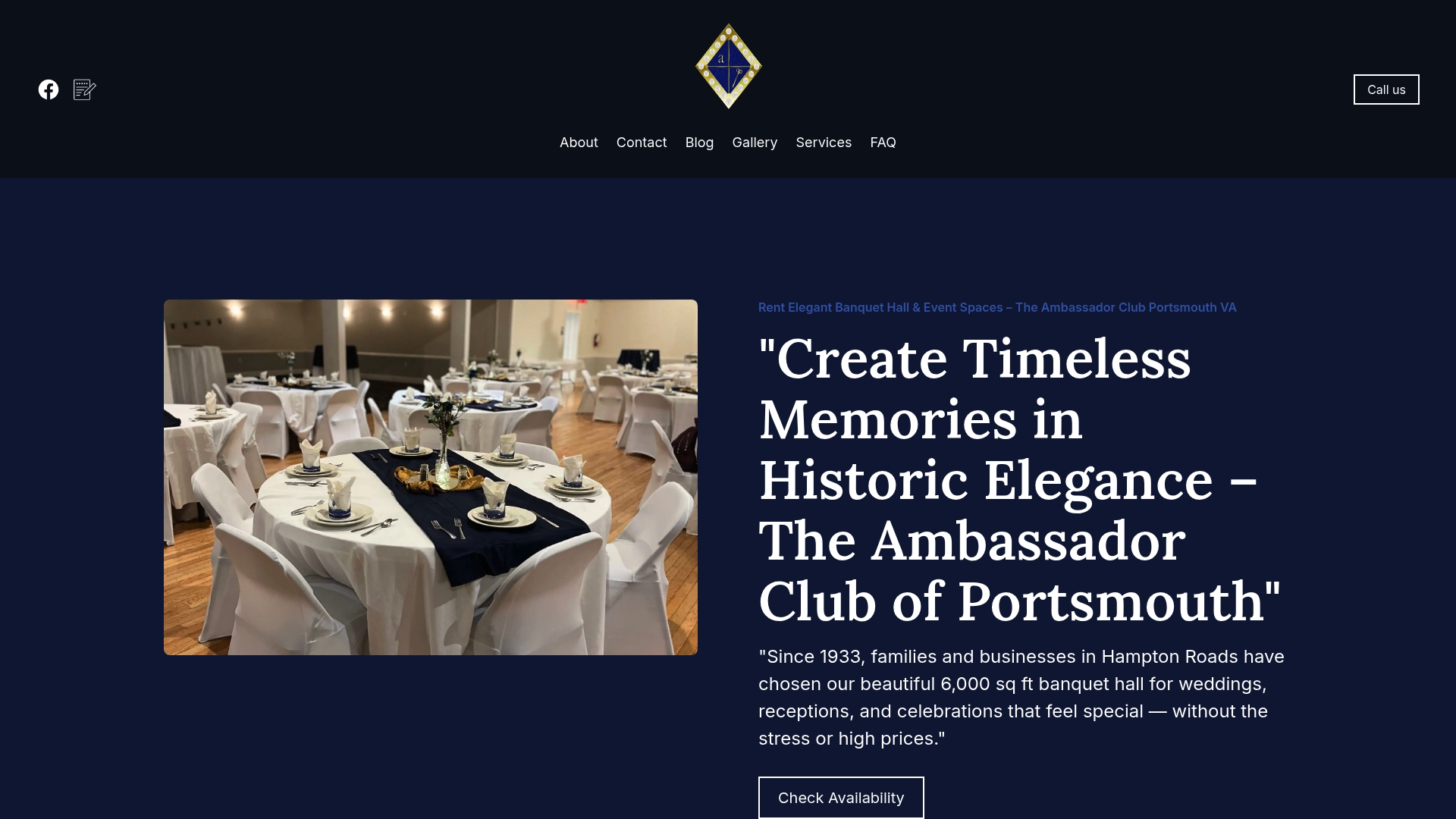
Ambassadorclubportsmouth has hosted events since 1933 in a 6,000 sq ft hall that accommodates up to 200 guests. The venue includes a full commercial kitchen, which means your catering team works from a real prep space rather than improvising in a hallway. Flexible layout options let you configure single-line, double-sided island, or two-station buffet setups depending on your guest count. For families and businesses in the Hampton Roads area planning weddings, receptions, or corporate events, book your event space at Ambassadorclubportsmouth and get the infrastructure your buffet service actually needs.
FAQ
How early should you set up a buffet before an event?
Buffet setup should be completed 30–60 minutes before service begins. That window allows staff to check food temperatures, adjust the layout, and resolve any equipment issues before guests arrive.
What buffet layout works best for large events?
The double-sided island layout is the strongest choice for events with 100 or more guests. It allows simultaneous serving from both sides of the table, which cuts wait times roughly in half compared to a single-line setup.
How often should food be checked during buffet service?
Food pan temperatures should be checked at least every 2 hours during service. Replace entire pans rather than topping off existing food to maintain both safety and quality.
Why should drink stations be separate from the food line?
Guests pause longer at beverage stations than at any other point in the buffet. Physically separating drinks from the food line prevents that pause from creating a backup that stalls the entire service.
How many staff members does a buffet event need?
A buffet serving 100 guests typically requires at least four assigned roles: a station attendant, a flow monitor, a kitchen runner, and a drink station attendant. Larger events above 150 guests benefit from doubling those roles across two stations.