
Saving money booking event spaces is achievable when you know exactly where venue pricing hides its flexibility. Weekday bookings alone can cut costs by 10% to 40% compared to weekend rates. Beyond timing, the real savings come from understanding hidden fees, negotiating for extras, and choosing venue models that give you control. This guide covers every lever you can pull, whether you are planning a wedding in Hampton Roads, a corporate function, or a private celebration on a tight budget.
How do timing and scheduling choices impact event space costs?
Timing is the single most powerful variable in venue pricing. Weekday events save 10% to 40% because venues face lower demand from monday through thursday. That discount applies not just to the room rate but often to vendor packages tied to the booking.
Seasonal promotions add another layer of savings. Venues offer limited-time deals of 10% to 50% off to fill low-demand calendar slots. A 40% discount on a summer 2026 booking or 25% off a food and beverage package can represent hundreds of dollars in real savings.

Flexibility in your date is your strongest bargaining chip. When you tell a venue you can move your event by a week or shift from saturday to thursday, you give them a reason to offer a better deal. Venues want to fill empty slots, and a flexible planner is exactly the kind of client they will discount for.
Here are the timing options and their typical savings potential:
- Weekday booking (monday through thursday): 10% to 40% off weekend rates
- Friday or sunday events: 10% to 20% off peak saturday pricing
- Off-peak season (january through march, late summer): 15% to 30% off standard rates
- Last-minute availability (30 days or less out): Variable, but often 20% or more off
- Advance booking for off-peak dates (6+ months out): Access to early-bird promotions
Pro Tip: Tell the venue coordinator you have two or three possible dates. That flexibility signals you are a low-risk booking and gives them room to offer a discount without setting a precedent.
What are the true costs beyond the base venue rental?
The listed rental rate is rarely the final number. Service fees typically run 15% to 25%, and cleaning fees average $100 to $400 on top of that. A venue priced at $1,500 can easily become $2,100 once mandatory charges are added.
Food and beverage minimums are another common budget inflator. Some venues require you to spend a set amount with their in-house catering, regardless of your actual needs. Mandatory vendor packages, valet parking fees, and event insurance requirements can each add $200 to $500 to your total.
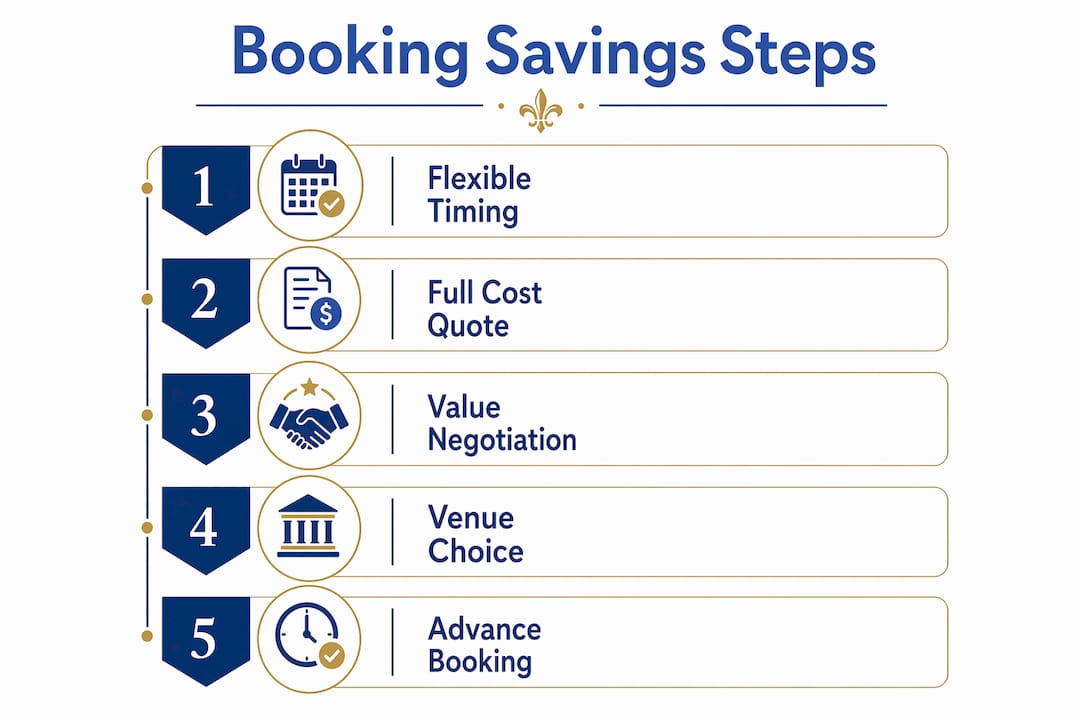
Always request a fully loaded, all-in quote before signing anything. Ask the venue to itemize every fee, including setup, breakdown, security, and any technology charges. That single step prevents the most common and painful budget surprises.
The table below shows typical fee ranges by event type, based on standard industry pricing:
| Event type | Service fee range | Cleaning fee range | Typical extras |
|---|---|---|---|
| Wedding reception | 18% to 25% | $200 to $400 | Coat check, security, valet |
| Corporate function | 15% to 20% | $100 to $250 | AV setup, tech support, parking |
| Private celebration | 15% to 18% | $100 to $200 | Bar service, setup labor |
| Nonprofit event | 10% to 15% | $100 to $150 | Varies by venue policy |
Pro Tip: Add a 20% to 25% cushion on top of the listed venue rate when building your initial budget. That buffer covers nearly every surprise fee category without requiring a second round of fundraising or family contributions.
How can negotiation create savings beyond just price reductions?
Negotiation in venue booking is not about demanding a lower number. Venues concede amenities rather than lowering base price, which means the real savings come from extras you would otherwise pay for separately. Extended access time, AV equipment, upgraded linens, and waived service fees are all fair game.
Effective negotiators understand venue goals and use that knowledge to frame requests. A venue trying to fill a slow tuesday in october is far more likely to throw in a free hour of setup time than to cut their published rate. Knowing their pressure points makes your ask feel reasonable rather than aggressive.
Transparency works in your favor here. When you show a venue your full budget and explain exactly what you need, they can often find creative ways to meet it. That honest conversation prevents surprise costs and builds the kind of relationship that leads to better deals on future bookings.
Negotiable elements and how to ask for them:
- Extended setup or breakdown time: "Can you include an extra hour for setup at no additional charge?"
- AV equipment and microphones: "Is the AV package something you can include with the room rental?"
- Waived service fee: "If we commit today, is there flexibility on the service charge?"
- Complimentary parking validation: "Can parking be included for our guests?"
- Upgraded table linens or centerpieces: "What can you add to make this package work for our budget?"
- Exclusive vendor access: "Are there preferred vendors who offer discounts to your clients?"
Pro Tip: Book the same venue twice and you become a repeat client. Venues track loyalty, and a second booking often unlocks perks that were off the table the first time around.
What venue types and booking models offer the most budget flexibility?
DIY venues, also called dry hire spaces, give you the most control over your total spend. Dry hire venues remove mandatory caterers and vendor markups, letting you bring in your own food, drinks, and decor at market rates. That flexibility can save hundreds compared to venues with locked-in catering contracts.
Hourly rate venues work well for shorter events, but they carry a risk. Many charge a minimum number of hours, so a two-hour event billed at a four-hour minimum costs the same as a half-day booking. Compare hourly rates with minimums against flat half-day or full-day rates before committing. Flat rates often win for events running four hours or more.
Smaller and less traditional spaces, such as historic clubs, community halls, or restaurant private rooms, frequently offer competitive pricing with character that larger hotel ballrooms cannot match. Ambassadorclubportsmouth, for example, offers a 6,000 sq ft hall in Portsmouth, VA, with a full commercial kitchen and flexible catering options, all at rates designed to compete with the area's larger venues.
Never book a venue based on photos alone. Wide-angle lenses and staged lighting make rooms look larger and more polished than they are in person. An in-person tour reveals true ceiling height, natural light, parking access, and whether the space actually fits your guest count comfortably.
Pro Tip: Book off-peak dates at least six months in advance. Venues release their best promotional pricing for low-demand periods early, and those deals disappear once the calendar fills up.
What common budgeting mistakes to avoid when booking event spaces?
The most expensive mistake in event planning is treating the venue rate as the total cost. Fully loaded costs with fees often exceed the headline rate by 15% to 25%. Planners who skip the all-in quote step routinely overspend by hundreds or thousands of dollars.
Under-sizing the space is the second most common error. A room that fits 100 people at maximum capacity feels crowded and uncomfortable. Book a space with 20% to 30% more floor area than your guest count strictly requires. That buffer allows for a dance floor, a buffet table, a photo booth, or simply room to breathe.
Trusting staged venue photos without visiting is a risk that costs planners time and money. A space that looks perfect online may have low ceilings, poor acoustics, or a parking situation that frustrates guests. The tour is not optional.
Top budgeting mistakes and how to avoid them:
- Skipping the all-in quote: Always request full fee itemization before signing a contract.
- Booking at maximum capacity: Reserve 20% to 30% more space than your headcount requires.
- Ignoring insurance requirements: Ask about event liability insurance early. It can add $150 to $400 to your budget.
- Forgetting setup and breakdown time: Confirm whether those hours are included or billed separately.
- Signing without a cancellation clause: Understand the refund policy before any money changes hands.
- Relying only on online photos: Schedule an in-person tour before committing to any deposit.
Key Takeaways
The most effective way to cut costs on venue rentals combines flexible timing, full-cost budgeting, and value-focused negotiation before you sign any contract.
| Point | Details |
|---|---|
| Book weekdays or off-peak | Weekday and off-season bookings save 10% to 40% compared to peak weekend rates. |
| Budget 20% to 25% above listed rate | Service fees, cleaning, and insurance routinely push totals well past the headline price. |
| Negotiate for extras, not just price | Venues concede AV equipment, extended access, and waived fees more readily than base price cuts. |
| Choose dry hire for maximum control | DIY venues let you bring your own vendors and avoid mandatory catering markups. |
| Always tour in person | Photos use staging tricks; only an in-person visit confirms true size, condition, and fit. |
What I have learned after planning events on a budget
The advice that actually moves the needle is not the advice most people follow. Everyone knows to "shop around," but very few planners walk into a venue conversation with a clear picture of their total budget, their flexible dates, and a specific list of extras they want included. That preparation is what separates planners who get deals from planners who pay full price.
I have seen clients save more by shifting a Saturday wedding to a Friday evening than by spending weeks comparing venues across the city. The venue they loved was always available. They just needed to ask about a different day. That one conversation saved them over $1,000 on the room rate alone, before any negotiation on extras.
The other lesson I keep coming back to is the power of the in-person tour. Staged photos are marketing, not reality. Every time a client skips the tour and books from a website, there is a risk. The ceiling is lower than expected. The parking lot is shared with a restaurant. The kitchen is too small for the caterer. None of that shows up in the listing. The tour is the single best investment of time in the entire planning process.
Premium spaces are more accessible than most planners assume. Historic venues, private clubs, and specialty spaces often price competitively because they rely on word of mouth rather than heavy advertising. The combination of flexibility, preparation, and honest communication with venue staff is what makes those spaces affordable.
— MARTIN
Elegant, affordable event spaces at Ambassadorclubportsmouth
Planning a wedding, corporate event, or private celebration in the Hampton Roads area does not require a hotel ballroom budget. Ambassadorclubportsmouth has offered historic elegance and competitive pricing since 1933, with a 6,000 sq ft hall that accommodates up to 200 guests.
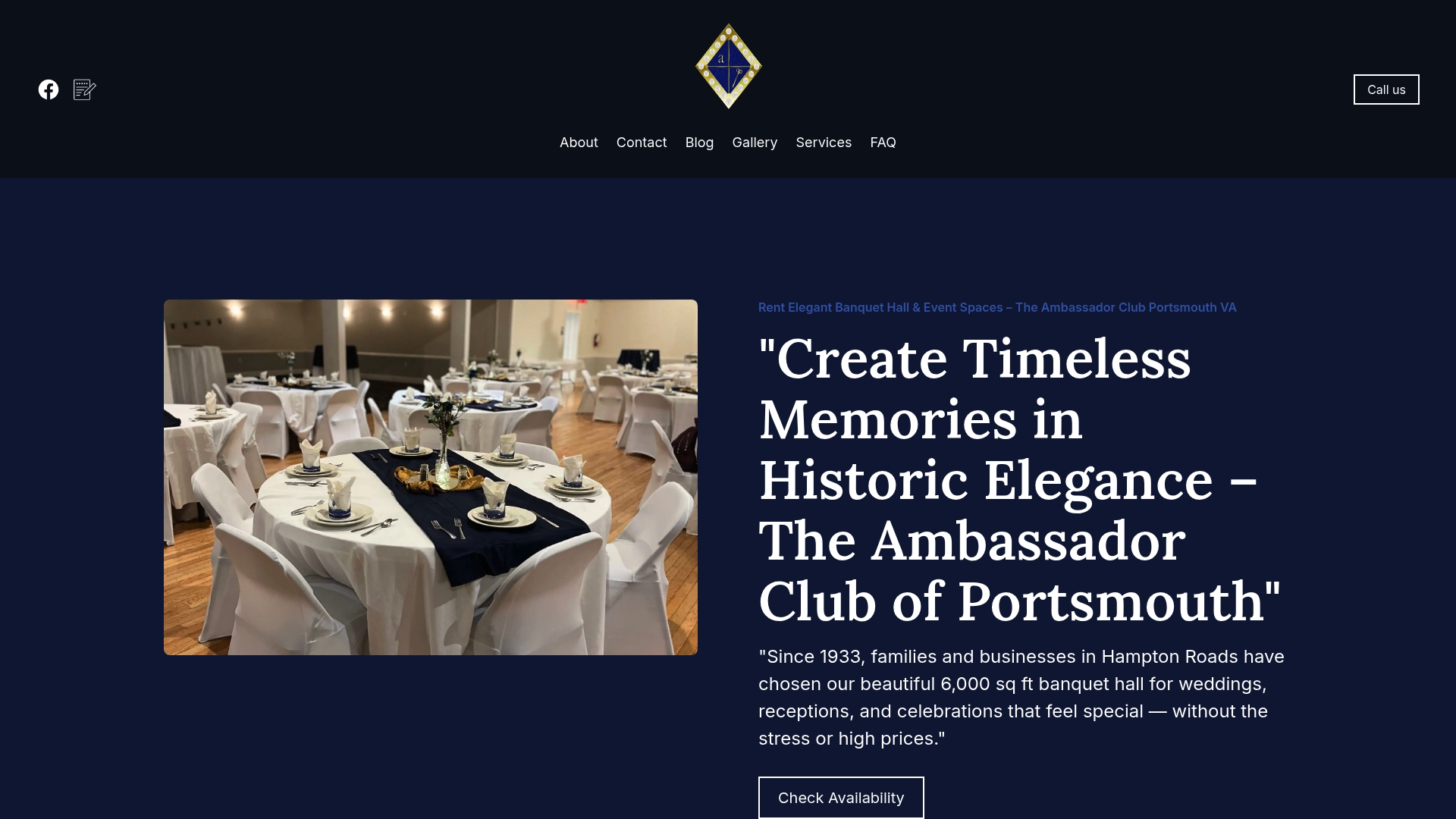
The club features a full commercial kitchen, flexible catering options, and packages built for planners who want a memorable event without the usual cost surprises. Whether you are booking a reception, a company dinner, or a milestone celebration, explore venue options at Ambassadorclubportsmouth and ask about current availability and seasonal pricing. The combination of historic character, full amenities, and transparent pricing makes it one of the strongest budget-friendly venue options in Portsmouth, VA.
FAQ
How much can I save by booking a weekday event?
Weekday bookings save 10% to 40% compared to weekend rates, depending on the venue and local demand. Friday and sunday events typically fall in the middle of that range.
What hidden fees should I watch for when renting an event space?
Service fees of 15% to 25% and cleaning fees of $100 to $400 are the most common charges not included in headline rates. Event insurance, setup labor, and parking fees can add several hundred dollars more.
What is a dry hire venue and how does it save money?
A dry hire venue, also called a DIY space, rents the room without mandatory in-house catering or vendor requirements. Dry hire venues reduce costs by letting you source your own food, drinks, and decor at competitive market rates.
What should I negotiate when booking an event space?
Focus on value-added extras rather than base price reductions. Venues concede amenities like AV equipment, extended access time, and waived service fees more readily than they cut their published room rate.
How far in advance should I book an event space to get the best deal?
Booking six or more months in advance for off-peak dates gives you access to early promotional pricing before those slots fill. Last-minute bookings within 30 days can also yield discounts, but availability is limited and negotiating power is lower.
Recommended
- Rent Elegant Spaces at The Ambassador Club, Portsmouth.
- The Ambassador Club of Portsmouth | The Ambassador Club of Portsmouth is a historic, community-focused civic and social organization proudly serving Portsmouth, Virginia, for over 70 years. Located at 364 Peninsula Avenue, the club is dedicated to strengthening the local community through meaningful public service, charitable contributions, and neighborly support—whether through donations, volunteer efforts, or direct aid to families, children, parents, and seniors in need. As a cornerstone of Portsmouth's social fabric, the Ambassador Club operates as a welcoming, member-driven group that fosters networking, fellowship, and positive impact. It also serves as a premier event venue, offering a beautifully renovated, spacious banquet hall of approximately 4,000 square feet (including over 3,000 square feet of dance floor), a full kitchen, stylish dry bar, large projection wall, and flexible meeting areas. The venue comfortably accommodates up to 200 guests seated or standing, making it an ideal, affordable, and elegant choice for: Weddings and receptions Holiday parties and family reunions Community dances and social gatherings Corporate trainings, meetings, and professional functions Banquets and other special celebrations With ample free parking and a reputation for exceptional value, the Ambassador Club combines timeless charm with modern amenities to create unforgettable experiences while continuing its legacy of giving back to the Portsmouth community.
- The Ambassador Club of Portsmouth | The Ambassador Club of Portsmouth is a historic, community-focused civic and social organization proudly serving Portsmouth, Virginia, for over 70 years. Located at 364 Peninsula Avenue, the club is dedicated to strengthening the local community through meaningful public service, charitable contributions, and neighborly support—whether through donations, volunteer efforts, or direct aid to families, children, parents, and seniors in need. As a cornerstone of Portsmouth's social fabric, the Ambassador Club operates as a welcoming, member-driven group that fosters networking, fellowship, and positive impact. It also serves as a premier event venue, offering a beautifully renovated, spacious banquet hall of approximately 4,000 square feet (including over 3,000 square feet of dance floor), a full kitchen, stylish dry bar, large projection wall, and flexible meeting areas. The venue comfortably accommodates up to 200 guests seated or standing, making it an ideal, affordable, and elegant choice for: Weddings and receptions Holiday parties and family reunions Community dances and social gatherings Corporate trainings, meetings, and professional functions Banquets and other special celebrations With ample free parking and a reputation for exceptional value, the Ambassador Club combines timeless charm with modern amenities to create unforgettable experiences while continuing its legacy of giving back to the Portsmouth community.
- The Ambassador Club of Portsmouth | The Ambassador Club of Portsmouth is a historic, community-focused civic and social organization proudly serving Portsmouth, Virginia, for over 70 years. Located at 364 Peninsula Avenue, the club is dedicated to strengthening the local community through meaningful public service, charitable contributions, and neighborly support—whether through donations, volunteer efforts, or direct aid to families, children, parents, and seniors in need. As a cornerstone of Portsmouth's social fabric, the Ambassador Club operates as a welcoming, member-driven group that fosters networking, fellowship, and positive impact. It also serves as a premier event venue, offering a beautifully renovated, spacious banquet hall of approximately 4,000 square feet (including over 3,000 square feet of dance floor), a full kitchen, stylish dry bar, large projection wall, and flexible meeting areas. The venue comfortably accommodates up to 200 guests seated or standing, making it an ideal, affordable, and elegant choice for: Weddings and receptions Holiday parties and family reunions Community dances and social gatherings Corporate trainings, meetings, and professional functions Banquets and other special celebrations With ample free parking and a reputation for exceptional value, the Ambassador Club combines timeless charm with modern amenities to create unforgettable experiences while continuing its legacy of giving back to the Portsmouth community.